2026 Best Cylinder Piston Rod Suppliers for Global Buyers
A dependable Cylinder Piston Rod supplier is judged long before a shipment reaches the factory floor. Buyers need to examine steel grades, heat treatment, straightness, surface finish, and coating consistency. A rod may look flawless under warehouse lights, yet wear quickly if its chrome layer is uneven. Small details matter.
W. Edwards Deming, a leading quality-management expert, is widely associated with the principle, “Quality is everyone’s responsibility.” That idea applies to rod sourcing: material selection, machining, inspection, and packaging all affect service life. This guide compares suppliers for global buyers through practical criteria, including production capability, dimensional control, test documentation, customization, lead times, and communication. Ask for measurable evidence, not polished promises. A sample inspection report can reveal more than a glossy catalog.
The best supplier depends on the application. A high-pressure mobile hydraulic cylinder may need different surface protection from equipment operating in a clean indoor plant. Freight distance and packaging also matter; a scratched rod can arrive unusable after a long voyage. Price still counts. But low prices deserve careful questions. This overview aims to help buyers build a shortlist, verify claims, and request comparable quotations. It cannot replace application-specific engineering review, and that limitation matters. Some supplier data may also be incomplete or difficult to compare. Look closely. A careful choice begins with clear specifications and honest follow-up.
Cylinder Piston Rod Basics: Hydraulic Function and ISO 5598 Terminology
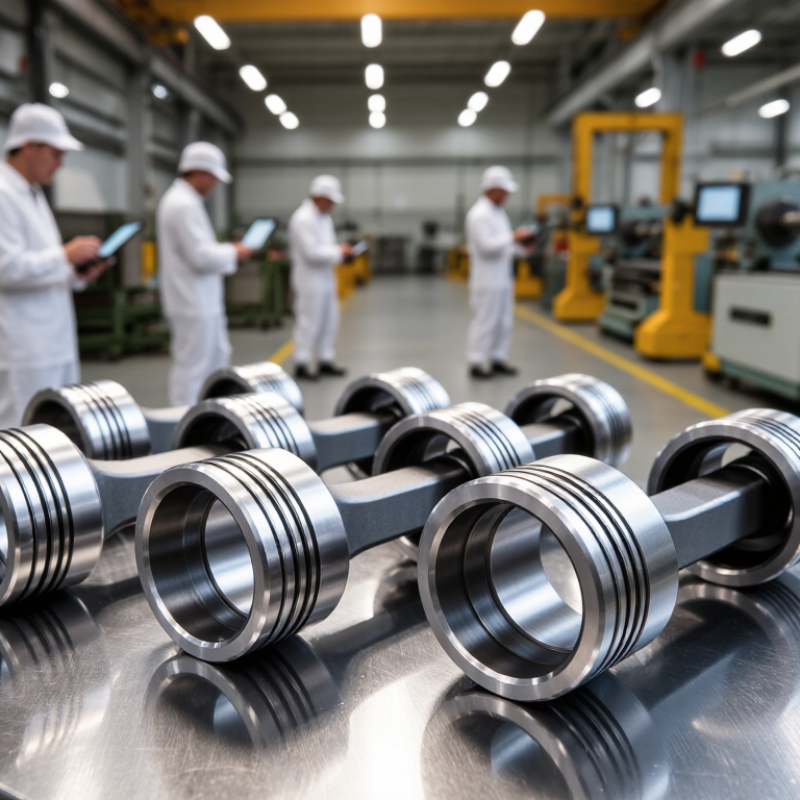
A hydraulic piston rod transfers force from the piston through the cylinder head to the external load. Pressurized fluid moves the piston; the rod carries the resulting linear motion. The rod surface passes through seals and wipers on every stroke. A scratch near the seal can cause leakage or accelerate wear. Small details matter. Buyers should check rod diameter, straightness, surface finish, coating, and end-thread dimensions against the application drawing. ISO 5598:2020 provides standardized fluid-power terminology, helping engineers and suppliers use terms such as “piston rod” consistently. It does not, by itself, specify a rod’s dimensions or acceptance tolerances.
The scale of the sector is substantial: Grand View Research estimated the global hydraulic cylinder market at USD 14.7 billion in 2023 and forecast a 4.6% compound annual growth rate from 2024 to 2030. This market estimate indicates broad demand, not a quality guarantee for any individual rod. For global sourcing, request material and inspection records, and clarify how straightness and surface finish are measured. A practical check is to compare the rod drawing with the mating seal and bearing specifications. Even careful documents can leave gaps. Confirm the test method and measurement location before approving samples.
Theoretical Hydraulic Extension Force by Cylinder Bore
At a constant hydraulic pressure of 16 MPa, a larger cylinder bore produces greater theoretical extension force. Values are calculated using force = pressure × piston area; actual force may be lower due to friction and operating conditions.
ISO 5598 terminology: A cylinder converts fluid power into linear force and motion. The piston rod transmits this force from the piston to the external load.
Common Rod Finish Benchmarks: 20–30 μm Chrome and 800–1,000 HV
2026 Best Cylinder Piston Rod Suppliers for Global Buyers
For cylinder piston rods, 20–30 μm of hard chrome and 800–1,000 HV are common finish benchmarks. Treat them as reference values, not automatic proof of suitability. A 25 μm coating may work well, but the application, seal design, and operating environment matter. Hardness readings also depend on the test method and load. Ask suppliers to state these details clearly.
Tips: Request coating-thickness records and hardness test conditions. Check measurements at several points, especially near shoulders and oil ports. Confirm surface roughness and dimensional tolerances too. A smooth-looking rod can still have uneven plating. Small details matter.
Review how the supplier handles inspection and rejects, not just the headline figures. Ask for sample reports tied to the actual production process. Verify that the chrome layer is uniform and adheres well; thickness alone cannot show that. One certificate may leave gaps, so compare its results with your drawing and service conditions. That step takes time, but it can prevent avoidable seal wear.
Pressure-Class Fit: ISO 6020-2 at 160 bar vs ISO 6022 at 250 bar
For global buyers, the pressure-class choice is a working specification, not a catalog detail. ISO 6020-2:2015 covers the 16 MPa (160 bar) medium-series cylinder, while ISO 6022:2006 covers the 25 MPa (250 bar) large-series class. Those figures describe the standards’ nominal pressure classes; they do not confirm a particular cylinder’s allowable peaks or duty cycle. Check the supplier’s datasheet, including test pressure, mounting dimensions, stroke, and port details. That gap matters.
Match the class to the circuit and the load. A machine running near 160 bar may suit an ISO 6020-2 cylinder, provided shock loads and cycle frequency are within the stated limits. For higher-pressure service, ISO 6022 may be a better fit, but the larger class alone is not a safety margin. Ask for rod-buckling calculations on long strokes, seal compatibility with the hydraulic fluid, and documented pressure-test results. Look closely at the rod surface and end-cap joints. Small details matter.
When comparing suppliers, request traceable material and inspection records alongside the pressure rating. ISO 6020-2 and ISO 6022 define cylinder series and mounting dimensions; they are not substitutes for application-specific verification. A spreadsheet can miss transient pressure spikes. I would not treat a nominal rating as proof of suitability without the operating profile. (References: ISO 6020-2:2015; ISO 6022:2006.)
Supplier Quality Checks: Typical Ra ≤0.2 μm, Coating, and Traceability
For cylinder piston rods, a typical buyer specification is Ra ≤0.2 μm on the working surface. Treat this as a contractual target, not a universal pass limit: ISO 21920-2:2021 defines profile-texture parameters, but buyers must state the acceptance criteria. Ask suppliers for readings from several positions along the rod, not just one polished end. Check the instrument calibration, probe direction, and stated measurement conditions. Small details matter. A smooth reading alone cannot confirm coating adhesion, hardness, or resistance to corrosion.
Request coating thickness results and the method used. ISO 2178:2016 describes magnetic measurement of non-magnetic coatings on magnetic substrates; confirm that the rod and coating suit that method. Review certificates for material grade, heat-treatment batch, coating batch, inspection date, and a rod-level identification number. ISO 9001:2015 clause 8.5.2 addresses identification and traceability, but certification does not replace clear lot records. A practical supplier check is to match one delivered rod’s marking to its material certificate and inspection report. Keep the chain intact. One weakness remains: paperwork can look complete while measurements are poorly sampled, so agree on sampling and dispute procedures before production.
Global Supplier Comparison: Capacity, Lead Time, MOQ, and Export Support
When comparing cylinder piston rod suppliers in 2026, look beyond a headline production figure. Ask how many rods can be finished each month at your required diameter, material, and surface treatment. A factory may have ample machining capacity but limited polishing or inspection stations. Request a sample production schedule, plus recent inspection records for straightness, coating thickness, and surface finish. Capacity claims deserve verification.
Lead time should include material sourcing, machining, finishing, inspection, and packing—not just production days. Ask for separate estimates for samples, repeat orders, and peak-season orders. A shipment that leaves the factory on time can still arrive late if export documents or freight arrangements are unclear. Get the delivery basis and document responsibilities in writing. Estimates are not guarantees.
Minimum order quantity matters when testing a new specification or serving a small service market. Ask whether mixed lengths or diameters can share one order, and whether setup fees apply. Small orders matter. For export support, check whether the supplier can provide clear packing lists, commercial invoices, wooden-case dimensions, and timely answers across time zones. Send a drawing and target forecast, then compare the written response with the quotation. One detail is easy to miss: a low MOQ may come with a longer lead time or higher unit cost. That trade-off should be visible before approval.
2026 Best Cylinder Piston Rod Suppliers for Global Buyers - Global Supplier Comparison: Capacity, Lead Time, MOQ, and Export Support
Anonymized supplier profiles and indicative planning benchmarks for hydraulic and pneumatic cylinder piston rods.
| Supplier Profile | Typical Capacity and Product Scope | Indicative Lead Time | Indicative MOQ | Export Support to Confirm |
| Large integrated producer | Suitable for repeat, higher-volume orders; commonly offers standard hard-chrome-plated rods and multiple diameter or length options. | Approximately 4–8 weeks for standard specifications; longer for custom sizes or busy production periods. | Often negotiable by specification and order volume; confirm production minimums and packaging requirements. | Ask about export packing, commercial invoices, packing lists, certificates of origin, and shipment coordination. |
| Mid-sized custom machining producer | Typically suited to mixed-size orders and made-to-drawing rods, subject to available machining, grinding, and plating capacity. | Approximately 6–10 weeks for custom work, depending on material availability and finishing requirements. | Often flexible for trial or mixed orders; confirm whether setup charges or per-size minimums apply. | Confirm drawing review, dimensional inspection reports, material documentation, and export packaging options. |
| Specialist surface-finishing producer | Focuses on rod surface treatments and finishes; capacity depends on rod dimensions, coating specifications, and batch size. | Approximately 4–9 weeks when the required base material and finishing process are available. | Usually depends on batch size and finishing setup; request a written minimum for each coating specification. | Confirm coating or surface-finish records, corrosion-test documentation when specified, and packing protection for transit. |
| Stock-supported distributor or processor | May supply standard sizes from available stock or arrange cut-to-length processing; availability varies by material, diameter, and finish. | Stock items may ship sooner; non-stock or processed items can require several weeks. | Can be lower for stocked items; cut-to-length, special packaging, or custom finishing may require minimum quantities. | Check stock confirmation, export sales terms, carrier options, and responsibility for customs documentation. |
Note: These are general, indicative industry planning ranges—not verified offers or performance claims for specific suppliers. Actual capacity, lead time, and minimum order quantity depend on rod material, diameter, length, straightness tolerance, surface finish, order volume, and destination. Request a current quotation and confirm export documents, inspection requirements, Incoterms, and delivery schedule in writing.