
2026 Best PE Tarpaulin for Global Buyers?
Choosing the 2026 best PE Tarpaulin requires more than comparing prices or surface colors. Global buyers need a sheet that performs under rain, sunlight, wind, storage pressure, and repeated handling. A strong purchase decision begins with the intended use. Construction covers need tear resistance. Agricultural users may prioritize UV stability and breathability. Transporters often need reinforced edges, reliable eyelets, and manageable weight.
Materials consultant David Chen offers a practical warning: “A tarpaulin should be judged after exposure, not only after inspection.” That point matters. A bright, heavy-looking fabric may still crack after months of strong sunlight. Check the polyethylene coating, fabric density, GSM, tensile strength, seam construction, and UV treatment. Inspect the corners closely. Weak stitching often fails before the main panel. Eyelets should sit inside reinforced patches, not directly against thin fabric.
Performance is not the only concern. Consistent production, clear specifications, responsible packaging, and dependable communication also shape supplier reliability. Ask for product samples, test reports, and batch details when possible. Confirm dimensions after hemming, because finished sizes can differ from advertised cutting sizes. Small details matter.
No option is perfect.
A lower-cost PE Tarpaulin may suit short-term covering, but it can disappoint in harsh climates. A heavier model may last longer, yet create higher freight costs and difficult installation. Buyers must balance service life, handling, climate, and budget. This guide compares the leading 2026 options through practical performance rather than marketing claims. Some recommendations may change after field testing. That is worth admitting. Real weather can expose weaknesses that laboratory figures cannot show.
What Is PE Tarpaulin and How Is It Made?
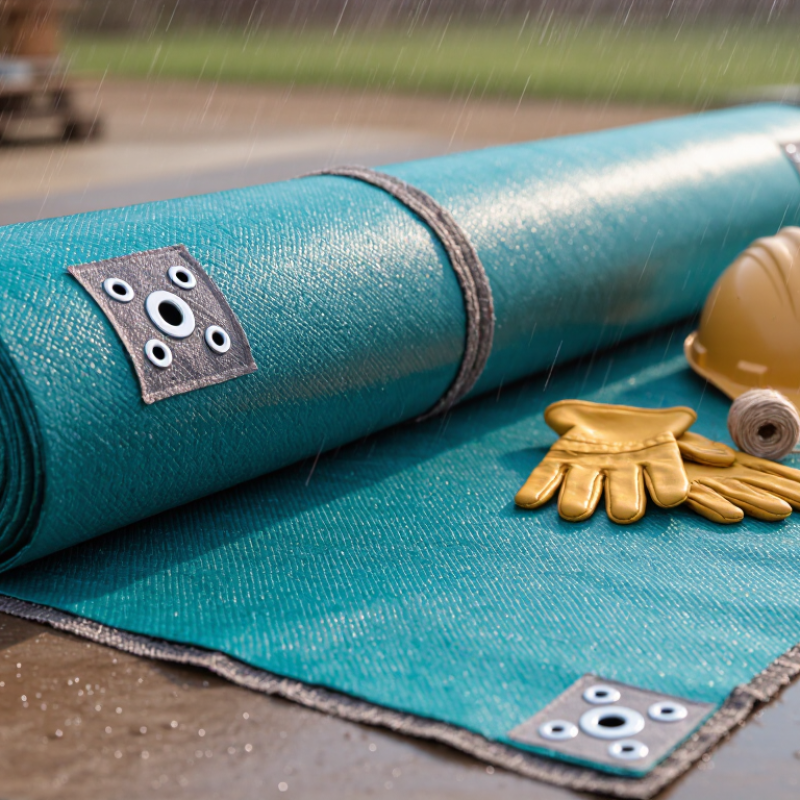
For global buyers in 2026, understanding PE tarpaulin matters more than choosing the thickest sheet. PE tarpaulin is a waterproof, flexible cover made mainly from polyethylene. Its center layer usually contains woven HDPE tapes. LDPE or LLDPE film is laminated onto both sides. This structure improves tear resistance, water protection, and handling strength. The fabric can feel slightly waxy. That is normal.
Production begins with melting polyethylene pellets and pressing them into thin tapes. The tapes are stretched, cooled, and woven into a dense fabric. Coating layers are then applied with controlled heat and pressure. Edges may be folded and heat-sealed. Metal eyelets are installed along reinforced hems. In practical inspections, seam quality often matters as much as fabric weight. A higher GSM is not automatically better. Excessive weight can reduce flexibility and increase shipping costs. Color stability, coating adhesion, and measured tensile strength also deserve attention. Some suppliers provide test reports, but documents should still match the actual sample.
Tips: Request a sample before placing a large order. Check pinholes under bright light. Fold the sheet repeatedly and inspect whitening or cracks. Ask for GSM tolerance, waterproof testing, UV performance, and eyelet spacing. Do not judge durability by appearance alone. One weakness remains easy to miss: poorly sealed edges can fail before the main fabric.
Key Materials, Coatings, and Construction Types
2026 Best PE Tarpaulin for Global Buyers?
Key Materials, Coatings, and Construction Types
Polyethylene tarpaulin begins with woven HDPE or LDPE tapes for strength and flexibility. HDPE usually supports better tensile performance, while LDPE layers improve sealing and softness. A balanced fabric should resist tearing around eyelets and folded corners. Check GSM, tape density, and tear strength together. One number rarely tells the whole story.
Coating construction changes real-world performance. A three-layer sheet often uses woven fabric between two laminated films. Additional coating can improve waterproofing, UV resistance, and abrasion protection, but may increase stiffness. Heat-sealed seams generally prevent leakage better than simple stitching. Reinforced hems and rust-resistant eyelets also matter during repeated installation. In practical inspections, weak edges often fail before the center panel. This is easy to overlook.
Tips: Ask for a sample and test it outdoors. Fold one corner repeatedly. Inspect pinholes, coating bubbles, seam gaps, and eyelet alignment. Confirm UV treatment, operating temperature, and hydrostatic pressure data before ordering. Color is not proof of durability. A shiny surface can still crack after cold exposure. Buyers should also compare packaging, inspection records, and replacement terms. Specifications may look complete, yet small construction details can change service life.
Performance Factors: Waterproofing, Strength, UV Resistance, and Weight
2026 Best PE Tarpaulin for Global Buyers?
Waterproofing starts with fabric structure, not appearance. A tightly woven PE base and continuous lamination reduce pinholes and seepage. ASTM D751 evaluates coated fabrics through hydrostatic pressure testing. Buyers should request the actual pressure result, not only the word “waterproof.” Some suppliers report vague values. That is a warning sign. For strength, ISO 1421 tensile testing measures force and elongation in both directions. Reinforced edges, welded hems, and evenly spaced eyelets matter during wind loading. A heavy sheet can still tear if stress concentrates around one eyelet.
UV resistance needs evidence from accelerated exposure testing. ISO 4892-3 and ASTM G154 help assess color change, cracking, and strength loss after artificial weathering. A useful specification should state exposure hours and retained tensile strength. “UV treated” alone says too little. Weight also changes handling and durability. Common PE tarpaulins often range from about 80 to 240 g/m², while heavier fabric usually offers better tear resistance but increases freight and installation effort. The World Bank’s Logistics Performance Index shows that transport efficiency remains a major global purchasing concern, so gsm should match the application rather than simply increase. Field experience suggests a 120 g/m² sheet may suit short-term covering, but harsh sunlight, repeated folding, and strong wind may demand more. I would still test a sample first; laboratory results do not perfectly predict every site.
How to Choose PE Tarpaulin for Different Global Applications
For global buyers, choosing PE tarpaulin starts with the application, not the advertised color. A cover for harvested grain needs different performance from a sheet protecting construction materials. Start with the site. Measure the covered area, expected wind, sunlight, rain, and handling frequency. In coastal regions, salt air can accelerate hardware corrosion, so reinforced edges and corrosion-resistant eyelets deserve attention. A practical supplier should provide GSM, fabric construction, coating details, and test information instead of vague claims.
For temporary shelters, truck covers, and outdoor storage, medium or heavy GSM fabric usually offers better tear resistance. However, the heaviest sheet is not always the best choice. It can be difficult to fold, transport, or secure safely in strong wind. Look for evenly spaced eyelets, heat-sealed hems, and reinforced corners. Check whether waterproofing remains effective after repeated folding. Small samples help. Expose them to sunlight and water before ordering large volumes. This simple trial can reveal brittle coating, leaking seams, or unpleasant odor.
Climate changes the decision. Hot regions need UV-stabilized PE and adequate ventilation beneath the cover. Cold areas require flexible material that will not crack during folding. Agricultural users should confirm that the product suits their intended goods and local requirements. Ask for production tolerances and inspection records. Reliable communication matters when dimensions cross borders. I would not trust a perfect specification sheet alone. Real performance can vary between batches. Confirm packing, labeling, and replacement procedures in writing, then compare total service life rather than only purchase price.
Global Buying Checklist: Standards, Customization, Pricing, and Shipping
2026 Best PE Tarpaulin for Global Buyers?
Global Buying Checklist: Standards, Customization, Pricing, and Shipping
A reliable PE tarpaulin starts with measurable specifications, not attractive photos. Confirm fabric weight, thickness, tensile strength, tear strength, and UV resistance. Request recent test reports and compare them with a production sample. Check seam welding, hem reinforcement, eyelet spacing, and edge strength. Requirements may differ by market, climate, and application. A perfect-looking sample can still mislead. Inspect several pieces from the same batch.
Customization should be written into the purchase order. Specify finished size, tolerance, GSM, color, printing area, eyelet material, folding method, and carton packing. Ask whether dimensions include hems. This small detail often causes disputes. For outdoor use, test color stability and waterproof performance after exposure. Flame-related requirements may apply to certain projects, so verify the destination market’s applicable standards with qualified professionals.
Pricing depends on resin costs, fabric weight, order quantity, printing, packaging, and inspection. Compare total landed cost, not only the factory price. Include tooling, inland delivery, insurance, duties, and port charges. Shipping plans should state container loading, carton dimensions, moisture protection, documents, and lead time. Allow buffer time for production delays. It feels inefficient, but rushed shipping decisions often cost more. Keep approved samples, test records, and signed specifications together for every shipment.
2026 Best PE Tarpaulin for Global Buyers? - Global Buying Checklist: Standards, Customization, Pricing, and Shipping
Indicative 2026 purchasing guide for polyethylene tarpaulin. Specifications, prices, lead times, and freight figures are typical commercial ranges and should be confirmed by sample testing, final drawings, destination, and order quantity.
| Product Grade | Typical Applications | Construction | Weight (g/m²) | Thickness (mm) | Tensile Strength (N/5 cm) | Tear Strength (N) | Water Resistance | Service Temperature | Expected Outdoor Life* | Indicative FOB Price (USD/m²) | Typical MOQ |
|---|---|---|---|---|---|---|---|---|---|---|---|
| Light-Duty PE Tarpaulin | Temporary covers, gardening, short-term material protection | Woven PE fabric with laminated PE coating; aluminum or plastic eyelets | 70–100 | 0.10–0.15 | 350–550 | 45–75 | 1,000–2,000 mm | −20°C to +60°C | 6–18 months | 0.45–0.85 | 1,000–3,000 m² |
| Standard Utility PE Tarpaulin | Agricultural covers, truck covers, construction materials, camping | Cross-laminated or woven PE fabric with double-sided coating; reinforced hem | 120–180 | 0.16–0.25 | 550–850 | 70–110 | 2,000–4,000 mm | −30°C to +70°C | 1–3 years | 0.75–1.30 | 2,000–5,000 m² |
| Heavy-Duty PE Tarpaulin | Industrial covers, shipping protection, truck and machinery covers | High-density woven PE scrim with thick laminated coating and rope-reinforced hem | 220–300 | 0.28–0.40 | 850–1,300 | 100–170 | 3,000–6,000 mm | −40°C to +80°C | 2–5 years | 1.20–2.20 | 3,000–8,000 m² |
| UV-Stabilized PE Tarpaulin | Long-term outdoor storage, agricultural and marine-related protection | Woven PE substrate with UV stabilizer package, anti-oxidant additives, and coated surface | 180–280 | 0.24–0.38 | 750–1,200 | 90–150 | 3,000–6,000 mm | −30°C to +80°C | 3–7 years | 1.35–2.50 | 3,000–8,000 m² |
| Silver or Blackout PE Tarpaulin | Light-blocking covers, transport, privacy screens, temporary shelters | Multi-layer PE construction with dark inner layer and reinforced perimeter | 180–320 | 0.25–0.45 | 700–1,250 | 85–160 | 2,500–5,000 mm | −30°C to +75°C | 2–5 years | 1.30–2.50 | 3,000–8,000 m² |
| Flame-Retardant PE Tarpaulin | Events, temporary partitions, warehouses, construction and emergency use | PE fabric containing flame-retardant additives; certified construction required for regulated projects | 200–350 | 0.28–0.48 | 700–1,200 | 85–160 | 2,500–5,000 mm | −25°C to +70°C | 1–4 years | 1.50–2.80 | 5,000–10,000 m² |
Global Buying Checklist
| Buying Dimension | Recommended Requirement | Verification Method | Common Risk |
|---|---|---|---|
| Material | Confirm virgin or recycled PE content, fabric type, coating layers, and additive package. | Request technical data sheet, material declaration, and a retained production sample. | Lower-cost filler or excessive recycled content can reduce flexibility and tear resistance. |
| Dimensions | Specify finished size, cut size, tolerance, eyelet spacing, hem width, and folding method. | Approve a pre-production sample and measure finished dimensions after hemming. | Nominal dimensions may be quoted before the hem is folded, causing a smaller usable area. |
| Strength | Set minimum tensile and tear values in both warp and weft directions. | Use ASTM D751, ISO 1421, or an agreed equivalent method. | A high GSM alone does not guarantee strong seams, eyelets, or tear performance. |
| Waterproofing | Define hydrostatic pressure, coating adhesion, seam sealing, and leakage acceptance criteria. | Check hydrostatic pressure and coating adhesion using agreed laboratory procedures. | Needle holes around eyelets and poorly sealed seams are frequent leakage points. |
| UV Performance | State the intended exposure period, climate zone, and required UV stabilization. | Request accelerated weathering data such as ASTM G154 or ISO 4892-3, where applicable. | Outdoor life varies significantly with sunlight, temperature, wind, and installation tension. |
| Fire Performance | For regulated applications, specify the exact local fire classification and test standard. | Request a valid third-party report for the exact fabric construction and color. | A generic “flame-retardant” claim is not equivalent to a project-approved fire classification. |
| Eyelets and Hem | Specify eyelet material, inner diameter, spacing, reinforcement patches, and corner construction. | Perform pull-out tests on corners, edges, and random eyelets from finished goods. | Weak eyelet reinforcement can fail before the tarp fabric reaches its rated strength. |
| Packaging | Confirm folded dimensions, carton or bale limits, moisture protection, labels, and pallet requirements. | Approve a packing specification before mass production. | Poor compression or wet packing can increase dimensional damage and mold risk during transit. |
Customization, Pricing, and Shipping Reference
| Item | Typical Commercial Range | Main Price Driver | Buyer Action |
|---|---|---|---|
| Custom Width | Common finished widths: 1.5–6.0 m; wider formats may require welding or special production. | Loom width, cutting waste, welding length, and order volume. | Provide finished dimensions and allowable tolerance, not only roll width. |
| Color Matching | Standard colors generally have no or low surcharge; custom color matching may add 3–10%. | Pigment quantity, minimum batch size, and color approval process. | Approve a physical color swatch under a defined light source. |
| Printing | One- to four-color printing may add approximately 0.05–0.35 USD/m². | Print coverage, number of colors, artwork preparation, and repeat length. | Submit vector artwork and approve a printed strike-off before production. |
| Eyelets and Reinforcement | Eyelet spacing commonly 30–100 cm; reinforced corners and rope hems increase cost by about 3–15%. | Metal type, spacing, patch size, rope diameter, and installation method. | Specify edge pull-out performance for windy or tensioned installations. |
| Production Lead Time | Stock items: 7–15 days; customized orders: 20–40 days after approval. | Fabric availability, color matching, printing, testing, and peak-season capacity. | Include sample approval and inspection time in the project schedule. |
| Sea Freight | LCL: commonly 30–60 days door-to-door; FCL: commonly 25–50 days, depending on route and customs. | Origin, destination, season, container availability, port congestion, and Incoterms. | Obtain an all-in quotation covering origin charges, destination fees, and customs responsibilities. |
| Air Freight | Usually 5–12 days door-to-door; economical mainly for samples or urgent small shipments. | Chargeable weight, fuel surcharge, destination, and package dimensions. | Request both actual and volumetric weight before comparing quotations. |
| Container Utilization | Folded PE tarpaulin is generally volume-limited before it becomes weight-limited. | Finished size, folding method, carton dimensions, pallet use, and compression ratio. | Request a packing list showing cartons, net weight, gross weight, and cubic volume. |
*Outdoor life note: Service-life estimates depend on UV intensity, climate, wind load, abrasion, installation tension, folding frequency, and maintenance. They are not warranties.
Testing note: ASTM and ISO methods are shown as commonly used reference methods. The buyer should select the legally applicable standard and require test reports for the exact finished construction, color, coating, and production batch.