
Which Curved Glass Cooler Is Best for Global Buyers?

A Curved Glass Cooler can turn chilled products into visible, immediate purchases. Yet global buyers need more than attractive glass and bright lighting. They must compare temperature stability, energy consumption, door design, voltage, climate class, service access, and spare-parts availability. A cooler that performs well in a European supermarket may struggle in a humid Southeast Asian store.

Industry data shows why efficiency matters. The International Energy Agency reports that cooling demand could more than triple worldwide by 2050. UNEP’s 2022 Cooling Emissions and Policy Synthesis Report also highlights the urgent need for higher-efficiency cooling equipment and lower-impact refrigerants. Grand View Research identifies commercial refrigeration as a growing global market, driven by food retail, hospitality, and expanding cold-chain infrastructure. However, market forecasts differ by methodology. Buyers should question simple growth claims.

Energy-efficiency authority Amory Lovins said, “The cheapest energy is the energy you don’t use.” His principle applies directly to a Curved Glass Cooler operating for long hours beside warm entrances and frequently opened doors. Small details matter. A heated glass system, accurate controller, tight door seal, and clean condenser can reduce wasted power. They can also protect product quality.

The best model depends on location, not appearance alone. Measure ambient heat, shelf loading, daily door openings, and local technician support. That assumption needs testing. A lower purchase price may become expensive after three years of electricity, maintenance, and product loss. This guide compares leading cooler types for global buyers, while recognizing an uncomfortable truth: no single Curved Glass Cooler is perfect for every market.
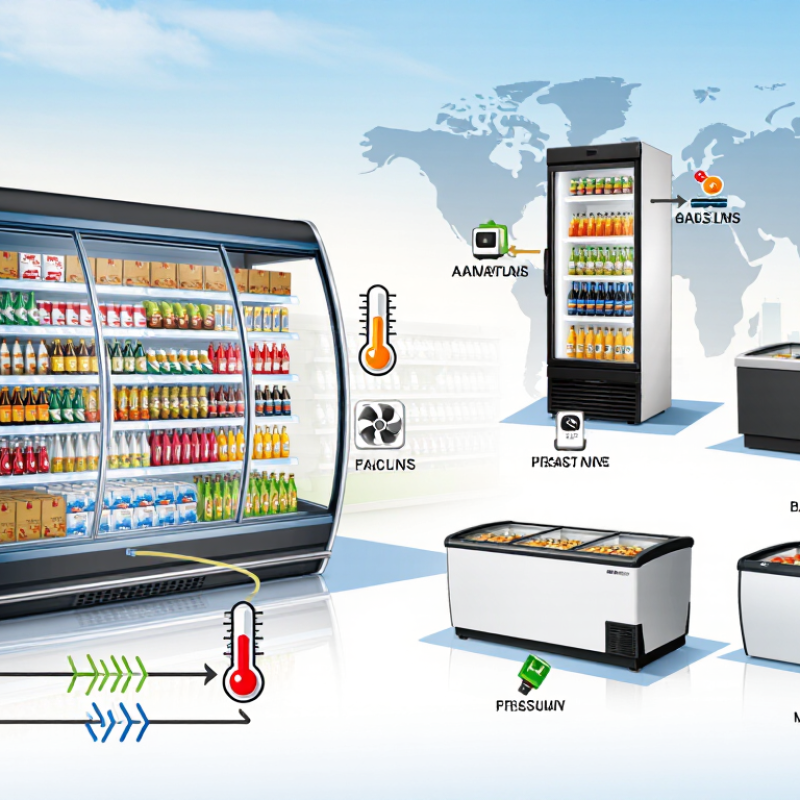
Which Curved Glass Cooler Is Best for Global Buyers?

What Defines a Curved Glass Cooler?

Which Curved Glass Cooler Is Best for Global Buyers?

A curved glass cooler is more than an attractive cabinet. It is a refrigerated display unit with a bowed, tempered glass front, insulated panels, controlled airflow, and visible product shelving. The curve improves viewing angles from nearby aisles. It does not automatically improve cooling performance. A polished curve can still hide poor insulation.

The definition is not perfectly uniform across supplier catalogs. Some units use heated glass to reduce condensation. Others depend on dry store conditions and stronger air circulation. Buyers should check the climate class, internal temperature range, refrigerant type, voltage, plug standard, and door-opening design. The 2024 Grand View Research assessment places the global commercial refrigeration market on a steady growth path through 2030. This supports demand, but market growth does not prove every cooler is efficient. The U.S. Department of Energy also identifies refrigeration as a significant electricity load in commercial food facilities.

Tips: Measure the installation path, not only the final footprint. Confirm glass radius, shelf depth, drainage, and service access. Ask for tested energy data at your local ambient temperature. A cooler rated at 25°C may struggle in a 35°C shop. Check replacement parts availability before ordering. Small details matter. I would also request a real operating test, because catalog promises can feel too clean. Look for stable temperature, quiet fans, even lighting, and minimal fogging during repeated door openings.

How Curved Glass Coolers Differ by Design and Capacity

Which Curved Glass Cooler Is Best for Global Buyers?

How Curved Glass Coolers Differ by Design and Capacity

Curved glass coolers vary sharply in visibility, loading speed, and usable space. A vertical model suits narrow aisles and encourages eye-level purchasing. A horizontal unit offers a lower center of gravity and easier access for bulky products. Curved glass can also reduce visual obstruction, but poor seals may increase condensation in humid regions. Climate matters more than many buyers expect.

Capacity should be measured by usable internal volume, not the advertised gross figure. A 300-liter cooler may hold less after shelves, air channels, and product spacing. For small shops, 200–400 liters often balances footprint and replenishment time. Larger units reduce refill frequency, yet they can waste energy when lightly loaded. I learned this the hard way during a store-layout assessment.

Door design changes operating cost. Hinged doors usually protect cold air better than open fronts, while sliding doors support faster customer access. The U.S. Department of Energy’s commercial refrigeration analysis evaluates energy use by volume and configuration, not wattage alone. The International Energy Agency’s The Future of Cooling reports that cooling demand could more than triple by 2050, making insulation and controls increasingly important. Efficiency labels help, but field conditions can disagree. Ask for tested energy data at the intended voltage, ambient temperature, and humidity.

Which Cooling Systems Suit Different Global Markets?

Which Curved Glass Cooler Is Best for Global Buyers?

Cooling systems should match the market, not only the cabinet shape. The IEA’s The Future of Cooling report projects global cooling demand could triple by 2050. UNEP’s 2022 Cooling Report also expects room air-conditioner stock to reach 5.6 billion units by 2050. These figures show why energy efficiency matters across retail refrigeration.

Warm, humid markets need tropicalized compressors, stronger condensers, and reliable airflow. A cooler operating near 43°C ambient temperature faces a serious heat load. In dusty regions, front-accessible filters and protected condenser coils reduce maintenance problems. Humid coastal markets may need anti-corrosion coatings. Small details matter.

European buyers often prioritize low-GWP refrigerants and strict energy performance requirements. The European Commission’s ecodesign framework continues to push commercial refrigeration toward lower energy use. North American projects may require compatibility with local voltage, frequency, and safety codes. These differences make one global specification unrealistic.

Curved glass can improve product visibility, but its larger exposed surface may increase heat gain. Double glazing and anti-fog heating can help, although heating elements also consume power. A common mistake is selecting the lowest-priced compressor. Field assessments often show that cleaning access, door-opening frequency, and ambient temperature influence operating cost more than the initial quote. Some assumptions remain uncertain. Testing the cooler under real store conditions is still wiser.

How to Compare Energy Use, Materials, and Durability

Which Curved Glass Cooler Is Best for Global Buyers?

How to Compare Energy Use, Materials, and Durability

A curved glass cooler should be judged by measured performance, not attractive lighting. Ask for annual energy consumption in kWh, tested under a stated ambient temperature. A unit rated at 25°C may perform differently in a hot coastal shop. Door openings, product loading, and overnight conditions also change real use. I have seen buyers compare wattage only, then face higher bills because the compressor runs longer.

Look closely at the glass and frame. Low-emissivity glass can reduce heat entering the cabinet, while strong seals limit cold-air loss. Tempered glass offers useful impact resistance, but its safety behavior differs from laminated glass. Check the frame for corrosion-resistant steel or a durable coated finish, especially in humid regions. Shelves should feel stable when fully loaded, not flex under ordinary beverage weight. Small details matter.

Durability depends on maintenance access, not only materials. Inspect the door hinges, gasket, condenser filter, and drain design. A cooler that is difficult to clean may lose efficiency within months. Request independent test data, wiring information, and spare-part availability before ordering. Also confirm voltage and frequency compatibility for the destination market. Energy labels can be incomplete. I still question any claim without test conditions, service records, or a clear warranty scope. The quietest cabinet is not always the most efficient.

Which Curved Glass Cooler Is Best for Global Buyers?

Comparing annual energy use, glass construction, materials, and expected service life under a standardized commercial refrigeration scenario.

Cooler configuration Glass and frame materials Expected service life Best use case
Single-pane curved glass Tempered glass; powder-coated steel frame Approximately 8 years Low initial cost and mild climates
Double-pane insulated curved glass Tempered insulated glass; coated steel or stainless-steel frame Approximately 10 years General retail use and mixed climates
Low-E double-pane curved glass Low-emissivity insulated glass; stainless-steel or corrosion-resistant frame Approximately 12 years Hot climates, premium stores, and long operating hours

The chart uses representative engineering benchmarks for a 1.5 m upright curved-glass cooler operating at 2–8°C in a 25°C ambient environment. Annual electricity figures are estimated under comparable operating conditions; actual consumption depends on climate, loading, thermostat settings, door or curtain design, maintenance, and local testing standards. Lower energy use and longer service life generally improve total cost of ownership.

Which Curved Glass Cooler Fits Your Business Needs?

Choosing a curved glass cooler starts with your sales pattern, not its appearance. A bakery may need wide shelves for cakes, while a convenience store needs fast access for bottled drinks. Measure the available floor space, doorway, and turning area carefully. Measure twice. A beautiful unit becomes a costly problem if it blocks customer movement.

Consider product temperature, display height, and daily opening frequency. Glass should offer clear visibility without creating heavy condensation in humid climates. Low-temperature models may suit frozen desserts, while chilled units work better for dairy, salads, and prepared foods. Ask for tested temperature ranges, insulation details, and energy data under realistic conditions. Laboratory figures can look impressive but may not match a busy shop.

Global buyers should also check voltage, plug requirements, refrigerant information, and local service support. In regions with unstable power, restart protection and temperature alarms can reduce stock losses. Adjustable shelves help businesses change product mixes during holidays or quiet seasons. Cleaning access matters too; narrow corners often collect dust and spilled syrup. Curved glass is attractive, but replacement cost and handling should be discussed before purchase. A small cooler may reduce energy use, yet it can force frequent restocking and raise labor costs. The best fit is not always the largest or most elegant model.

Which Curved Glass Cooler Is Best for Global Buyers? - Which Curved Glass Cooler Fits Your Business Needs?
Cooler Configuration Typical Product Capacity Recommended Temperature Typical External Size (W × D × H) Display Area Common Refrigeration Features Best Business Fit Global Buying Considerations
Countertop Curved Glass Cooler Approximately 100–300 L Approximately +2°C to +8°C 0.9–1.5 m × 0.7–0.9 m × 0.8–1.2 m Front-facing, compact display Fan-assisted cooling, LED lighting, adjustable shelves, rear sliding doors Cafés, bakeries, convenience counters and small food-service outlets Check counter load capacity, plug type, operating voltage and available ventilation clearance.
Single-Deck Upright Curved Glass Cooler Approximately 300–700 L Approximately +2°C to +8°C 0.6–1.2 m × 0.7–0.9 m × 1.8–2.1 m Vertical front display with multiple shelves Ventilated cooling, automatic defrost, LED illumination, electronic temperature control Supermarkets, grocery stores, convenience stores and beverage retailers Confirm door orientation, aisle width, ambient-temperature rating and energy-label requirements.
Double-Deck Upright Curved Glass Cooler Approximately 600–1,200 L Approximately +2°C to +8°C 1.2–2.5 m × 0.8–1.0 m × 1.9–2.2 m Large vertical merchandising area Independent fan circulation, heated glass options, night curtain options, adjustable shelving High-volume retail locations requiring strong product visibility Evaluate floor loading, transport access, heat rejection, service access and total connected load.
Curved Glass Deli and Pastry Display Cooler Approximately 250–800 L Approximately +2°C to +8°C for chilled foods; product-specific limits apply 1.0–2.5 m × 0.8–1.1 m × 1.1–1.4 m Low-front or service-counter display Humidity management options, stainless-steel work surface, adjustable product decks, front ventilation Delis, patisseries, prepared-food counters and food halls Verify humidity control, food-contact materials, cleaning access and the required product temperature range.
Island Curved Glass Cooler Approximately 500–1,500 L Approximately +2°C to +8°C 1.5–2.5 m × 1.2–1.8 m × 0.9–1.3 m 360-degree or multi-sided merchandising Multi-directional access, ventilated cooling, LED lighting, lockable sliding or hinged glass Central store displays, supermarkets, airports and high-traffic retail areas Allow sufficient customer circulation space and confirm power routing, floor protection and delivery access.
Remote-System Curved Glass Cooler Approximately 800–2,000 L Approximately +2°C to +8°C 1.5–3.0 m × 0.8–1.1 m × 1.8–2.2 m Extended line-up display with glass doors Connection to a central refrigeration system, reduced local noise, electronic controls, automatic defrost Large supermarkets, hypermarkets and multi-cabinet retail projects Requires compatible pipework, qualified installation, refrigerant compliance and coordinated commissioning.
Selection guide: Choose a countertop model when space is limited, an upright model for maximum vertical visibility, a deli or pastry model for service-counter presentation, an island model for 360-degree merchandising, and a remote-system model for large retail installations. Actual capacity, dimensions, energy consumption and temperature performance vary by cabinet design, ambient conditions, loading pattern and local electrical requirements.

CONTACT US