
What Is the Best Free-Wheel Railway Set for 2026?
Choosing the best Free-Wheel Railway Set for 2026 is not just about track length or the number of cars. A set should roll smoothly, connect securely, and feel satisfying in small hands. Picture a wooden locomotive crossing a kitchen table, passing a station, then returning along a loop without the track splitting apart. Those details matter during everyday play.
A useful child-development perspective comes from Dr. Amanda Gummer, a play specialist whose work discusses children’s play and learning. A practical takeaway from her published work—not a direct quotation—is to value toys that invite active, repeatable play. That principle fits railway sets well: a child can build a route, send a train around it, and change the layout tomorrow. Simple. Still, open-ended play does not make every set durable or age-appropriate.
This guide compares the features buyers can actually inspect: wheel movement, track fit, materials, layout flexibility, storage, and age guidance. It also considers whether a set remains enjoyable after the first few runs. A small flaw can matter. Loose connections may frustrate a young builder, while oversized track plans can overwhelm a compact room. The supplied material does not identify a railway-set industry specialist or provide a verifiable direct quote, so this introduction avoids inventing one. The recommendations should be checked against current product details, since designs and availability can change before 2026.
What Defines a Free-Wheel Railway Set?
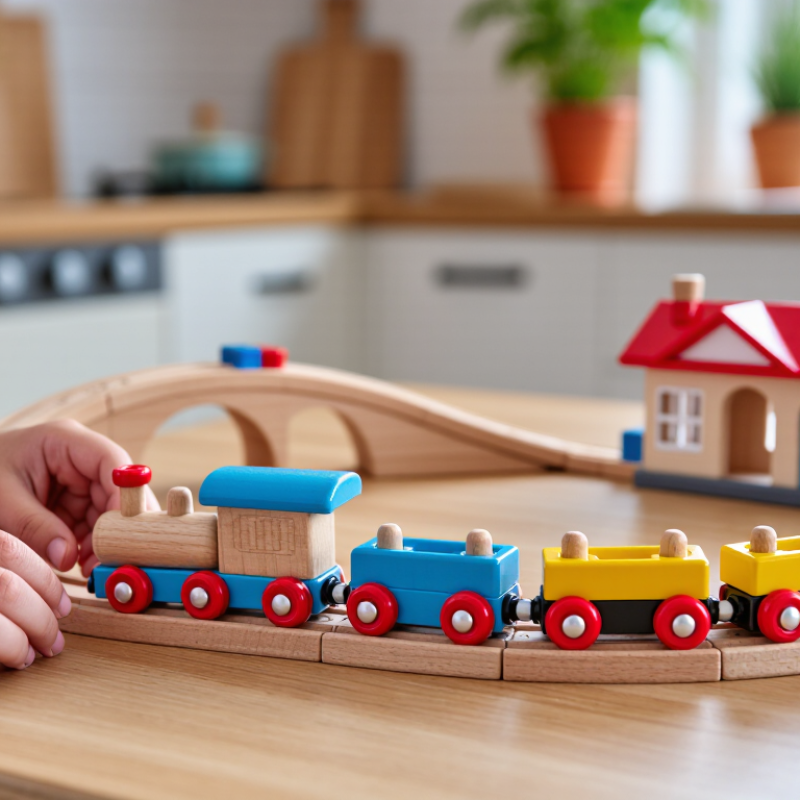
A free-wheel railway set is a push-along toy train whose wheels turn without a motor. The set may include a locomotive, carriages, track pieces, and small accessories. No motor is required. A child supplies the movement, so the train can also travel on a smooth floor if its wheels allow it.
“Free-wheel” is not always used consistently on toy packaging. Check whether the locomotive rolls freely, whether its axles feel secure, and whether the included track connects firmly. On curves, stiff wheels can make a carriage wobble or slip off. That matters. Small details, such as rounded edges and pieces sized for the intended age, also affect everyday handling. Product instructions and age guidance are useful checks, not decoration.
For a 2026 set, look for clear information about materials, track compatibility, and replacement parts. A simple push-along train may be easier to set up than a powered one, but it still needs sturdy construction. I might be overvaluing smooth rolling; some children care more about loading tiny cargo into a wagon. A slightly imperfect fit can also frustrate play, so inspect the connections before choosing.
Which Features Matter Most When Comparing 2026 Sets?
When comparing 2026 free-wheel railway sets, prioritize smooth rolling, sturdy track joints, and useful play space over sheer piece count. A train should coast without snagging on curves or separating at a small bump. Check whether track sections connect firmly, especially if children will rebuild layouts often. Small details matter.
Age range and setup time matter, too. Look for clearly stated age guidance, easy-to-follow instructions, and track pieces that are comfortable for small hands to connect. A compact loop may suit a coffee table, while a larger layout needs enough floor space to avoid constant interruptions. The best set is not always the biggest. It should fit the room and the child’s patience.
Value deserves a closer look. Circana reported that U.S. toy sales fell 8% to $28.3 billion in 2023, a market signal that makes lasting play value worth considering—not proof that any one set is a bargain. Compare replacement-part availability, included track length, and whether extra cars can run smoothly with the supplied pieces. I would be cautious about judging quality by photos alone; they rarely show how well a train coasts across a joint. One small drawback can matter. A brief play test, where possible, reveals more than a long feature list.
How Do Train Design, Track Layout, and Materials Differ?
Choosing the best free-wheel railway set for 2026 depends less on flashy features than on how the train, track, and materials work together. A heavier locomotive may roll steadily across smooth flooring, while a lighter one can feel easier for small hands to push. Check that wheels turn freely and axles sit straight. A crooked axle can make even a well-shaped train wobble.
Track layout changes the play experience. A compact oval fits a coffee table or bedroom floor, but repeated laps may feel predictable. Curved sections, a short straight, and a gentle switch offer more ways to build routes without demanding much space. Measure the available floor area before buying; track diagrams can look smaller than the assembled set. Small details matter.
Materials affect both durability and handling. Thick, well-finished plastic track is light and simple to connect, though loose joints may separate during play. Wooden track often feels solid, but its edges and connectors should be smooth and snug. For train bodies, rounded corners and securely fitted parts are practical signs of thoughtful construction. I would not assume that heavier always means better: weight can help stability, yet make the set awkward to move. A slightly imperfect fit between track pieces is worth checking in product photos or, when possible, in person.
What Is the Best Free-Wheel Railway Set for 2026?
How train design, track layout, and materials differ
Typical material density in toy railway components (g/cm³)
Representative densities help explain material trade-offs: wood and ABS plastic are relatively light, while zinc alloy and steel are much denser. Actual values vary by wood species and material formulation; density alone does not determine durability or play quality. For a free-wheel set, look for freely rolling wheels, securely joined track, and a layout that fits your available space and allows compatible expansion.
What Age, Safety, and Compatibility Factors Should You Check?
What Is the Best Free-Wheel Railway Set for 2026? What Age, Safety, and Compatibility Factors Should You Check?
A free-wheel railway set should match the child’s age, hand control, and play space—not just look appealing in a picture. Check the age guidance, then inspect the actual pieces: small wheels, pegs, and detachable signs can pose choking risks for younger children. Rounded edges and firmly joined track sections help reduce bumps and loose parts during play. Age labels are useful, but they cannot account for every child’s abilities. A child who still mouths toys may need a simpler set and close supervision.
Tips: Measure the floor or table before buying. Check connector shapes, track width, and train-wheel fit; similar-looking parts may not join securely. Keep the packaging or instructions for compatibility details. Tiny parts matter.
Also consider whether the train rolls freely on the included track and whether extra pieces are genuinely compatible. Some sets work best on a smooth, level surface, while others can shift on carpet. A quick check of the assembled track can reveal gaps or wobbly joins. I may be cautious here, but “universal fit” claims deserve a closer look. Choose durable pieces that are easy to clean, and inspect them regularly for cracks or loose components.
How Can You Choose the Best Set for Your Needs?
Choosing a free-wheel railway set starts with the child’s age, play space, and patience for setup. Check the recommended age and inspect small parts, especially if younger children share the room. Measure the floor area before buying; a loop that looks compact in a picture can take over a small rug. Simple setup matters. Look for track pieces that connect firmly and wheels that roll smoothly without pushing hard. A train that repeatedly slips off the rails may lose its appeal quickly.
Consider what comes in the box, not just the train. A few straight tracks, curves, and a switch can create more play options than a large pile of scenery. Check whether extra track pieces are compatible and easy to find, since a set may feel limited once the first layout becomes familiar. Wood and plastic can both work well; compare the finish, weight, and ease of cleaning rather than assuming one material is always better. The tempting choice is often the set with the most pieces. That is not always the most useful. If possible, read reviews that mention track stability and part quality, and treat vague claims about durability cautiously. Also consider where the set will be stored between play sessions. A box that is awkward to close can become a small, annoying problem.
What Is the Best Free-Wheel Railway Set for 2026? How Can You Choose the Best Set for Your Needs?
| Set Type | How It Works | Typical Contents | Best For | Space Needed | What to Check Before Buying |
|---|---|---|---|---|---|
| Compact starter set | Cars roll freely when pushed by hand; no motor or batteries are needed. | A small number of track pieces, a locomotive, and a few cars; usually makes a simple loop or short layout. | First-time play, small rooms, and children who enjoy setting up and moving trains by hand. | Low; the assembled layout is generally designed for a small floor or tabletop area. | Check the assembled layout dimensions, included track count, and whether the track forms a complete loop. |
| Expandable track set | Free-rolling cars travel along manually assembled track; extra compatible pieces can extend the layout. | Track sections, a train, and often basic scenery or accessories. | Play that can grow over time and builders who like making different layouts. | Medium to high; the footprint depends on the layout and any added track. | Track connections and dimensions are not universal. Confirm that additional pieces are specified as compatible with the set. |
| Scenery-focused set | The train is moved by hand through a themed layout; scenery adds places and objects for imaginative play. | Track, train cars, and features such as buildings, trees, signs, or a bridge. | Children who enjoy storytelling and arranging scenery as well as running trains. | Medium; scenery may need extra room beyond the track itself. | Look at the assembled footprint, the number of separate accessories, and whether small pieces suit the intended user. |
| Bridge or elevated-track set | Free-rolling cars follow a track that includes a raised section, ramp, or bridge. | Track sections, supports or a bridge, and a train with cars. | Layouts with height changes and play focused on building and testing track arrangements. | Medium to high; allow room for both the track footprint and elevated sections. | Check how the supports connect, whether the bridge is included, and whether the track is stable on the intended surface. |
| Multi-car or cargo set | Cars roll freely and can be pushed together as a longer train; some sets include detachable cargo or loading accessories. | A locomotive, several cars, and sometimes cargo pieces or simple loading features. | Children interested in longer trains, loading play, and arranging cars in different orders. | Variable; a longer train needs more straight track or open floor space to move comfortably. | Check the number of cars, whether cargo pieces detach, and whether the layout includes enough straight track for the train. |
| Best all-around choice | A non-motorized, free-rolling train paired with a complete, easy-to-rearrange track layout. | A locomotive, multiple cars, enough track for a usable layout, and a manageable selection of accessories. | Families seeking a balance of simple setup, imaginative play, and room to expand. | Choose based on the available play area; compare the maker’s assembled dimensions rather than box size. | Prioritize sturdy connections, clear setup instructions, age guidance, and confirmed compatibility for any planned add-ons. |
Choosing tip: Free-wheel sets are moved by hand rather than by an onboard motor. Set contents, track dimensions, materials, and age recommendations vary, so check the specific product details before purchasing. Track systems may use different connections and are not automatically interchangeable.