
Best Frozen Food Optical Sorter for Global Buyers?
In the rapidly evolving world of frozen food processing, the demand for reliable machinery is paramount. Experts agree that investing in a quality Frozen Food Optical Sorter can significantly enhance operational efficiency. According to Dr. Emily Harris, a renowned industry specialist, "The right optical sorter can be a game-changer for food quality and safety."
The global market for these sorters is competitive. Companies must navigate various factors when making their selection. Features such as accuracy, speed, and versatility are essential. However, finding the best option requires thorough research. Many buyers encounter difficulties in understanding the available technologies.
Expert insights reveal common pitfalls in choosing a Frozen Food Optical Sorter. Some buyers focus solely on price without considering long-term benefits. Others may overlook the importance of support and training. Reliable equipment is a critical investment for maintaining food safety standards. Being aware of these challenges is essential for making an informed decision.
Best Frozen Food Optical Sorter: Overview of Market Demand and Trends
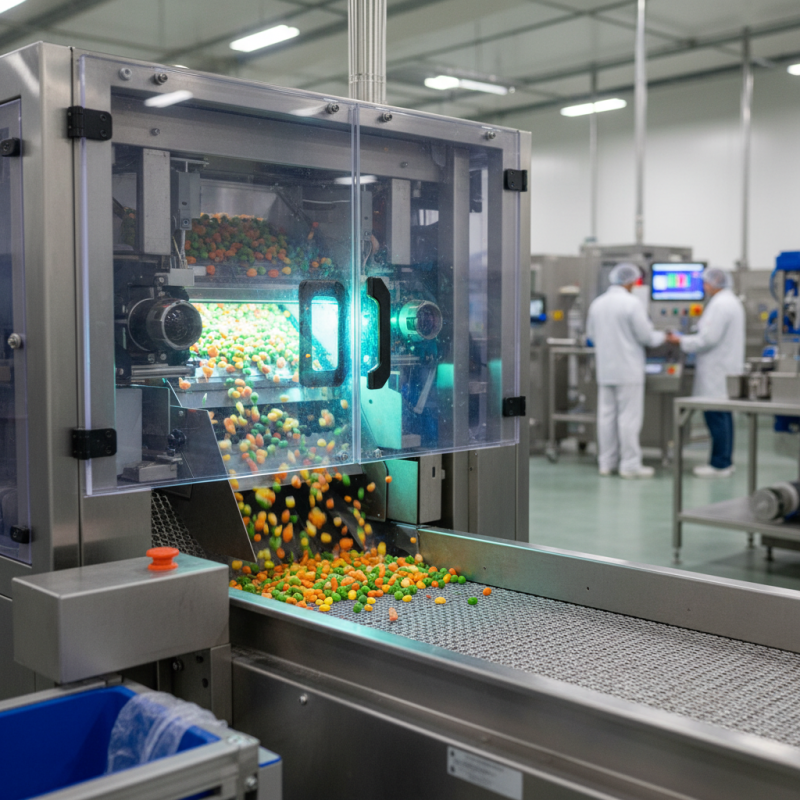
The demand for frozen food has surged globally. Consumers seek convenience and variety in their meals. This trend drives up the need for advanced sorting technology in food processing. Companies are now focusing on optical sorters to ensure quality and minimize waste. These machines utilize cameras and sensors to detect imperfections and contaminants, enhancing overall safety.
However, the effectiveness of these systems relies on continuous innovation. Manufacturers face the challenge of keeping up with technological advancements. There are ongoing discussions about the balance between automation and human oversight. Integrating AI into sorters could boost accuracy but requires skilled personnel for management.
Market trends show that buyers prioritize efficiency and reliability in sorting equipment. Cost considerations also play a role. Companies must justify the investment in high-tech machinery. Understanding food safety regulations and consumer preferences is essential. This knowledge will help navigate market complexities and maintain a competitive edge.
Key Features and Technologies in Frozen Food Optical Sorting Machines
Frozen food optical sorting machines play a vital role in ensuring product quality. These machines utilize advanced technologies to detect and separate unwanted materials from high-quality food items. They employ sophisticated imaging systems to identify defects, discoloration, and foreign materials. Precision in these processes is essential for maintaining product integrity.
Key features include high-resolution cameras and infrared sensors. These components work together to analyze each piece of food in real time. The technology can differentiate between various types of fruits, vegetables, and proteins. Color sorting helps eliminate products that do not meet specific standards. However, achieving perfect sorting remains a challenge.
Moreover, machine learning algorithms enhance sorting capabilities over time. The more these machines operate, the smarter they become. Yet, there are still instances where they may misidentify some products. Inconsistent lighting or product variations can lead to errors. Continuous calibration and operator training are crucial to improve accuracy. Understanding these nuances can guide buyers in making informed decisions.
Leading Manufacturers of Optical Sorters in the Frozen Food Industry
Optical sorters play a crucial role in the frozen food industry. They ensure that only the best products reach consumers. The technology identifies and eliminates defective items, making the process efficient and reliable. Leading manufacturers focus on innovation to enhance sorting accuracy. Their expertise lies in creating machines that can handle diverse frozen food materials.
Certain features are essential in these machines. High-resolution cameras capture detailed images of products. Advanced algorithms analyze these images quickly. The best optical sorters minimize waste and maximize quality. Yet, challenges remain. Some manufacturers struggle with the diversity of food shapes and sizes. Continuous advancements are needed to address these variations.
In addition, training staff to effectively use these machines can be challenging. Proper maintenance is necessary for optimal performance. Manufacturers must also consider the cost of operational efficiency. Buyers should seek equipment that balances quality and expense. Collaborating with knowledgeable suppliers can lead to better choices in this competitive market.
Best Frozen Food Optical Sorter for Global Buyers
| Manufacturer Region | Sorting Technology | Output Capacity (kg/h) | Accuracy (%) | Features |
|---|---|---|---|---|
| North America | Laser & Camera | 3000 | 98 | Multi-spectral imaging |
| Europe | Line Scan Camera | 2500 | 99 | Adaptive learning |
| Asia | Hyperspectral Imaging | 3500 | 97 | Real-time data processing |
| South America | CCD Cameras | 2000 | 95 | Compact design |
| Africa | Near Infrared Detection | 1800 | 92 | Versatile for various products |
Comparative Analysis of Sorting Accuracy and Efficiency in Optical Sorters
When selecting the best frozen food optical sorter, sorting accuracy and efficiency are crucial. These machines utilize advanced technology to identify and separate various food items. However, variations exist in their performance. Factors such as lighting conditions, food surface texture, and color impact sorting quality. Even minor inconsistencies in these factors can lead to mis-sorted products, affecting overall reliability.
In comparative analysis, one may find that different models yield diverse results. Some sorters manage to maintain high accuracy rates but may sacrifice speed. Others excel in throughput but struggle with precise sorting of similar items. This creates a dilemma for buyers. They must weigh the importance of accuracy against efficiency depending on their operational needs. It’s possible that a sorter perfect for one facility might not meet the unique demands of another.
Implementation of optical sorting technology also presents challenges. Maintaining cleanliness is essential for optimal performance. Residue on lenses can compromise detection capabilities. Regular maintenance often gets overlooked, leading to degraded performance over time. A well-rounded approach should consider both machinery performance and human oversight to ensure the best possible outcomes in sorting frozen foods.
Cost-Benefit Analysis of Implementing Optical Sorting in Frozen Food Processing
In the frozen food industry, optical sorting technology has emerged as a game changer. This process enhances quality control by using advanced sensors to identify defects or contaminants. It evaluates each piece of food based on color, size, and shape. Ultimately, this saves time and boosts productivity. Implementing such systems can lead to more efficient operations.
The initial cost of these optical sorters can be significant. For small to mid-sized processors, this investment might seem daunting. However, reduced labor costs and fewer product returns can offset the expenses. In a cost-benefit analysis, increased yield from better sorting can improve profitability. Yet, potential buyers must consider ongoing maintenance and training expenses.
Adapting to new technology requires a cultural shift in management and staff. Resistance to change can hinder progress. Companies should provide adequate training and support for their employees. The long-term gains are clear, but the transition may present obstacles. Careful planning and realistic expectations are crucial for success.