
What Is the Best Louvered Pergola in 2026?
A Louvered Pergola can turn a sunlit patio into a more comfortable outdoor room, but the best choice depends on how you use that space. Some homeowners want adjustable shade for afternoon meals. Others need dependable rain protection, simple controls, and a frame that suits a narrow deck. A polished product photo cannot answer every practical question. The details matter: louver range, drainage design, dimensions, materials, installation needs, and the warranty behind the finish.
This guide explores what makes a pergola stand out in 2026 and how to compare models without relying on vague promises. We’ll look at manual and motorized options, smart controls, weather performance, maintenance, and overall value. Check published wind and snow ratings against your local conditions, and confirm what the manufacturer’s warranty actually covers. Ask how water exits the structure; a small channel or poorly placed downspout can affect where you sit. That matters. No single model is best for every patio, and product specifications can be incomplete or difficult to compare. I may give too much attention to hardware, while everyday comfort is harder to measure. Still, a careful checklist makes the decision clearer—and helps you choose a pergola that fits your home, budget, and real outdoor routine.
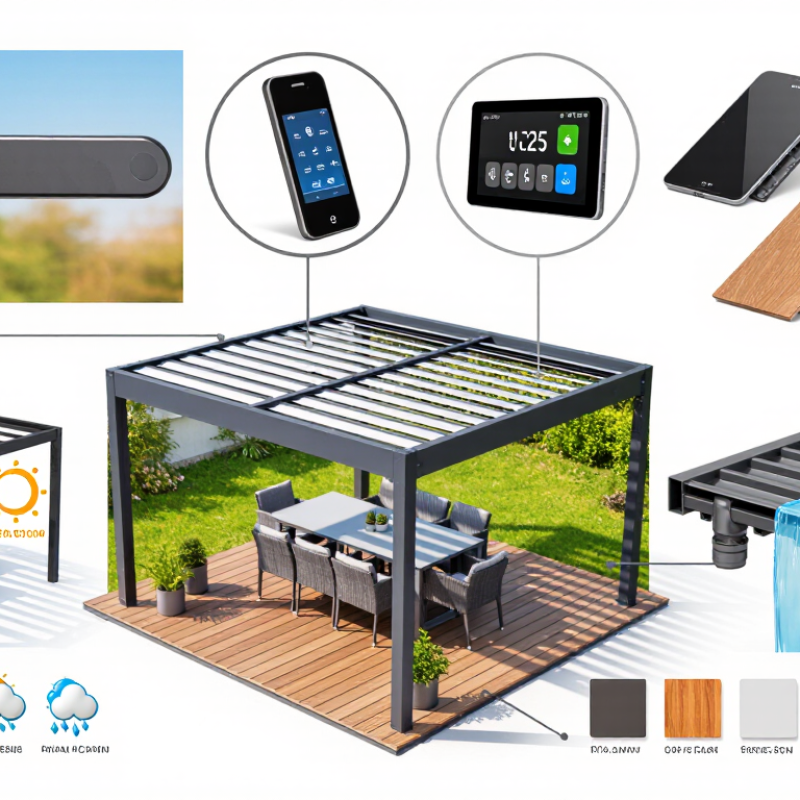
Define Louvered Pergolas by Roof Design, Frame, and Integrated Drainage
What Is the Best Louvered Pergola in 2026?
A louvered pergola is best judged by how its roof, frame, and drainage work together. Rotating louvers let you adjust shade and airflow; closed blades can direct rain toward integrated gutters. Check how fully the blades close and whether water escapes at the corners. Small gaps matter. The American Society of Landscape Architects’ 2023 Residential Landscape Architecture Trends Survey identified outdoor living spaces as a leading residential design feature, reported by 76% of respondents. That signals interest in usable outdoor rooms, not a specific Pergola Design.
Frame strength matters when louvers are open to wind or carry wet snow. Compare the maker’s stated load ratings and ask whether they reflect local conditions. NOAA’s Atlas 14 precipitation-frequency data provides rainfall estimates by location, useful when assessing whether a gutter and outlet plan suits your site. Look for concealed channels, accessible cleanouts, and downspouts that discharge away from posts and foundations. Test the controls, too. A smooth demo is not proof of long-term performance. No design is maintenance-free; leaves and grit can still clog narrow drains. A practical choice balances adjustable shade, a sturdy frame, and drainage you can inspect and clear.
Compare Wind and Snow Ratings Against ASCE 7 Design Loads
What Is the Best Louvered Pergola in 2026?
The best louvered pergola is not simply the one with the highest advertised wind speed. Its rating must match your site’s design loads. ASCE 7-22 provides procedures and hazard maps for wind and snow loads, with values affected by location, risk category, exposure, and building geometry. Wind ratings may use different test methods, so an advertised speed is not automatically comparable to an ASCE design wind speed. Ask for the stamped engineering documents and the test standard behind each claim.
Snow needs equal care. ASCE 7 distinguishes ground snow load from roof snow load; roof shape, exposure, and thermal conditions affect the design value. A louvered roof’s open position may shed snow, but it does not prove the frame can resist accumulated snow when closed. Check the manufacturer’s documented capacity against site-specific loads, including connections and supports. Small details matter: a strong beam can still depend on weak anchors.
Tips: Use the ASCE Hazard Tool for your project location, then have a qualified local design professional verify the applicable loads. Compare like with like: units, load type, louver position, and test method. If documentation is vague, pause. I would not treat a marketing chart as a structural calculation.
What Is the Best Louvered Pergola in 2026? Compare Wind and Snow Ratings Against ASCE 7 Design Loads
Wind bars show reference velocity pressure calculated using the ASCE 7 equation qz = 0.00256 Kz Kzt Kd Ke V², with all coefficients set to 1.0 for illustration. Actual design pressures depend on the site, exposure, building geometry, and other factors. Snow bars are example ground snow load inputs—not regional requirements or roof snow loads. Wind and snow values are not interchangeable; verify local code loads and product-specific engineering documentation before choosing a pergola.
Assess Structural Performance Using ASTM E330 Test Data
When comparing louvered pergolas in 2026, look beyond attractive photos and ask for structural test data. ASTM E330 evaluates how an assembly responds to uniform static air pressure. For a pergola, the useful question is not simply whether it was tested, but what exact configuration was tested.
Check the report for the tested span, post and beam dimensions, louver position, connection details, and applied pressure. These details matter. A result from a short, reinforced test frame may not represent a wider installation with different footings. Note both deflection under load and any permanent deformation after pressure is removed. Numbers matter.
Still, one detail is easy to miss: an E330 result does not automatically establish performance for every site or storm condition. It reflects the specimen and test setup described in the report. Ask whether the tested assembly matches the model and dimensions you are considering, and whether an engineer has reviewed the proposed installation. A clear report is reassuring, but it is not a substitute for sound anchoring and site-specific design. That distinction can be easy to overlook when comparing products.
Compare Aluminum Frames and Coatings by ASTM B221 and AAMA Standards
What Is the Best Louvered Pergola in 2026?
For a louvered pergola, frame strength and coating durability deserve separate checks. ASTM B221 specifies requirements for aluminum-alloy extruded profiles, including mechanical properties and dimensional tolerances. It does not certify a complete pergola or guarantee corrosion resistance. Ask for the alloy and temper, plus documentation showing the supplied extrusions meet the specification. A thicker-looking beam alone proves little.
Coatings need their own evidence. The Fenestration and Glazing Industry Alliance’s AAMA 2604 and 2605 standards set performance requirements for organic coatings on aluminum. Their weathering tests include five- and ten-year exposure periods in South Florida, respectively. These are test benchmarks, not promises of equal service life at every home. Sun exposure, coastal salt, cleaning habits, and installation details all matter. Ask which standard the finish meets, and request test documentation rather than relying on a color sample.
Inspect the small details. Look for even coating inside visible channels, sealed fastener points, and drainage paths that will not trap water. Ask how cut edges are protected; they can be easy to overlook. Still, standards cannot tell you how carefully a specific frame was assembled. That part takes a closer look.
Rank 2026 Options by Climate Fit, Controls, Warranty, and Installed Cost
In 2026, rank pergolas by the weather they must handle, not by appearance alone. For coastal or windy sites, place reinforced aluminum frames with engineered drainage near the top. Check the stated wind limits and anchoring requirements; a strong frame cannot compensate for weak footings. In hot, dry climates, adjustable louvers that create reliable shade may matter more than extra automation. Snowy regions need clear guidance on closing louvers before storms. Snow adds real weight.
Controls come next. A motorized system with a rain sensor can close louvers during a sudden shower, while a manual crank costs less and has fewer components to maintain. Wind sensors are useful, but they do not replace secure installation or sensible storm procedures. Ask whether controls work during a power outage, and whether replacement parts remain available. These details are easy to overlook in a showroom.
Compare warranty coverage by component: frame, finish, motor, and electronics may have different terms and exclusions. Then compare installed quotes, not just kit prices. Include foundations, wiring, delivery, drainage changes, and labor. Costs vary by site, so a single online estimate can mislead. Request an itemized quote and confirm what is excluded. I would rank a simpler model higher when its climate rating, service access, and written coverage are clearer, even if its control panel looks less impressive. A little less flashy, perhaps.