
10 Best Wooden Doors for Global Buyers
Choosing among the 10 best Wooden Doors takes more than admiring a rich oak grain or a smooth walnut finish. A door must suit its opening, climate, use, and maintenance needs. A solid front door may offer a substantial feel, while an engineered construction can help manage movement as humidity changes. Details matter. Check the frame, seals, hardware preparation, finish, and stated performance—not just the product photograph.
Architect Mies van der Rohe’s often-cited principle, “Less is more,” offers a useful design lens. It is not a door-buying rule, but it reminds buyers to weigh proportion and material honestly. A clean panel can age well. Ornate carving can, too, when it suits the building. Neither choice guarantees quality. Ask for clear specifications and samples. Feel the finish. Inspect the edges. Small flaws show there.
Global buyers also need to compare the same details across suppliers. Confirm wood species, construction, dimensions, finish options, packaging, lead time, and available test documentation. Requirements and climate conditions differ by destination, so verify local project specifications with qualified professionals. One overlooked point: a beautiful door can still disappoint if its frame or installation is poor. This guide compares ten options through practical criteria, while recognizing that no single style fits every home or project. Some trade-offs remain. That deserves a second look.
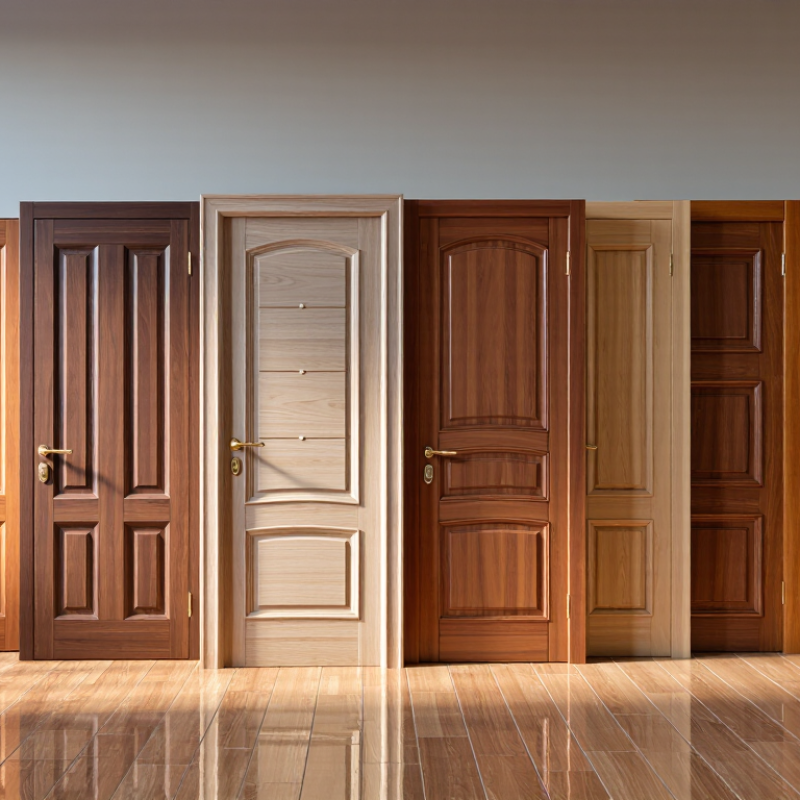
How to Rank 10 Wooden Door Types by Use, Climate, and Construction
10 Best Wooden Doors for Global Buyers
How to Rank 10 Wooden Door Types by Use, Climate, and Construction
Rank doors by where they will work, not by appearance alone. For busy interior spaces, solid-core and flush-veneer doors offer practical everyday choices. Stile-and-rail and panel doors suit rooms where visible detail matters. Engineered-timber and laminated doors can improve dimensional stability. Louvered designs allow airflow; sliding, folding, and pivot doors help manage tight layouts. For exposed entrances, consider insulated, weather-sealed wood construction. These ten types serve different needs. No single ranking fits every home.
Climate changes the decision. In humid or seasonally variable conditions, ask about core construction, moisture protection, and installation requirements. USDA Forest Products Laboratory’s Wood Handbook: Wood as an Engineering Material (FPL-GTR-282, 2021) explains that wood movement varies by grain direction, with tangential shrinkage generally greater than radial shrinkage. That matters when a door meets a narrow frame. A beautiful fit can still bind after a damp season. Treat species, finish, and local exposure as a system, not separate details.
Tips: Check the door’s intended interior or exterior use, seal exposed edges, and allow materials to acclimate before installation. Ask for documented construction details, not just a “solid wood” label. A ranking is useful, but it can mislead when climate and workmanship are overlooked.
Compare Solid-Wood, Engineered, and Veneered Doors by Core and Finish
Solid-wood doors show natural grain and can often be repaired, but their performance depends on species, construction, and moisture control. In humid rooms, seasonal swelling may affect clearances and latch alignment. Check how the door was dried and assembled. Wood moves.
Engineered doors use layered components or a stable core to limit movement. Their faces may be wood veneer, laminate, or another finish, so ask what lies beneath the surface. A dense core can feel substantial and help reduce sound transfer, though the result also depends on thickness, seals, and installation. Inspect an edge sample; it can reveal more than a polished product photo.
Veneered doors offer real-wood character with less solid timber at the face. Grain matching varies, and thin veneer can be harder to refinish after deep scratches. Finish matters, too: matte coatings tend to show fewer fingerprints, while glossy surfaces make marks and uneven grain easier to notice. Request samples in natural light, then compare color, edge treatment, and finish consistency. A sample is not the whole door. Check the specification for core material, veneer thickness, and compatible cleaning methods before ordering. It is easy to focus on appearance and overlook those details.
10 Best Wooden Doors for Global Buyers — Compare Solid-Wood, Engineered, and Veneered Doors by Core and Finish
A practical comparison of common door constructions. Performance depends on the full door assembly, manufacturing quality, installation, climate, and applicable local standards. “Best” is use-dependent rather than a universal ranking.
| Door Type | Typical Core / Construction | Common Finish | Key Advantages | Limitations to Consider | Suitable Uses | Buyer Checks |
|---|---|---|---|---|---|---|
| 1. Solid Oak Door | Solid oak boards or a solid-wood stile-and-rail construction. | Clear or tinted stain, oil, or paint. | Distinctive grain; can be sanded and refinished when the construction and remaining material allow. | Heavier and generally more affected by humidity changes than stable engineered constructions; quality and movement depend on drying and assembly. | Interior rooms, entrances, and traditional or contemporary interiors where natural grain is desired. | Confirm whether the door is solid throughout or has engineered components; check moisture content, joinery, finish coverage, and local entry-door requirements. |
| 2. Solid Walnut Door | Solid walnut boards or a solid-wood frame-and-panel construction. | Clear, natural, or lightly tinted finish to show the grain. | Rich natural color and grain; suitable for feature interiors. | Typically a premium material; natural color variation is normal, and direct sunlight can change appearance over time. | Interior feature doors, offices, and high-visibility residential spaces. | Request a representative sample, clarify allowable color variation, and check whether the finish includes UV protection if exposed to strong sunlight. |
| 3. Solid Pine Door | Solid softwood boards, often assembled as a frame-and-panel door. | Paint, clear varnish, stain, or oil. | Often lighter than dense hardwood options and can be painted or finished to suit many interiors. | Softwood can dent more readily than many hardwoods; knots and grain can affect appearance and finishing. | Interior rooms and projects where a paintable or naturally grained softwood door is suitable. | Check knot treatment, board quality, surface preparation, and whether the door is intended for interior or exterior exposure. |
| 4. Engineered Solid-Core Door | Engineered wood frame with a dense core, which may use wood blocks, particleboard, or other specified core materials. | Paint, laminate, or wood veneer. | Generally provides a more substantial feel than a hollow-core door; engineered construction can improve dimensional consistency. | Weight and performance vary by core; not every solid-core door is sound-rated or fire-rated. | Bedrooms, offices, and interior locations where a heavier-feeling door is preferred. | Ask for the core specification, finished weight, permitted hardware, and documented acoustic or fire performance if required. |
| 5. Engineered Hollow-Core Door | Light frame with a honeycomb or other lightweight internal core and thin face panels. | Paint, laminate, or thin veneer, depending on the product. | Lightweight and often economical for standard interior applications. | Usually offers less sound reduction and impact resistance than a comparable solid-core door; hardware fixing options may be limited. | Interior closets and low-impact areas where low weight and cost are priorities. | Check hinge and lock reinforcement, trimming limits, face-panel material, and suitability for the intended traffic level. |
| 6. Natural Wood-Veneer Flush Door | Thin natural-wood veneer bonded to an engineered substrate, commonly over a solid or hollow core. | Clear lacquer, varnish, or another transparent protective finish. | Provides a real-wood surface with a more uniform, modern appearance; veneer can use wood efficiently. | Veneer is thin and may not tolerate deep sanding; color and grain can vary between leaves or batches. | Contemporary interiors, hotels, and projects requiring coordinated flat-panel doors. | Confirm veneer species, thickness, matching method, core type, edge treatment, and whether repairs or refinishing are possible. |
| 7. Reconstituted-Veneer Flush Door | Engineered substrate faced with manufactured veneer made from recomposed wood fibers or layers. | Clear or tinted protective coating. | Can provide a more consistent grain pattern and color across multiple doors than natural veneer. | Appearance differs from natural grain; the substrate and surface finish determine durability and repair options. | Large interior projects that need a coordinated, repeatable wood-look finish. | Request a full-size or representative finish sample and verify the stated veneer material, core, edge construction, and cleaning instructions. |
| 8. Stile-and-Rail Engineered Wood Door | Engineered stiles and rails surrounding floating or fixed panels; panel material varies by specification. | Paint, stain, or wood veneer. | Offers a traditional panelled appearance; engineered components can help limit movement compared with some all-solid constructions. | Panel design, joints, and materials differ between products; not all versions are suitable for exterior exposure. | Residential interiors and entrances where a panelled style is desired. | Check whether panels are solid, veneered, or composite; confirm exposure rating, joint quality, and finish suitability for the location. |
| 9. Molded-Skin Engineered Door | Molded hardboard or fiberboard faces over a lightweight or solid core, commonly with a shaped panel profile. | Factory primer followed by paint, or a factory-applied coating. | Can reproduce a panelled look at relatively low weight; primed faces are convenient for painted interiors. | The molded face is not a solid-wood surface; damaged skins can be difficult to repair invisibly. | Painted interior doors in residential and multi-unit projects. | Verify face material, core type, paint preparation, edge sealing, and permitted trimming dimensions. |
| 10. Moisture-Resistant Engineered Wood Door | Engineered wood construction with moisture-resistant components and sealed edges; exact core and face materials vary. | Paint, laminate, or a specified moisture-resistant coating. | Designed for locations with greater humidity exposure than ordinary interior doors when installed and maintained as specified. | “Moisture-resistant” does not mean waterproof; standing water, unsealed cuts, and unsuitable installation can cause damage. | Bathrooms, utility areas, and humid interiors where the product is explicitly approved for the conditions. | Check the manufacturer’s exposure limits, edge-sealing requirements, ventilation guidance, and any local building or fire rules. |
Check Fire Labels: Common Ratings Span 20 to 90 Minutes Under Test Standards
10 Best Wooden Doors for Global Buyers
Fire labels deserve close attention when comparing wooden doors. Common fire-protection ratings include 20, 45, 60, and 90 minutes. NFPA 80’s opening-protective provisions cover these rating classes, while NFPA 252 and UL 10C describe fire-test methods for door assemblies. These numbers indicate performance under specified test conditions, not a guarantee for every building or fire.
The label should match the door, frame, glazing, and hardware as a tested assembly. A 60-minute door fitted with unapproved hardware may not retain its rated performance. NFPA 80 also addresses installation and maintenance, so inspect the label and verify the complete specification with the supplier and local building professional. Details matter. A label can look reassuring, but it does not replace correct installation or routine checks.
Tips: Photograph the label before purchase. Confirm its rating, listing information, and compatibility with the frame and hardware. Then check that the required rating suits the project’s code and location.
Example Fire-Door Ratings (Minutes)
These values represent example rated durations, not a ranking of door quality. A fire rating applies to a tested door assembly, including its frame and hardware; available ratings and requirements vary by product and local code.
Verify Moisture Content: 6–12% Is a Common Benchmark, Not a Global Rule
A moisture reading can help explain why a wooden door later swells, sticks, or develops uneven gaps. Yet 6–12% is a useful reference range, not a universal specification. Timber adjusts to the humidity of its surroundings. A door destined for a heated, dry interior may need a different target from one installed in a humid coastal home. Local climate matters.
Ask how and where the reading was taken. A handheld meter used on the door’s surface may not reveal moisture deeper inside the stiles or rails. Species, temperature, and meter settings can also affect results. That matters. Request the measurement method, sampling locations, and the supplier’s recommended range for your destination and installation conditions. Compare like with like.
A practical check is to measure several areas, including near the bottom rail, and record the results before shipment. After delivery, allow the door to acclimate as advised before fitting it. Not a guarantee. Even careful checks can miss differences between the core and surface, and a reading may change during storage. I would not reject a door based on one number alone; ask how the value relates to the room where it will be used.
Assess FSC Certification, Dimensions, Installation, and Total Cost Across Markets
For global buyers, a wooden door is not just a panel; it is a measured opening, a shipment, and a long-term maintenance choice. FSC’s 2023 Facts and Figures report describes more than 160 million hectares of certified forest across over 80 countries. That scale is useful, but a certificate alone does not prove that every component in a door is covered. Check the certificate scope and product claim, including the frame and veneer where relevant. Ask for traceable documents. Paperwork matters.
Dimensions can derail an otherwise sound order. Measure the structural opening, wall thickness, floor finish, and hinge side; do not rely only on a nominal “standard” size. A 10-millimetre mismatch may mean site trimming, extra labor, or a door that will not seal properly. Local conventions for handing, jamb depth, and fire or acoustic performance also differ. Confirm them with the installer before production, not after the crate arrives.
Compare the landed cost, not just the factory price. Include crating, freight, duties, local delivery, hardware, installation, and likely refinishing. UNEP’s 2023 Global Status Report says buildings and construction generated 37% of global energy- and process-related CO₂ emissions in 2022; material sourcing is one part of that wider impact. Request moisture and finish specifications, especially for humid or coastal sites. A spreadsheet helps, but it can still miss delays, damage, or local labor rates. Leave room for those uncertainties.