
China Best Fitting Quick Connect Manufacturers

Finding the China Best Fitting Quick Connect Manufacturers requires more than comparing catalog prices. It requires evidence of consistent engineering, controlled production, and dependable after-sales support. A reliable supplier should explain material choices, sealing methods, pressure ratings, and connection compatibility clearly. These details matter when a fitting operates inside a compact hydraulic line, pneumatic cabinet, or fluid transfer system.

Experience reveals practical differences. A quick connect that looks polished may still leak after repeated coupling cycles. Strong manufacturers test samples under pressure, temperature changes, vibration, and contamination conditions. They also maintain traceable inspection records for dimensions, threads, seals, and surface treatment. Ask for test reports. Ask for samples. Then compare the results with your actual working environment.

Fitting Quick Connect products from China can serve many industries, including automation, machinery, medical equipment, agriculture, and transportation. However, “best” is never universal. A brass fitting may suit moderate water service, while stainless steel may better resist corrosion. A compact design may save installation space, yet reduce accessibility during maintenance. These trade-offs deserve honest discussion.

Qualified manufacturers usually support custom thread standards, branding, packaging, and small engineering adjustments. Their technical teams should respond with drawings, tolerance information, and clear production timelines. Certifications can help, but certificates alone do not prove long-term performance. That point is easy to overlook.

This guide introduces leading Chinese manufacturers through practical selection criteria. It considers manufacturing experience, quality systems, product range, customization ability, communication, and delivery reliability. Some suppliers may appear impressive at first. Careful verification still matters. The right partner should fit your application, not merely your purchasing budget.
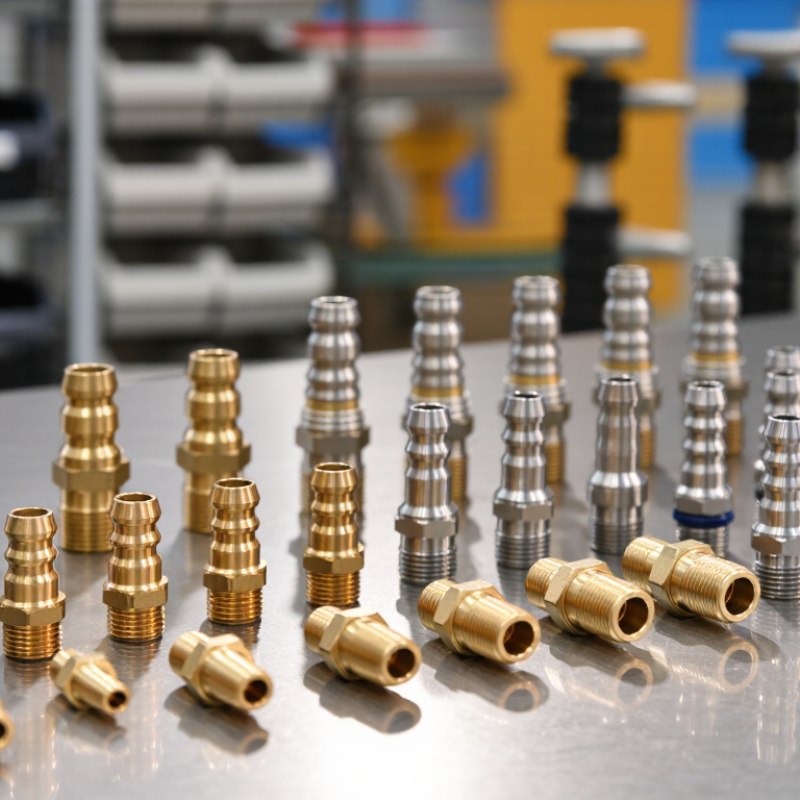
China Best Fitting Quick Connect Manufacturers

Quick-Connect Fittings: Types, Functions, and ISO 7241 Standards

China Best Fitting Quick Connect Manufacturers

Quick-connect fittings join hydraulic lines without lengthy tools or complicated procedures. Common designs include ball, poppet, and flat-face couplings. Each type controls fluid flow differently during connection and disconnection. Ball couplings suit general hydraulic service and tolerate moderate contamination. Poppet designs provide dependable shutoff, but trapped pressure can prevent connection. Flat-face couplings reduce fluid loss and limit air entering the circuit.

ISO 7241 defines dimensional requirements and performance tests for hydraulic quick-action couplings. Its main groups are Series A and Series B. These series support interchangeability when manufacturers follow the specified dimensions. However, ISO 7241 compliance does not automatically confirm suitability for every application. Engineers must still check working pressure, temperature, fluid compatibility, and flow capacity. Small details matter.

Field inspections often reveal damaged seals, worn locking balls, or partially engaged sleeves. These faults may cause leakage or sudden separation. A clean connection helps, but cleanliness alone is not enough. Operators should inspect sealing surfaces before assembly. They should also verify that the sleeve locks fully after connection. I have seen fittings selected correctly but installed with unsuitable hose routing. That mistake created side loading and early wear. Thread type, material, and seal compound also deserve careful review. A fitting may meet the standard and still perform poorly in a badly designed system.

Key Specifications: 10–700 bar Ratings, Flow Rates, Materials, and Seals

China Best Fitting Quick Connect Manufacturers

Selecting Quick Connect Fittings requires more than comparing catalog prices. Working pressure may range from 10 to 700 bar, depending on design, size, and connection method. A fitting rated for 700 bar needs careful assembly and verified pressure testing. Lower-pressure pneumatic systems may prioritize easy handling and fast cycling.

Flow rate is equally important. A small coupling can create noticeable pressure loss when fluid demand rises. Manufacturers should provide tested flow data, pressure-drop curves, and recommended hose sizes. Stainless steel suits corrosive environments, while carbon steel offers strong performance in demanding hydraulic equipment. Brass can work well in moderate-pressure systems. Engineering polymers may reduce weight, but their temperature and impact limits need closer review.

Seal selection should match the medium and operating temperature. NBR often supports general hydraulic applications, while FKM handles higher temperatures and many oils. EPDM is useful with water-based fluids but may react poorly with petroleum oils. PTFE offers broad chemical resistance, although it may need an energizing design for reliable sealing. Small details matter.

In practical inspections, threads, locking sleeves, and valve alignment deserve attention. A coupling can look precise and still leak after repeated connection cycles. Our evaluation process is not flawless; field feedback sometimes challenges laboratory assumptions. Reliable manufacturers document material certificates, batch testing, dimensional checks, and replacement seal specifications before shipment.

China Best Fitting Quick Connect Manufacturers - Key Specifications: 10–700 bar Ratings, Flow Rates, Materials, and Seals

Typical specification ranges for commonly manufactured quick-connect couplings. Final ratings depend on coupling size, connection type, temperature, fluid compatibility, and applicable standards.

Coupling Type Common Standard Nominal Size Working Pressure Typical Flow Rate Body and Sleeve Materials Typical Seal Materials Typical Applications
Mini hydraulic poppet coupling ISO 7241-A, compact series DN 5–10
1/4–3/8 in
10–250 bar 5–25 L/min Carbon steel with zinc plating; stainless steel option NBR standard; FKM for elevated temperature and selected fluids Compact hydraulic tools, agricultural equipment, mobile machinery
General-purpose hydraulic poppet coupling ISO 7241-A DN 10–25
3/8–1 in
10–315 bar 20–100 L/min Hardened carbon steel; stainless steel 304 or 316 option NBR, FKM, EPDM option for compatible water or chemical service Hydraulic power units, loaders, tractors, construction equipment
Industrial hydraulic ball coupling ISO 7241-B DN 6–25
1/4–1 in
10–250 bar 15–100 L/min Carbon steel with protective plating; stainless steel option NBR standard; FKM and EPDM available for specified media General hydraulic circuits, molds, material-handling systems
Flat-face hydraulic coupling ISO 16028 DN 6–25
1/4–1 in
10–420 bar 10–200 L/min Hardened steel with zinc-nickel or zinc plating; stainless steel option NBR standard; FKM for higher temperature service Excavators, skid-steer loaders, forestry machines, high-cleanliness circuits
Screw-to-connect hydraulic coupling ISO 14541 / ISO 14540 DN 6–20
1/4–3/4 in
250–700 bar 5–100 L/min High-strength alloy steel; corrosion-resistant plating NBR standard; FKM for high-temperature applications High-pressure jacks, rescue tools, tensioners, test equipment
Hydraulic screw coupling with residual-pressure capability ISO 14540-type design DN 6–12
1/4–1/2 in
350–700 bar 2–40 L/min Heat-treated alloy steel; stainless steel option for corrosive environments Polyurethane backup elements with NBR or FKM primary seals High-pressure maintenance tools and industrial hydraulic systems
Thermoplastic low-pressure coupling Manufacturer-specific industrial profile DN 5–12
1/4–1/2 in
10–30 bar 5–40 L/min Acetal, polyamide, or glass-filled engineering polymer; stainless steel valve EPDM for water; NBR for air and oil; FKM for selected chemicals Coolant lines, laboratory equipment, fluid transfer, light-duty automation
Pneumatic quick-connect coupling ISO 6150-B or ISO 4414-compatible profile DN 5–15
1/4–1/2 in
10–16 bar 300–2,000 L/min at 6 bar Nickel-plated brass, aluminum, or engineered polymer NBR standard; EPDM or FKM for specified air and chemical conditions Compressed-air tools, pneumatic controls, factory automation
Stainless-steel process coupling ISO 7241-compatible or application-specific profile DN 6–25
1/4–1 in
10–200 bar 10–150 L/min Stainless steel 316 or 316L; electropolished option FKM, EPDM, PTFE, or FFKM selected according to process media Food processing, chemical transfer, water treatment, instrumentation
Thermal-fluid quick coupling Application-specific industrial profile DN 8–25
3/8–1 in
10–40 bar 15–180 L/min Brass, carbon steel, or stainless steel; anti-corrosion coating available EPDM for water and glycol; FKM for compatible heat-transfer oils Die-temperature control, chillers, injection molding, heat exchangers
Technical note: Pressure and flow figures are representative engineering ranges, not universal limits. The maximum allowable working pressure should be verified against the complete coupling assembly, connection size, fluid, operating temperature, impulse cycles, and the applicable product test requirements.

China Manufacturer Evaluation: ISO 9001, IATF 16949, and OEM Capacity

China Best Fitting Quick Connect Manufacturers should be evaluated beyond product photographs and low quotations. ISO 9001 shows that a manufacturer controls documented processes, inspections, corrective actions, and customer feedback. Ask for the certificate scope and validity date. A framed certificate alone proves little. Request recent audit records, inspection plans, and sample quality reports.

For automotive applications, IATF 16949 indicates stronger process discipline and risk management. Check whether it covers the actual factory making the fittings. Review traceability from raw material batches to finished cartons. Useful evidence includes dimensional reports, pressure testing records, leak-test results, and nonconformance handling. Small details matter. A missing revision number can create confusion.

OEM capacity requires practical verification. The supplier should understand drawings, tolerances, sealing materials, connection standards, tooling, and packaging requirements. Ask how it manages prototype samples, design changes, production approval, and stable monthly output. PPAP support can be important for automotive projects. However, capacity claims may be optimistic. Compare machine lists with staffing, inspection equipment, lead times, and recent production records. A factory may offer engineering support, yet struggle with urgent revisions. That weakness deserves discussion, not concealment. A controlled trial order, clear acceptance criteria, and documented communication can reveal more than a polished presentation.

China Best Fitting Quick Connect Manufacturers — Manufacturer Evaluation Benchmark

This 100-point reference model evaluates quick-connect fitting manufacturers by quality-system certification, automotive quality management, OEM engineering capability, process traceability, and product validation. It is an industry evaluation framework and does not represent any specific company or brand.

ISO 9001 supports consistent quality-management processes, while IATF 16949 adds automotive-specific requirements such as risk management, traceability, and defect prevention. OEM readiness covers engineering support, tooling, validation, documentation, and scalable production.

Quality Testing: ISO 19879, Cycle-Life Tests, Leakage Limits, and Corrosion Control

China Best Fitting Quick Connect Manufacturers

Quality testing separates a dependable quick connect from a polished imitation. A professional manufacturer should use ISO 19879-aligned procedures where applicable. Each fitting needs traceable material records, dimensional checks, and controlled assembly conditions.

Cycle-life testing should reflect real service, not only laboratory convenience. Technicians repeatedly connect and disconnect samples under rated pressure and temperature. They inspect locking balls, seals, sleeves, and mating surfaces after every test stage. Small defects matter. A fitting may operate smoothly while its seal slowly loses resilience.

Leakage limits must be written before testing begins. Pressure decay, external leakage, and trapped-fluid leakage require separate acceptance criteria. Inspectors should record stabilization time, test medium, pressure, and temperature. Test it cold. Temperature changes can expose seal shrinkage or poor tolerances. A clean report can still hide weak sampling, so destructive inspection remains valuable.

Corrosion control starts with suitable metals, protective coatings, clean storage, and moisture-resistant packaging. Salt-spray results can support evaluation, but they cannot represent every field environment. Manufacturers should examine coating blisters, red rust, pitting, and thread damage under magnification. Some testing plans are too short. That limitation deserves honest documentation, not optimistic wording. Reliable suppliers publish deviations, retain failed samples, and correct root causes before releasing production lots.

Selection Guide by Industry: Hydraulics, Pneumatics, Agriculture, and Construction

China Best Fitting Quick Connect Manufacturers

Choosing quick connects by industry requires more than matching thread size. Pressure, flow, temperature, contamination, and working motion all matter. Experienced buyers should inspect test data, material certificates, and cycle-life results. A fitting that looks correct may still restrict flow or leak under vibration.

Hydraulic systems need strong bodies, reliable seals, and pressure ratings above the real operating range. Steel fittings suit demanding machinery, while stainless steel helps resist corrosion and washdown conditions. Pneumatic equipment usually prioritizes low weight, fast response, and minimal air leakage. Check tube compatibility carefully. A small mismatch can cause repeated disconnections. In agriculture, fittings face mud, fertilizer residue, water, and rough handling. Protective sleeves and easy-clean profiles can reduce maintenance. Construction equipment needs impact resistance and dependable connection under movement. Dust caps matter more than many specifications suggest.

Tips: Ask manufacturers for application-specific samples, not only catalog parts. Measure pressure spikes, not just average pressure. Confirm seal materials against oil, water, chemicals, and outdoor temperatures. Also review replacement availability and inspection procedures. This step is often overlooked. Do not assume the most expensive fitting is the safest choice. I have seen oversized connections reduce efficiency, while cheaper-looking designs performed better after proper testing. Field trials remain valuable, because laboratory conditions rarely reproduce mud, heat, vibration, and hurried maintenance.

CONTACT US