
China Top 10 Tantalum Sheet Manufacturers
China is an important source of tantalum products for industries that need materials built for demanding conditions. tantalum sheet is valued for its corrosion resistance, high melting point, and performance in carefully specified applications. Yet the material name alone tells buyers very little. Thickness, purity, surface finish, and dimensional tolerance can all affect whether a sheet suits a particular design.
This guide introduces ten China-based manufacturers and offers a practical starting point for comparing their capabilities. It considers product range, technical information, quality controls, customization, and communication with customers. Those details matter. A clear specification sheet, for example, can help clarify whether a supplier’s stated thickness range matches a project’s requirements. Product pages and company claims should still be checked directly, since capabilities and certifications may change.
The right supplier depends on the intended use, order quantity, and required documentation. Requesting current test reports and confirming production details can reduce uncertainty before a purchase. No ranking can replace that work. It is also worth remembering that public information may be incomplete, and a polished website is not proof of consistent production quality. Use this overview to identify candidates, ask focused questions, and compare evidence—not just promises. A careful review takes time, but it can reveal differences that a headline cannot.
What Tantalum Sheet Is and Where It Is Used
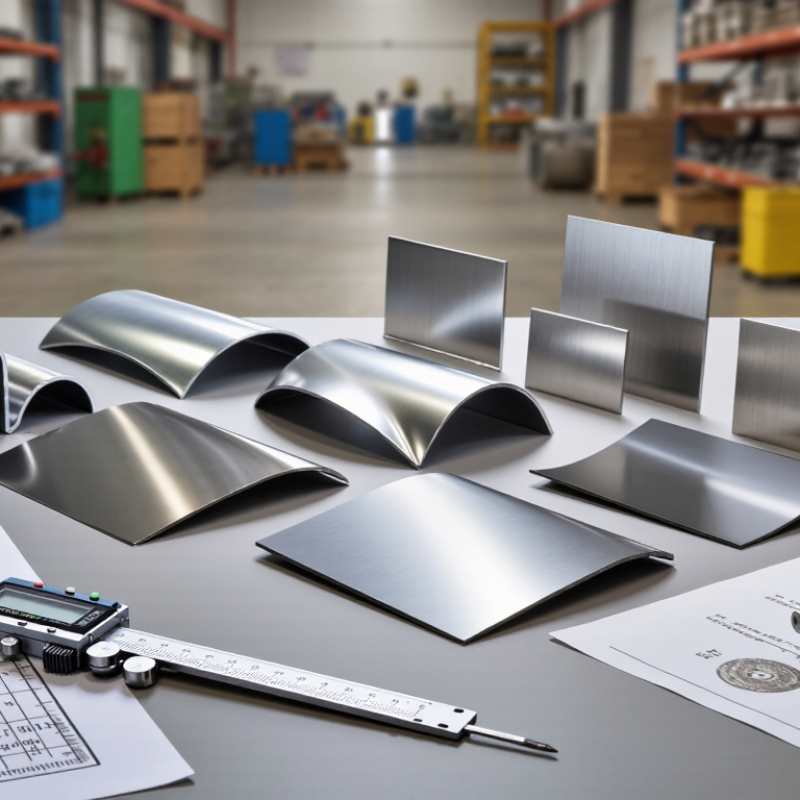
Tantalum sheet is a flat, rolled form of a dense, ductile refractory metal. It can be cut and formed into parts, though thickness, purity, and surface condition affect fabrication. Tantalum melts at about 3,017°C and resists many corrosive environments. Not all, though: process chemistry and temperature still need checking.
Its uses include linings, heat exchangers, and vessel components in chemical processing, where corrosion resistance can extend equipment life. Thin sheet also serves in electronic components and sputtering targets; selected grades are used for medical applications. The USGS Mineral Commodity Summaries 2025 estimates 2024 global mine production at about 2,100 metric tons and identifies electronics, chemical equipment, and superalloys among tantalum’s uses. The report describes tantalum overall, not sheet-specific demand. ASTM B708 covers tantalum and tantalum-alloy plate, sheet, and strip, offering a useful reference when specifying material.
Tip: Match the grade to the actual service environment. Ask for mill test documentation, then verify thickness tolerance and surface finish. A corrosion-resistant label alone is not a design review.
How China’s Tantalum Sheet Manufacturing Industry Is Organized
China’s tantalum sheet industry is organized as a chain, not a single factory category. It begins with imported or domestic tantalum feedstock, which is refined into metal powder or ingots. Specialized processors then consolidate, forge, roll, anneal, and finish the metal. Each stage affects purity, thickness tolerance, and surface quality.
The USGS Mineral Commodity Summaries for 2023 and 2024 estimated global mine production at about 2,000 tonnes in 2022 and 2,100 tonnes in 2023. These figures describe mined tantalum, not sheet output, and should not be mistaken for China’s production capacity. They do show why feedstock access and recovery rates matter. In practice, buyers often assess a supplier’s control over melting, rolling, and inspection, rather than relying on a broad “manufacturer” label. A thin sheet may look simple. It is not.
Downstream demand comes from chemical equipment, electronics, aerospace components, and medical devices, where corrosion resistance and dimensional stability can justify higher processing costs. Small batches matter. Chinese producers may specialize in different steps: some focus on primary metal processing, while others convert supplied stock into custom gauges and cut parts. The boundary is not always clear. That makes traceable material certificates, measured thickness maps, and documented annealing conditions useful when comparing suppliers. Industry structure is therefore better understood through process capability than company count.
China Top 10 Tantalum Sheet Manufacturers - How China’s Tantalum Sheet Manufacturing Industry Is Organized
Industry structure overview: This table maps ten functions in the tantalum-sheet value chain. It is not a verified ranking of ten individual manufacturers; company names and brand data are intentionally omitted, and capabilities vary by producer.
| No. | Industry function | Typical work related to tantalum sheet | Relevant materials or process stages | Common specification or quality considerations |
|---|---|---|---|---|
| 1 | Raw-material and feedstock supply | Supplies tantalum-bearing materials or processed feedstock to downstream metal producers. | Tantalum concentrates, intermediate materials, and recycled tantalum-bearing scrap. | Material identity, impurity control, traceability, and consistency of feedstock. |
| 2 | Extraction and chemical refining | Converts suitable feedstock into purified tantalum compounds for subsequent metal production. | Hydrometallurgical separation, purification, and preparation of tantalum compounds. | Chemical purity and control of metallic and non-metallic impurities. |
| 3 | Tantalum powder production | Produces tantalum powder, an important intermediate in the wider tantalum materials supply chain. | Powder preparation and processing; powder is a distinct product from sheet. | Powder chemistry and particle characteristics are relevant to powder applications, but do not by themselves establish sheet quality. |
| 4 | Metal consolidation and ingot production | Consolidates tantalum metal feedstock into forms that can be worked into wrought products. | Powder or other suitable metal feedstock; consolidation and melting routes depend on the producer and product requirements. | Ingot integrity, composition, and suitability for downstream forming. |
| 5 | Primary rolling and sheet formation | Reduces tantalum stock through rolling operations to produce plate, strip, or sheet in specified dimensions. | Hot or cold working may be used as appropriate to the material and production route. | Thickness, width, flatness, surface condition, and dimensional tolerances. |
| 6 | Intermediate annealing and heat treatment | Uses controlled heat treatment between forming stages or as a final operation when required. | Annealing schedules are selected according to the material condition and intended properties. | Mechanical condition, grain structure, and consistency across the sheet. |
| 7 | Cutting and surface finishing | Finishes sheet to customer dimensions and prepares edges and surfaces for handling or fabrication. | Slitting, shearing, machining, cleaning, and other specified finishing operations. | Cut-edge quality, surface cleanliness, finish, and protection from contamination or damage. |
| 8 | Inspection and material testing | Checks product characteristics against the purchase specification and applicable material requirements. | Dimensional inspection, chemical analysis, surface examination, and mechanical testing where specified. | Test methods, sampling, acceptance criteria, and inspection records should be agreed between buyer and supplier. |
| 9 | Custom conversion and fabrication | Provides cut-to-size or further-processed sheet for customers with defined component requirements. | Blanking, machining, forming, or other conversion work, subject to the requested design and material condition. | Drawing revision, tolerances, handling requirements, and confirmation that the material condition suits the intended fabrication. |
| 10 | Packaging, documentation, and distribution | Prepares finished sheet for shipment and supplies the associated order and material documentation. | Protective packaging, product identification, packing records, and shipment coordination. | Part and lot identification, quantity, agreed certificates or test reports, and packaging suitable for the shipping route. |
Profiles of Ten Tantalum Sheet Manufacturers in China
This guide profiles ten Chinese tantalum sheet manufacturers through their production strengths, rather than treating “top” as a verified ranking. The profiles distinguish integrated metal processors from precision rolling mills, custom-size suppliers, foil-focused workshops, and producers serving chemical or high-temperature applications. Each profile should be checked for material traceability, stated purity, thickness tolerance, and available inspection records. Small details matter. A sheet that looks bright under warehouse lights may still show edge waviness or inconsistent thickness.
The US Geological Survey’s Mineral Commodity Summaries 2024 estimated global tantalum mine production at about 2,100 metric tons in 2023, measured as tantalum content. This upstream figure does not measure sheet output, but it helps explain why buyers should examine sourcing and batch documentation alongside price. For each manufacturer, the profile considers rolling capability, achievable dimensions, surface condition, and whether chemical analysis can be linked to the delivered batch. These checks are practical, not glamorous.
The ten profiles also highlight differences in order flexibility, sample support, and communication about production limits. Some suppliers may suit repeat orders; others may be more responsive to unusual dimensions or small trial runs. That distinction is easy to overlook. Published specifications alone are not enough, and a catalogue cannot prove consistent performance. Buyers should request recent test data and compare samples against their own requirements.
China Tantalum Sheet Manufacturers: Material Benchmark
Elemental density comparison for tantalum and selected metals used in demanding sheet applications. Values are approximate room-temperature densities in g/cm³; this chart does not rank manufacturers.
Tantalum’s high density is a key material characteristic to consider when evaluating sheet applications alongside factors such as thickness, purity, and forming requirements.
How Their Products, Capabilities, and Quality Standards Compare
China Top 10 Tantalum Sheet Manufacturers: How Their Products, Capabilities, and Quality Standards Compare
Comparing tantalum sheet suppliers takes more than checking a quoted price or purity figure. The USGS Mineral Commodity Summaries 2024 estimated global tantalum mine production at 2,100 metric tons in 2023. That limited upstream supply makes traceable material records worth examining. Ask whether a supplier can provide heat numbers, chemical analysis, and test results for the actual batch. Small details matter. A clean, even sheet edge can reduce rework during forming.
Product comparisons should cover thickness range, dimensional tolerances, surface finish, and available grades. ASTM B708 specifies requirements for tantalum and tantalum-alloy plate, sheet, and strip. Check whether test certificates identify the applicable specification and inspection method. ISO 9001 certification can indicate a quality-management system, but it does not, by itself, prove that each sheet meets your drawing. Some catalogs look complete; actual lead times and custom-size capability may be less clear. Confirm them in writing.
Tips: Request a sample cut from the intended production batch. Compare its thickness at several points, inspect the surface under consistent lighting, and verify certificates against the material markings. A supplier’s polished brochure is not a substitute for batch-level evidence.
How to Evaluate and Source Tantalum Sheets from China
China Top 10 Tantalum Sheet Manufacturers
How to Evaluate and Source Tantalum Sheets from China
When sourcing tantalum sheets from China, start with a precise specification. State the required grade, chemical composition, thickness, width, length, and dimensional tolerances. Tantalum’s corrosion resistance and high melting point make it useful in demanding equipment, but the wrong grade can still cause problems. Ask suppliers for a mill test report and confirm that its batch number matches the material offered. Paperwork matters.
Check the sheet itself, not only the quotation. Request clear photos of the surface, edges, and packaging, then arrange a sample when practical. Look for scratches, dents, uneven thickness, and signs of contamination. Small details matter.
For critical applications, consider independent testing of the sample against your specification. Confirm production capacity, lead time, export packaging, and shipping terms in writing. Compare quotes on the same basis; a low price may exclude testing or protective packing. Even a careful checklist has limits, so leave room for inspection and unexpected delays.