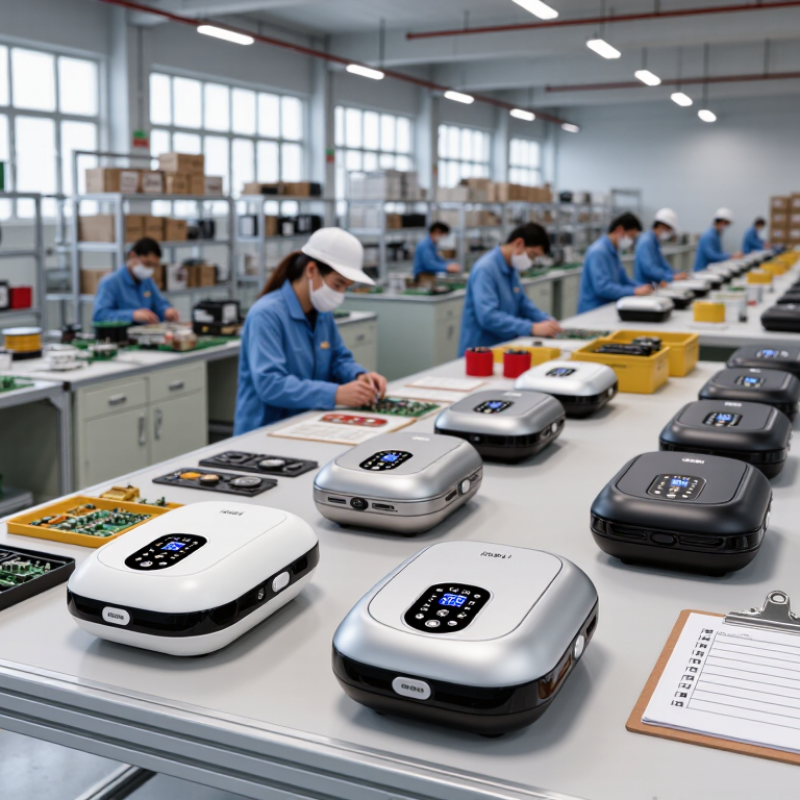
China Top Compact Foot Massager Manufacturers for Buyers
Choosing a Compact Foot Massager supplier involves more than comparing prices or product photos. Buyers need to understand how each manufacturer handles design, production, quality checks, and communication. A clear process matters. It can help prevent avoidable surprises, especially when product samples differ from later production units.
China’s manufacturers offer varied product formats, from simple vibration models to heated units with adjustable settings. Ask for specifications, sample availability, packaging options, and realistic production timelines. Check how the supplier inspects key components, such as controls, wiring, and outer materials. Request relevant test reports and confirm that they match the exact model under discussion. Do not treat a polished catalog as proof. Ask for details.
This guide introduces manufacturers for buyers evaluating product fit, production capacity, and ongoing support. It also highlights questions worth asking before placing an order, including how defects are handled and whether design changes affect lead times. Compare answers in writing. Small details matter. A factory visit or independent inspection may offer useful context, but neither guarantees every shipment will be consistent. No checklist removes every doubt. Buyers should weigh evidence, communicate expectations clearly, and allow time for sample review. Supplier selection is rarely perfect; sometimes the right choice becomes clear only after careful questions and a closer look at the product.
What Defines a Compact Foot Massager and Its Main Types
A compact foot massager is designed to treat the feet without taking over a room. In practice, buyers often look for a small footprint, manageable weight, and controls that are easy to reach while seated. There is no universal size standard, though. Compact models may still feel bulky under a low desk. The American Podiatric Medical Association’s 2014 foot health survey reported that 77% of Americans had experienced foot pain. That figure describes foot problems, not demand for massagers, but it shows why comfort deserves careful attention.
Common types include air-compression units, which inflate and release around the feet; roller or kneading models, which apply pressure to the soles; and vibration or heat designs, which add a gentler sensation. Some products combine these functions. More features do not always mean a better fit. People with sensitive feet may prefer adjustable intensity and a clearly marked stop control. A massager should not replace medical advice for persistent pain or swelling.
Tips: Check the usable foot space, not just the outer dimensions. Try the lowest setting first, and confirm that the cord reaches your chair. Heat can feel pleasant, but it may be unsuitable for people with reduced temperature sensation. Read the manual before use.
Key Features and Technologies Used in Compact Foot Massagers
Compact foot massagers combine mechanical kneading, air compression, and optional heat in a small housing. Rollers target the sole, while inflatable chambers squeeze the sides and instep. The American Podiatric Medical Association’s 2014 consumer survey found that 77% of U.S. adults had experienced foot pain. That figure signals a broad comfort need, not proven demand for any particular device.
For buyers, control matters as much as feature count. Look for separate intensity settings, clear session controls, and automatic shutoff. A useful test is simple: can a user change modes without bending far or reading tiny labels? Heat should feel gentle, not mask excessive pressure. That trade-off is easy to miss.
Compact designs also face practical limits. A narrow chamber may not fit larger feet, and powerful motors can make a bedside unit noisy. Removable liners help with cleaning; stable feet reduce sliding on hard floors. Ask manufacturers for cycle-life, noise, and temperature test results, not just feature lists. APMA’s survey measured reported foot pain, not treatment outcomes, so buyers should avoid assuming massage provides medical relief.
Overview of China’s Compact Foot Massager Manufacturing Landscape
China’s compact foot massager manufacturing landscape draws on a broad base of electronics, plastics, motor, and appliance suppliers. UNIDO’s International Yearbook of Industrial Statistics 2024 places China’s share of global manufacturing value added at roughly 31% in 2022. That figure describes manufacturing overall, not foot massagers specifically. It helps explain why buyers can often source molded shells, small motors, wiring, and control components within one industrial region.
Details matter. A compact unit may combine a molded footbed, vibration motors, heat controls, and removable fabric covers. Buyers should inspect sample consistency, noise levels, cable strain relief, and temperature stability—not just catalog specifications. China’s National Bureau of Statistics reported 5.0% growth in manufacturing value added in 2023, but broad growth does not guarantee quality in this niche. Ask suppliers for test records and production samples. Then compare them. Factory capability can vary between batches, and that is easy to underestimate. Some sourcing decisions still rely too heavily on a polished sample.
How Buyers Can Evaluate and Compare Chinese Manufacturers
Buyers comparing Chinese compact foot massager manufacturers should start with a written product brief, not a polished catalog. List the required dimensions, weight, massage modes, controls, and target price. Ask each supplier to provide a sample matching those details. Small differences matter. Check whether the unit fits beneath a desk, whether buttons are easy to reach, and whether the motor sounds intrusive in a quiet room. Run repeated sessions and note heat, pressure consistency, and any loose seams or shifting parts. Request the materials list and the inspection steps used during production. A sample can feel excellent while later batches vary, so ask how changes are recorded and approved.
Compare suppliers on more than quotation price. Request production timelines, minimum order quantities, defect-handling procedures, and relevant test documents for your intended market. Verify that document details match the proposed model. Ask who checks incoming components and finished units, and whether inspection records can be shared. Clear answers are useful; vague promises deserve follow-up. Communication is part of the evaluation, too. Send one specific question about a sample issue and see whether the response addresses it. No comparison is perfect: buyers may overlook packaging damage or long-term wear during a short review. Ask how the supplier handles replacement parts and warranty claims, then record the answer in writing.
China Top Compact Foot Massager Manufacturers: Buyer Evaluation Priorities
Use these suggested weights to compare suppliers. They are a practical evaluation framework, not results from a manufacturer survey. Score each supplier using verifiable documents, samples, and factory evidence.
Suggested criteria include product safety and compliance evidence, quality-control processes, manufacturing capacity, product performance, customization capability, delivery reliability, and after-sales support. Adjust the weights to fit your product requirements and sourcing priorities.
Sourcing, Quality Verification, and Export Considerations for Buyers
Compact foot massagers can look alike in catalog photos, yet their motors, padding, and housing may differ. Ask each manufacturer for dimensioned drawings, product weight, motor specifications, and a sample with the intended control panel. Inspect the foot area, seams, cable strain relief, and stability on a hard floor. A quiet room helps. Photos are not proof.
Verify the supplier’s production capacity and quality checks before negotiating volume. Request recent inspection records and clear answers about incoming materials, assembly checks, and defect handling. Test a sample through repeated sessions, not just one quick run. Note heat, noise, vibration, and control response. A small pilot order can reveal packing or consistency problems. It costs time, but surprises cost more. One buying mistake is trusting a polished sample without checking whether bulk units will match it.
For export planning, confirm carton dimensions, gross weight, labeling needs, and the documents required by the destination market. Agree on who handles freight, insurance, and damage claims. Ask for packaging photos and verify that units are protected from pressure and moisture. Build time for inspection and shipping delays. Plans can still slip; leave room for that.
China Top Compact Foot Massager Manufacturers for Buyers - Sourcing, Quality Verification, and Export Considerations for Buyers
Buyer’s comparison framework: Use these criteria to evaluate prospective manufacturers and trading partners. Product configurations, compliance obligations, and export requirements vary by model and destination market; verify details against the actual product and current regulations.
| Evaluation Area | What Buyers Should Compare | Evidence or Data to Request | Practical Verification | Buyer Consideration |
|---|---|---|---|---|
| Product format | Open-foot roller or shiatsu units, enclosed foot chambers, air-compression designs, and models combining multiple massage functions. | Model-specific specification sheet, product dimensions, net weight, materials, control layout, and included accessories. | Review a production-representative sample and compare it with the approved drawings and specification sheet. | Confirm that the product’s footprint and entry design suit the intended user and retail positioning. |
| Electrical configuration | Rated input, adapter output, plug type, frequency, power consumption, and whether the product is supplied with an external power adapter. | Rating-label artwork, adapter datasheet, wiring diagram, and test reports for the exact model and electrical configuration. | Check label information against the sample and the requirements of the destination market. Do not assume a universal-voltage adapter unless its rating confirms it. | Specify the destination country and plug configuration before quotation and sample approval. |
| Functions and controls | Massage modes, intensity levels, heat function, timer settings, control interface, and automatic shutoff behavior. | Function matrix, user manual, control-panel artwork, and a list of functions included in each quoted model. | Test every advertised function on the sample, including mode changes, timer operation, and any heat setting. | Ensure product descriptions and packaging claims match the verified functions; avoid unsupported therapeutic claims. |
| Materials and construction | Housing material, foot-contact surfaces, removable fabric components, seams, vents, cable strain relief, and stability during operation. | Bill of materials, material declarations where relevant, cleaning instructions, and photos of internal and external construction. | Inspect fit and finish, cable connections, moving parts, and cleanability. Check removable covers for correct fit after washing if they are described as washable. | Agree on approved materials and color references in writing; identify any material substitutions that require buyer approval. |
| Safety and regulatory documentation | Electrical safety, electromagnetic compatibility, restricted-substance requirements, labeling, and market-specific conformity obligations. | Reports and declarations applicable to the exact model, factory, adapter, and destination market. Relevant frameworks may include IEC 60335-1 and IEC 60335-2-32 for household massage appliances, where applicable. | Check report numbers, model names, test scope, laboratory details, dates, and whether the tested configuration matches the order. Confirm destination-specific requirements independently. | A document or logo alone does not establish compliance. CE marking, for example, requires the applicable conformity process and supporting technical documentation. |
| Factory and supplier capability | Whether the supplier manufactures the product, uses subcontractors, controls incoming components, and can maintain production consistency. | Business and factory information, production-process overview, quality-system certificates if claimed, key subcontractor details, and recent product references that can be checked. | Arrange a factory audit or independent assessment where order value and risk justify it; verify the production address and quality-control responsibilities. | Clarify who owns tooling, who approves component changes, and which entity is responsible for defects and corrective actions. |
| Quality control plan | Incoming inspection, in-process checks, final inspection, functional testing, and traceability of finished goods. | Written inspection checklist, defect classification, inspection records, and a sample quality agreement. | Approve a “golden sample” and use an agreed pre-shipment inspection plan. ISO 2859-1 may be used as a reference for attribute sampling when the parties agree on the sampling level and acceptance limits. | Set acceptance criteria for critical, major, and minor defects before production; sampling plans are agreed controls, not a substitute for product-specific safety testing. |
| Reliability and use testing | Operation under expected use, control durability, heating performance where fitted, abnormal noise, and wear on moving or contact parts. | Test protocol, test conditions, sample size, recorded results, and corrective-action reports for identified failures. | Define repeatable tests for the ordered model, such as repeated start-stop and mode-selection checks, then review results against buyer-approved criteria. | Agree test duration and pass/fail limits rather than relying on unsupported statements such as “long life” or “commercial grade.” |
| Packaging and transit protection | Retail-box dimensions, protective inserts, carton strength, pallet configuration, shipping marks, and protection against movement or impact. | Packaging drawings, carton dimensions, gross and net weight, units per master carton, and pallet-loading plan if applicable. | Inspect a packed sample and consider a distribution test appropriate to the shipping method, such as an applicable ISTA procedure or ASTM D5276 drop test. | Validate packaging using the actual product and shipping configuration; confirm whether retail packaging must remain saleable after transport. |
| Commercial and production terms | Minimum order quantity, sample and tooling charges, production lead time, payment milestones, spare parts, and warranty process. | Itemized quotation, agreed specifications, production schedule, warranty terms, and written change-control procedure. | Compare like-for-like quotations and obtain written confirmation of what is included, including adapter, packaging, testing, and export packing. | Use a purchase contract or detailed purchase order to record specifications, inspection rights, delivery terms, and remedies for nonconforming goods. |
| Shipping and trade terms | Transport mode, named delivery place or port, cargo insurance responsibility, shipment schedule, and allocation of customs-clearance tasks. | Quotation stated under a named Incoterms® 2020 rule and precise place or port, plus a proposed shipping plan. | Check that the named place, freight scope, and responsibilities match the buyer’s logistics arrangement and insurance plan. | Incoterms® allocate specified delivery obligations, costs, and risks; they do not replace the sales contract or determine product compliance. |
| Export and import documents | Commercial invoice, packing list, transport document, and any destination-specific certificates or declarations required for the transaction. | Draft documents for review before shipment; certificate of origin or other supporting documents when required by the destination or buyer. | Match product descriptions, quantities, weights, consignee details, and shipping marks across the document set. | Confirm the applicable HS classification with a customs broker or relevant authority. Classification can depend on product design and jurisdiction, so do not rely on an assumed code. |
| After-sales support | Defect reporting process, replacement parts, troubleshooting materials, response times, and handling of warranty claims. | Service contact details, parts list, exploded diagram if available, troubleshooting guide, and written warranty procedure. | Request sample responses to common service issues and verify that replacement parts can be identified by model and revision. | Agree how defects, repeat failures, and product safety concerns will be escalated and documented. |

Note: This table is a general sourcing checklist, not a directory of verified manufacturers or a certification of any supplier. Confirm current legal, testing, customs, and labeling requirements for each destination market before placing an order.