
What Are the Top China Welded Steel Pipe Manufacturers?

China is a major source of Welded Steel Pipe for construction, energy, water, and industrial projects. Yet choosing a reliable manufacturer requires more than comparing online prices. A strong supplier should demonstrate stable production, clear specifications, and consistent quality records.

This guide examines leading China Welded Steel Pipe manufacturers through practical purchasing criteria. These criteria include pipe diameter, wall thickness, steel grade, welding method, surface treatment, and application requirements. ERW and LSAW pipes may suit different project conditions. Buyers should also review mill certificates, inspection reports, production capacity, and delivery performance. Small details matter. A poorly protected pipe surface can create storage problems before installation begins.

Experienced manufacturers usually explain their testing process clearly. They may provide dimensional checks, hydrostatic testing, ultrasonic inspection, and material traceability. However, certificates alone should not end the evaluation. Independent inspection can reveal differences between stated quality and delivered products. Factory audits also help confirm equipment, workers, and actual production conditions.

This overview does not treat every large manufacturer as automatically dependable. Reputation can change. Export experience may vary between factories, trading companies, and production sites. Some supplier information also remains incomplete or difficult to verify. That limitation deserves attention. The most useful comparison considers technical expertise, industry experience, communication, compliance, and after-sales support together. With these factors in view, buyers can build a shorter, safer list of potential Chinese manufacturers.
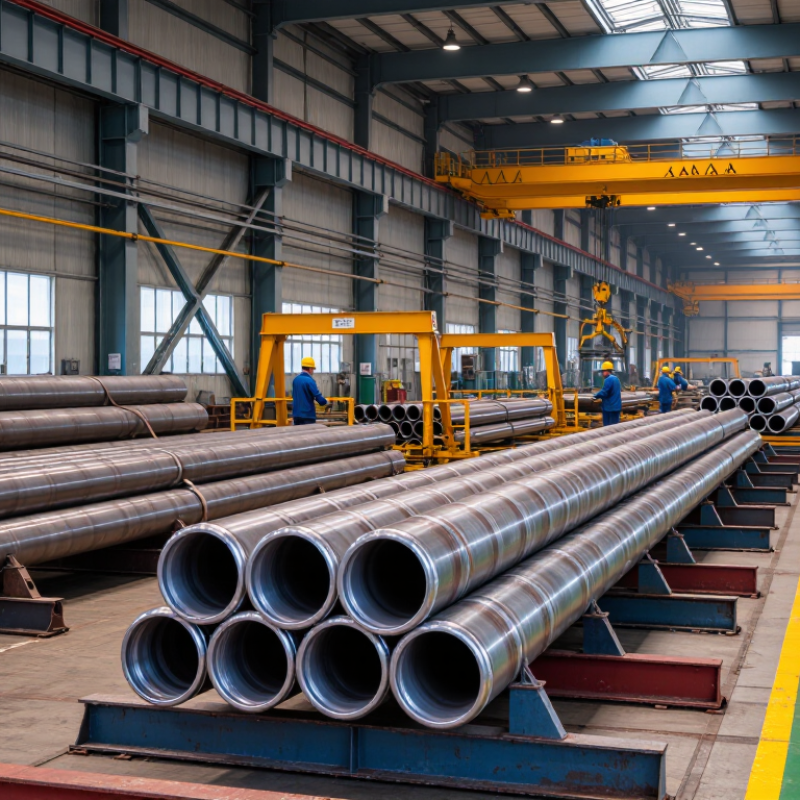
What Are the Top China Welded Steel Pipe Manufacturers?

What Defines a Leading China Welded Steel Pipe Manufacturer?

A leading China welded steel pipe manufacturer is defined by more than production volume. It combines controlled welding, accurate forming, and disciplined inspection. Experienced engineers should understand how steel grade, wall thickness, and pipe diameter affect weld performance. Their knowledge must appear in daily production records, not only in sales materials.

Quality begins with dependable raw materials and clear heat-number traceability. Each coil or plate should be checked before forming. During welding, operators monitor current, speed, alignment, and temperature. Non-destructive testing can reveal hidden flaws near the seam. Dimensional checks should cover outside diameter, wall thickness, ovality, and pipe length. Small deviations matter.

Documentation also defines a serious manufacturer. Mill certificates, inspection reports, welding procedures, and packing records should match the actual shipment. I would ask for sample reports and verify whether the testing equipment is calibrated. A factory may claim strict control, yet weak records can expose gaps. That deserves attention.

Practical experience matters after production ends. A reliable supplier protects pipe ends, uses suitable supports, and prevents moisture damage during transport. Communication should remain clear when specifications change. No factory gets every batch perfect. I would still examine its response to a rejected piece, because honesty during a problem often reveals more than polished marketing.

How China’s Welded Steel Pipe Industry Is Organized

China’s welded steel pipe industry is organized as a layered network, not a single market. Large producers operate integrated mills with forming, welding, heat treatment, coating, and testing lines. Regional manufacturers often focus on construction, water transmission, energy, or machinery applications. Smaller workshops usually serve local buyers and custom orders.

The strongest manufacturers normally show clear production control. Their facilities may include automatic submerged arc welding, ultrasonic inspection, hydrostatic testing, and dimensional checks. Buyers should examine mill certificates, weld records, coating reports, and batch traceability. A reliable supplier can explain where steel coils originated and how each pipe passed inspection. Factory visits also reveal practical details, such as storage conditions, crane capacity, and whether pipes are protected from standing water.

Export trading companies form another important layer. They connect overseas buyers with several mills, but their technical knowledge varies. Some can manage documentation and shipping well, while others mainly compare prices. That difference matters. The lowest quotation may hide thinner walls, weaker coatings, or incomplete testing. Industry directories are useful, but not always accurate. Some profiles appear impressive online yet provide little evidence of current production. This is where careful verification becomes necessary. Even experienced buyers can miss small inconsistencies in certificates or specifications. China’s industry is efficient, broad, and competitive, but its quality is not uniform across every producer.

What Are the Top China Welded Steel Pipe Manufacturers? - How China’s Welded Steel Pipe Industry Is Organized

China’s welded steel pipe industry is organized mainly by forming process, product diameter, applicable standards, and end-use sector.

Industry Segment Primary Manufacturing Process Common Outside-Diameter Range Typical Wall-Thickness Range Common Standards Typical Applications Typical Supplier Role
High-frequency welded pipe Cold-forming of steel strip followed by high-frequency electric-resistance welding Approximately 21.3–610 mm Approximately 1.5–20 mm GB/T 3091, ASTM A53, ASTM A500, API 5L Water transmission, structural work, building columns, mechanical components, and low-to-medium-pressure service High-volume standardized production with strong emphasis on dimensional consistency and delivery speed
Longitudinal submerged-arc welded pipe Steel plate formed into a cylinder and welded along the longitudinal seam using submerged-arc welding Approximately 406–1,422 mm Approximately 6–40 mm API 5L, GB/T 9711, ASTM A252, ASTM A671 Long-distance oil and gas pipelines, large water projects, piling, and heavy structural engineering Project-based production for large-diameter and higher-wall-thickness requirements
Spiral submerged-arc welded pipe Helical forming of steel strip with continuous submerged-arc welding on the spiral seam Approximately 219–3,620 mm Approximately 6–25 mm API 5L, GB/T 9711, ASTM A252 Municipal water pipelines, drainage, irrigation, piling, and large-diameter transmission lines Cost-efficient large-diameter production with flexible use of available steel coil
Structural welded pipe ERW, HFW, or submerged-arc welding, depending on diameter and structural load requirements Commonly 21.3–1,422 mm Commonly 2–40 mm GB/T 6725, GB/T 3094, ASTM A500 Steel buildings, bridges, towers, machinery frames, and architectural structures Specification-driven supply based on yield strength, geometry, tolerances, and fabrication needs
Line pipe for energy and utilities ERW, HFW, longitudinal SAW, or spiral SAW, selected according to diameter, pressure, and service conditions Approximately 60–1,422 mm Approximately 3–40 mm API 5L and GB/T 9711 Crude oil, natural gas, refined products, industrial water, and utility networks Qualification-focused supply involving chemical composition, toughness, weld inspection, and hydrostatic testing
Boiler, heat-exchanger, and pressure-service pipe Precision welded forming with controlled heat treatment, nondestructive testing, and dimensional inspection Commonly 10–610 mm Commonly 1.5–30 mm ASTM A178, ASTM A249, ASTM A269, and applicable GB standards Boilers, heat exchangers, condensers, process equipment, and industrial heating systems Higher-value technical production requiring tighter surface, weld, and pressure-performance controls
Coated and finished welded pipe Base pipe production followed by galvanizing, three-layer polyethylene, fusion-bonded epoxy, painting, or lining Depends on the underlying ERW or SAW pipe Depends on the underlying pipe specification ISO 21809, AWWA C213, ASTM A53, API 5L, and project-specific specifications Buried pipelines, marine works, water treatment, fire protection, and corrosive environments Value-added supply combining pipe manufacturing, surface protection, testing, and export packing

Note: Diameter and wall-thickness figures are common production ranges rather than universal limits. Actual availability depends on the selected standard, steel grade, forming line, testing requirements, and project specification.

Key Manufacturing Standards, Technologies, and Product Types

What Are the Top China Welded Steel Pipe Manufacturers?

Key Manufacturing Standards, Technologies, and Product Types

Reliable Chinese welded steel pipe manufacturers usually demonstrate more than production capacity. They show controlled processes, traceable materials, and consistent inspection records. Common standards include API 5L, ISO 3183, ASTM A53, EN 10217, and ASTM A252. Each standard serves different applications, from fluid transportation to structural piling.

Material certificates should identify the steel grade, heat number, chemical composition, and mechanical results. Traceability matters. During manufacturing, mills may use ERW, HFW, LSAW, or SSAW technology. ERW and HFW pipes suit many water, gas, and structural applications. LSAW pipes handle large diameters and demanding line service. SSAW production offers flexibility for long, heavy-wall pipes.

Inspection should include dimensional checks, hydrostatic testing, and weld-seam examination. Ultrasonic testing can reveal internal discontinuities that visual inspection may miss. Coating lines may add galvanizing, three-layer polyethylene, epoxy, or other protective systems. Surface preparation remains important. Poor preparation can weaken an otherwise sound coating.

Product selection depends on pressure, diameter, wall thickness, soil conditions, and installation method. A professional supplier should explain these relationships clearly. I would question any factory promising every specification without reviewing drawings and service conditions. Production data can look impressive, yet small issues may appear during fit-up or field welding. That detail matters. Reliable communication, independent inspection, and realistic tolerances often separate a capable manufacturer from a merely large one.

Top China Welded Steel Pipe Manufacturers by Market Strength

What Are the Top China Welded Steel Pipe Manufacturers?

Top China Welded Steel Pipe Manufacturers by Market Strength

Market strength matters more than factory size alone. Strong manufacturers usually combine stable production, verified quality systems, and dependable export performance. Their workshops often include automated forming lines, submerged arc welding equipment, and hydrostatic testing stations. Buyers should examine monthly capacity, product range, and delivery records. A large catalog means little if common diameters remain unavailable.

Experienced manufacturers provide mill test certificates, weld inspection reports, and batch traceability documents. These records should match the pipe’s heat number, wall thickness, grade, and test pressure. Port access also affects competitiveness. Efficient loading near major shipping routes can reduce delays and handling costs. Reliable suppliers explain coating options, packaging methods, and tolerance controls without hiding technical details.

Market leadership still requires careful checking. A polished website cannot replace an independent factory audit. Some producers report impressive capacity but rely heavily on subcontracted processes. That may create uneven welding quality or uncertain inspection records. Buyers should compare sample pipes, audit production dates, and confirm lead times in writing. I have found that the cheapest quotation often excludes testing, coating, or inland transport. That oversight can change the real cost quickly. Performance data should be reviewed repeatedly, because one successful shipment proves very little.

How to Evaluate and Select a Reliable Chinese Supplier

Selecting a reliable Chinese welded steel pipe supplier requires more than comparing prices. Start with the exact specification, including outside diameter, wall thickness, steel grade, length, welding method, and surface coating. A serious supplier should explain production limits clearly. Vague answers are warning signs.

Request recent mill test certificates and confirm each certificate matches the quoted material. Check heat numbers, chemical composition, tensile strength, and hydrostatic test results. Ask for photographs of pipe marking, welding equipment, storage areas, and packing. A factory visit or independent inspection can reveal details that documents miss. Look for clean storage, organized records, and visible quality-control procedures.

Communication also matters. Send a small trial order with measurable acceptance criteria. For example, require six-meter pipes, controlled wall-thickness tolerance, capped ends, and moisture-resistant bundles. Confirm how defects, delays, and replacement costs will be handled. Check whether the supplier can provide traceability from raw coil to finished pipe. This protects your project when questions arise.

Do not choose the lowest quotation automatically. An unusually cheap offer may exclude testing, coating, inland transport, or secure packing. I would also question perfect promises. Production problems happen, and honest suppliers explain their response plans. A previous buyer reference, verified export record, and clear contract terms provide stronger evidence than polished sales language. Still, no checklist replaces careful judgment. Dig deeper before paying.

How to Evaluate a Reliable Chinese Welded Steel Pipe Supplier

This procurement scorecard uses a 100-point evaluation model. Product conformity and inspection traceability receive the highest weighting because buyers should verify compliance with the required ASTM, API, EN, or ISO specifications before comparing price and delivery terms.

CONTACT US