
Who Are the China Top 10 Bronzing Machine Manufacturers?

Packaging and print buyers increasingly expect finishes that catch the eye without slowing production. Grand View Research valued the global packaging market at about USD 1.14 trillion in 2023, and projected a 3.9% compound annual growth rate from 2024 to 2030. This broad market figure does not measure demand for Bronzing Machines directly. It does, however, show the scale of the packaging sector in which decorative finishing competes for investment.

Smithers’ report, The Future of Global Printing to 2028, projected global print market value to rise from USD 818.2 billion in 2023 to USD 874.4 billion in 2028. For converters, brand owners, and print shops, the practical question is whether a machine can apply foil consistently across real jobs—not just produce an impressive sample. Feed accuracy, registration, changeover time, service access, and spare-parts support deserve close attention. Small details matter.

This overview examines China’s leading Bronzing Machine Manufacturers through those purchasing considerations. It is a starting point, not a definitive ranking: public data rarely compares manufacturers on identical machines, test conditions, or after-sales standards. That gap matters. A fast demonstration cannot replace a production trial with the buyer’s own stock, foil, and artwork. The strongest supplier is therefore not always the one with the longest specification sheet, but the one that can document repeatable results and respond when a line needs help.
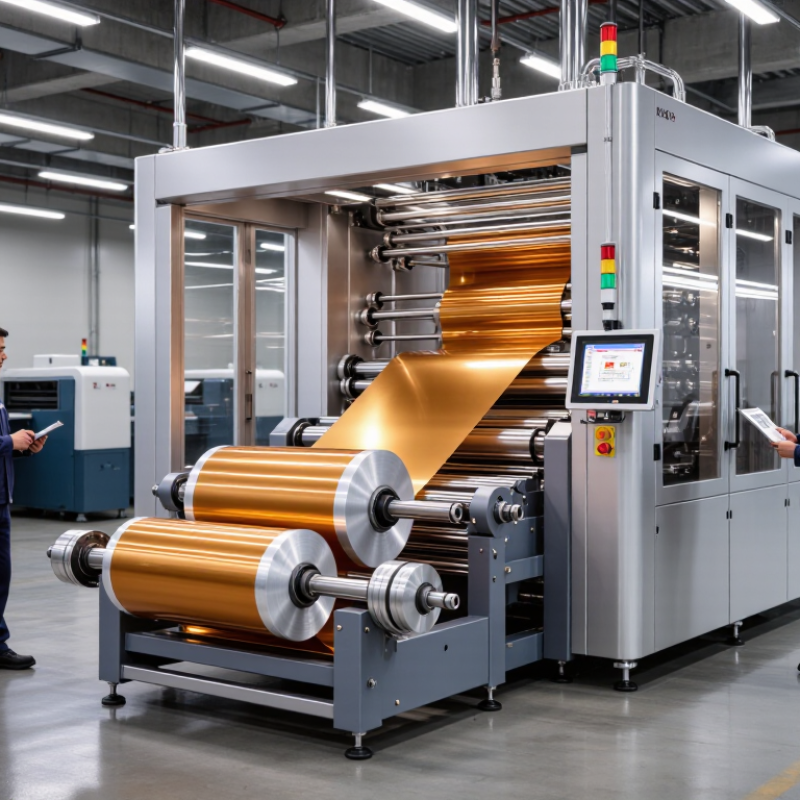
Who Are the China Top 10 Bronzing Machine Manufacturers?

What Bronzing Machines Are and How They Work

A bronzing machine decorates paper, card, or other compatible surfaces with a metallic-looking finish. Despite the name, it usually transfers a thin foil rather than applying bronze powder. The effect can highlight a logo, border, or small lettering. It is a controlled transfer process.

Most hot-foil systems use a heated metal die, a roll of foil, and a pressure mechanism. The foil has several layers, including a carrier film and a release coating. An operator positions the material, then sets the die temperature, pressure, and contact time. When the die presses down, heat activates the foil’s adhesive over the selected area. The carrier film lifts away, leaving the design attached to the surface. Alignment matters.

Machines may use flat platens for sheets or rotary systems for continuous materials. A clean, even impression depends on the substrate coating, foil compatibility, die condition, and steady feeding. More heat is not always better; it can blur edges or damage delicate stock. Setup often takes test impressions, and that part can feel slower than expected. A glossy sample is useful, but adhesion and edge quality deserve checking too. That is easy to overlook.

Key Criteria for Evaluating Chinese Bronzing Machine Manufacturers

Evaluating Chinese bronzing machine manufacturers starts with matching the machine to your materials and production volume. Ask whether it handles your foil width, sheet size, substrate thickness, and daily operating hours. Request a live demonstration using your own stock, not only the supplier’s sample sheets. Watch the foil transfer closely. Fine lettering, solid areas, and repeated passes can reveal uneven pressure or temperature control. Small details matter. Check registration accuracy across several sheets, not just one. Ask how operators adjust heat, pressure, and feed speed, and whether settings can be repeated after a shift change.

Build quality and support deserve equal attention. Inspect the frame, rollers, guards, and electrical cabinet, then ask for a clear parts list and maintenance schedule. Confirm which components are locally available and how quickly technical help typically responds. A low price may look attractive, but downtime and hard-to-source parts can change the real cost. Review the warranty terms and ask for references from factories with similar jobs. A polished demonstration is useful, but it is not a production record. Even a careful checklist has blind spots, so compare test results, service commitments, and operating costs before deciding.

Who Are the China Top 10 Bronzing Machine Manufacturers? - Key Criteria for Evaluating Chinese Bronzing Machine Manufacturers

Use these criteria to compare suppliers of hot-foil stamping (bronzing) machines. The weights are suggested evaluation priorities, not rankings or verified ratings of individual manufacturers.

Evaluation Criterion Why It Matters Evidence to Request How to Evaluate Suggested Weight
1. Application and machine fit Machine configuration must suit the intended substrate, product format, foil process, and production volume. A written application review, proposed configuration, and sample-run plan for the buyer’s actual materials. Confirm the supplier explains limitations and process requirements, not just the machine’s headline capabilities. 14%
2. Technical specifications and usable format Maximum sheet or workpiece size, stamping area, pressure, temperature control, and feeding format affect compatibility and output. A model-specific specification sheet, machine layout, and clear definitions for each stated limit. Match specifications to the buyer’s smallest and largest jobs; distinguish maximum capacity from recommended production conditions. 12%
3. Stamping quality and repeatability Consistent heat, pressure, registration, and dwell time help reduce incomplete transfer, wrinkling, and rejects. Samples produced on comparable materials, documented setup conditions, and an agreed acceptance checklist. Assess transfer coverage, edge definition, registration, and consistency across repeated samples and different job positions. 14%
4. Production speed and changeover Advertised speed alone does not indicate finished output; setup, feeding, inspection, and job changes also affect productivity. A timed demonstration using a representative job, including setup and changeover steps. Compare accepted finished pieces per hour under stated conditions rather than relying only on a maximum cycle-rate figure. 10%
5. Build quality and maintainability Sound construction, accessible service points, and maintainable components can support dependable operation over time. A factory inspection or live video tour, maintenance schedule, component list, and routine-service instructions. Check assembly finish, guarding, access for cleaning and adjustment, and whether maintenance tasks are clearly documented. 10%
6. Safety and regulatory documentation Appropriate safeguards and documentation support safer installation and operation; requirements depend on the destination market and machine configuration. Risk-assessment information, electrical documentation, safety-device details, operating instructions, and applicable conformity documents. Verify documents against the exact machine and destination-market requirements; do not treat a certificate or label as proof of every safety requirement. 10%
7. Quality control and factory capability A controlled build and inspection process can reduce specification errors and improve consistency between delivered machines. Factory profile, production and inspection workflow, test records, and confirmation of the actual manufacturing location. Check that the supplier can trace the ordered configuration and provide documented checks before shipment. 8%
8. Installation, training, and technical support Commissioning and operator training help the buyer achieve stable production and troubleshoot routine issues. Installation scope, training materials, support hours, communication channels, and escalation arrangements. Confirm who provides support, in which languages, and whether remote or on-site assistance is included or separately charged. 8%
9. Spare parts and warranty terms Clear warranty coverage and access to replacement parts can reduce uncertainty when service is needed. Written warranty terms, exclusions, recommended spare-parts list, parts pricing, and dispatch arrangements. Compare coverage, response process, and parts availability in writing; clarify freight, labor, and travel-cost responsibilities. 7%
10. Total cost, delivery, and commercial clarity Purchase price is only one part of ownership cost; shipping, installation, utilities, tooling, and consumables may also matter. Itemized quotation, delivery schedule, packaging and shipping terms, payment milestones, and a list of exclusions. Compare quotations on the same scope and delivery basis, and confirm lead time and acceptance conditions in the contract. 7%
Total suggested evaluation weight 100%

Profiles of Ten Leading Bronzing Machine Manufacturers in China

China’s bronzing-machine sector includes manufacturers with different strengths, rather than one model suited to every workshop. One profile focuses on flatbed presses for crisp foil details on cartons. Another builds roll-to-roll systems for labels and flexible materials. A third emphasizes automatic foil feeding, while a fourth serves short runs with compact equipment. A fifth specializes in packaging lines, where steady registration matters on long production shifts.

Tips: Ask for a sample using your actual stock. Check foil transfer, alignment, setup time, and waste—not just the machine’s stated speed.

Other useful profiles include makers of large-format presses, machines with multiple heating zones, and systems designed for quick changeovers. Some focus on straightforward controls for smaller teams; others integrate inspection and production tracking. The tenth profile may offer broad customization, though that can bring longer lead times. These are capability-based profiles, not a verified ranking of named companies. Compare service response, spare-part access, safety features, and test results. A polished demonstration is helpful, but real production conditions can expose problems a showroom sample misses.

Comparing Their Technologies, Product Ranges, and Industries Served

A comparison of ten Chinese bronzing-machine manufacturers should look beyond headline speed. Hot-foil stamping systems vary in pressure control, heating stability, registration accuracy, and changeover time. Servo-driven machines can offer precise movement, while pneumatic and hydraulic designs may suit different workloads and budgets.

Ask for sample runs using your own material. A clean foil edge on paper does not guarantee the same result on textured leather or coated board. That detail matters.

Product ranges may include flatbed presses, roll-to-roll equipment, automatic feeders, and compact machines for shorter runs. Their applications span packaging, commercial printing, labels, stationery, and decorative products.

Compare sheet size, embossing capability, foil width, and supported substrates against your actual production mix. Request clear cycle-time data and maintenance intervals, not just maximum-speed claims. No single setup fits every job.

One weakness in many comparisons is limited information about long-run consistency; a polished demonstration cannot reveal every adjustment operators may need during a full shift. Ask how tooling changes, operator training, and spare-part access affect daily output.

How to Assess a Manufacturer for Your Production Requirements

When assessing a bronzing machine manufacturer, start with the job, not the catalogue. Define substrate width, hourly output, foil type, image detail, and acceptable setup time. Ask for a test using your own material. Watch how evenly the foil transfers across a full-width sheet, especially near the edges. Record temperature stability, pressure settings, changeover time, and rejected pieces. A polished sample is useful, but it may not represent a long production run.

Check whether the supplier can show repeatable test records, maintenance schedules, spare-parts lead times, and operator training plans. ISO’s 2023 Survey reported 1,265,216 valid ISO 9001 certificates worldwide; certification signals a quality-management system, not proof that a particular machine meets your targets. The International Federation of Robotics’ World Robotics 2024 report counted 541,302 industrial robots installed in 2023, highlighting how production lines increasingly depend on automation compatibility. Ask for control-system details and interface options. Then verify them with your plant team. Small gaps matter. One point worth questioning: supplier-run trials rarely capture your dust, shift patterns, or operator habits. Request a written acceptance test with measurable tolerances, and clarify who pays if the machine misses them.

CONTACT US