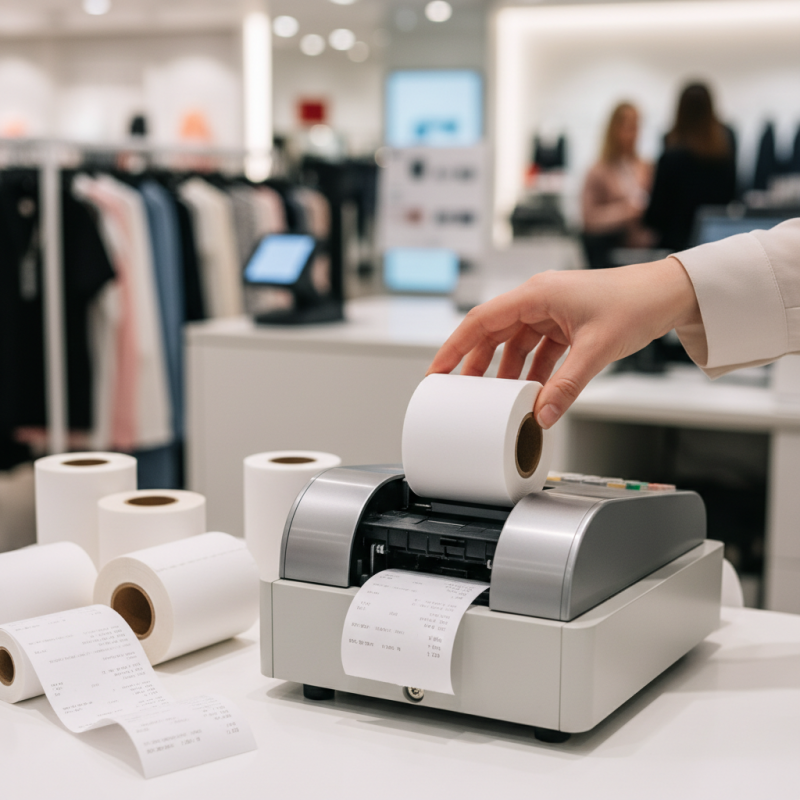
How to Choose the Best Thermal Cash Register Paper For Your Business?
Choosing the right Thermal Cash Register Paper is crucial for any business. It affects receipt quality and customer satisfaction. Emily Grace, a thermal printing expert, stated, "The right paper can enhance your brand image."
In the bustling retail environment, every detail counts. Using high-quality Thermal Cash Register Paper can improve the clarity and durability of receipts. Many businesses overlook this important factor. They often choose paper based on cost alone, risking poor print quality.
Some papers may fade quickly or smudge easily. This can lead to lost transactions and frustrated customers. It's essential to consider various factors, such as size, thickness, and compatibility. Finding the ideal balance can take time. Making the right choice will ultimately benefit your business in the long run.
Understanding Thermal Cash Register Paper Types and Specifications
When selecting thermal cash register paper, understanding the types and specifications is crucial. Thermal paper comes in different grades, each affecting print quality and durability. Low-grade paper might save costs, but it can fade quickly. This could lead to issues with record-keeping for your business.
Another aspect to consider is the size and thickness of the paper. Standard roll widths vary, typically from 2 to 3 inches. Thicker paper often provides better results, yet it may not fit all printers. Testing various options can help find the right balance between quality and compatibility.
Additionally, be mindful of the storage conditions. Heat and light can degrade thermal paper, diminishing its lifespan. Ensure that the paper is stored in a cool, dry place. Neglecting these factors might result in wasted resources. Consider regular evaluations of your paper choice. This practice aids in keeping up with the evolving needs of your business.
Thermal Cash Register Paper Types Comparison
Evaluating Print Quality: Importance of Thermal Paper Brightness and Smoothness
When choosing thermal cash register paper, print quality is crucial. Brightness and smoothness significantly impact the clarity of your receipts. Research shows that paper brightness affects ink absorption and visibility. Higher brightness levels can enhance the contrast between the print and paper, aiding customer readability. Studies report that brighter thermal papers can boost print clarity by up to 30%.
Smoothness is another key factor. It directly affects the printing process. Paper with a smooth texture ensures that the thermal print head operates efficiently. This can reduce wear and tear on printing equipment. Poor quality paper can lead to smudging and misprints, causing frustration. A survey indicated that 45% of businesses experienced issues with low-quality thermal paper, resulting in compromised customer service.
Tips: Always sample different types of paper before making a bulk purchase. Look for papers that provide consistent quality, even if they cost slightly more. Consider the environment too; some thermal papers include eco-friendly attributes. Test prints in different lighting conditions. Ensure your choice meets your business needs without sacrificing quality.
How to Choose the Best Thermal Cash Register Paper For Your Business? - Evaluating Print Quality: Importance of Thermal Paper Brightness and Smoothness
| Paper Type | Brightness Level | Smoothness Rating | Durability (Years) | Best Use Case |
| Standard Thermal Paper | 85+ | Medium (3) | 1-3 | Retail Transactions |
| High Brightness Thermal Paper | 90+ | High (5) | 3-5 | High-end Retail |
| Eco-Friendly Thermal Paper | 80+ | Medium (3) | 1-2 | Sustainable Practices |
| Premium Thermal Paper | 95+ | Very High (7) | 5-7 | Luxury Services |
Assessing Paper Durability: Weight, Thickness, and Longevity Factors
When selecting thermal cash register paper, two important factors are weight and thickness. These characteristics play a significant role in determining the durability of the paper. A heavier weight often suggests a sturdier product, which can withstand frequent use. Thin paper may jam easily or tear, leading to frustration during peak hours. Users might overlook this, assuming all paper performs the same.
Longevity is another critical aspect. Businesses need to consider how long printed receipts will last. Some thermal papers fade quickly, making them unreadable in just a few weeks. This can be problematic for record-keeping or customer service. Think about how often you need to reference past transactions. It's easy to forget about the importance of longevity until a crucial receipt goes missing.
Choosing the right thermal paper isn't just about cost. It's about ensuring satisfaction in the long run. Reflect on your specific needs. Take the time to consider different options carefully. Ultimately, the right choice can enhance operations and improve customer interactions.
The Impact of Thermal Paper Size on Compatibility and Functionality
When selecting thermal cash register paper, size matters significantly. The width and length of the paper roll can affect the overall functionality of your cash register. If the paper is too wide, it may jam the printer. If it is too narrow, the receipts may not print correctly. Finding the right size ensures that your transactions flow smoothly and efficiently.
Compatibility with your cash register is essential. This means considering the specifications outlined by the manufacturer. Yet, there can be discrepancies. Some cash registers may accept rolls that others cannot. Evaluating your equipment can prevent unexpected issues. It's crucial to check the model of your register before purchasing.
Different businesses may require different sizes of thermal paper. A small coffee shop could get by with shorter rolls, while a retail store might need longer ones. Assessing your daily transaction volume is vital. Think about how often you need to replace rolls. It requires careful observation and planning. Be prepared to experiment with various sizes, as what works for one situation might not suffice for another.
Cost-Effectiveness: Balancing Quality and Price in Thermal Paper Selection
When selecting thermal cash register paper, cost-effectiveness is a key factor for many businesses. A cheaper option might be tempting, but it can lead to issues. Low-quality paper often jams in printers. This can waste time and create frustration. Investing a little more in reliable paper can improve workflow.
Consider the thickness and brightness of the paper. Thicker rolls often provide clearer prints and resist fading. However, they may cost more. Finding the right balance is essential. It’s not just about the price tag. Assess your printing volume and quality needs. Sometimes, a budget option may suffice. But it’s worth evaluating if the savings are truly beneficial long-term.
Take into account the supplier reliability as well. Even the best paper can be a waste if it arrives late or damaged. Reviews can guide your choice, but they aren’t always perfect. Some customers may overlook details that matter most to your operations. Testing various options in small batches may provide better insight into what works for you.