
How to Choose Heavy Duty Magnet Clips in 2026?
Choosing Magnet Clipsheavy Duty in 2026 requires more than checking a package’s advertised holding force. A clip supporting a steel tool panel faces different risks from one holding warehouse labels. Surface thickness, air gaps, coating, vibration, and sideways loading can quickly reduce performance. The U.S. Department of Energy’s Critical Materials Assessment identifies permanent magnets as strategically important technologies, while the International Energy Agency reports that rare-earth demand is closely connected to clean-energy and advanced manufacturing growth. These reports describe the wider magnet industry, not clip performance specifically. That limitation matters.
Magnetism researcher Dr. David Jiles offers a useful principle: “Magnetic performance depends on the material, geometry, and operating conditions.” Buyers should apply it practically. Test a loaded clip on the exact painted cabinet, refrigerator door, or steel rack. Leave a safety margin. A 50-kilogram rating may not mean 50 kilograms in a sideways position.
Look for ferrite or neodymium construction, a protective coating, a steel backing plate, and a clearly stated pull-force test method. Check temperature limits and corrosion resistance, especially in workshops or humid storage rooms. Do not trust impressive numbers alone. Real installations are rarely perfect. Even experienced purchasers sometimes overlook vibration, uneven surfaces, or repeated removal.
Industry forecasts from Grand View Research and MarketsandMarkets indicate continued demand for permanent magnets across industrial applications. Yet buyers still need product-level evidence. In this guide, we examine testing, materials, load ratings, safety factors, and practical selection mistakes before recommending any Magnet Clipsheavy Duty solution.
What Heavy Duty Magnet Clips Are and How They Work
How to Choose Heavy Duty Magnet Clips in 2026?
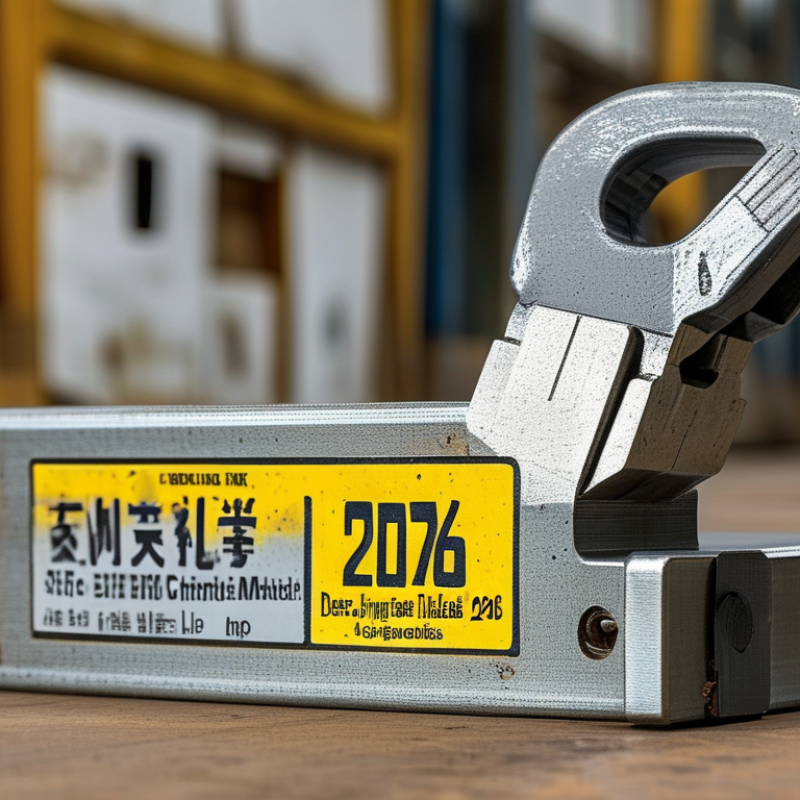
Heavy duty magnet clips combine a permanent magnet, a steel backing plate, and a gripping jaw. The magnet creates a magnetic field that closes through ferrous metal, such as a filing cabinet or steel shelf. The clip then holds paper, labels, cables, or light tools. A stronger magnet is not always better. The steel surface, air gap, paint thickness, and pulling direction can reduce holding force sharply.
Magnet material matters. Neodymium magnets offer high strength in a small size, while ferrite magnets usually cost less and resist corrosion better. The U.S. Geological Survey’s Mineral Commodity Summaries 2025 estimated global rare-earth mine production at about 390,000 metric tons in 2024. That figure shows why material sourcing and supply stability deserve attention in 2026. It does not prove that every neodymium clip is superior.
Check the rated holding force carefully. Manufacturers often measure it on a thick, clean steel plate under ideal conditions. Real use is messier. A dusty cabinet, a plastic coating, or a sideways load may cut performance substantially. I once trusted a large rating and ignored the clip’s weak hinge. That was a poor choice. Look for a protective coating, a reinforced jaw, and a tested load rating with safety margin. The International Organization for Standardization’s ISO 9227 salt-spray method can also help compare corrosion testing, although laboratory exposure is not identical to daily use. Test the clip on your actual surface. Small details decide reliability.
How to Choose Heavy Duty Magnet Clips in 2026? - What Heavy Duty Magnet Clips Are and How They Work
| Selection Dimension | Typical Options or Range | How It Affects Performance | Recommended Choice |
|---|---|---|---|
| What a heavy-duty magnet clip is | A clip, hook, or clamp combined with a permanent magnet assembly | The magnet attaches to ferromagnetic surfaces such as steel; the clip holds papers, cables, signs, tools, or light fixtures | Choose a clip whose magnet and mechanical parts are both rated for the intended load |
| Magnet material | Neodymium-iron-boron or ceramic ferrite | Neodymium provides high magnetic strength in a compact size; ferrite is generally less powerful but economical and resistant to demagnetization in many applications | Select neodymium where space and high holding force matter; select ferrite for larger, lower-cost assemblies |
| Nominal holding force | Common clip assemblies range from approximately 2 to 50 kgf under ideal pull-off testing | Advertised force is normally measured against clean, thick, flat mild steel with direct contact; real-world capacity is often lower | Use a safety factor of at least 2 for static loads and more for vibration, impact, or overhead mounting |
| Load direction | Direct pull-off, sliding or shear, angled, and overhead loads | A magnet usually resists direct pull-off better than sliding; side loads can be reduced by dust, paint, oil, or a low-friction surface | Use multiple clips, a mechanical stop, or a rubberized contact pad for sliding and overhead applications |
| Contact surface | Clean bare steel, painted steel, textured metal, or a thin sheet | Air gaps and nonmagnetic coatings reduce magnetic coupling. Stainless steel may be weakly magnetic or nonmagnetic depending on its grade | Test the clip on the actual surface and keep the contact area clean, flat, and free of debris |
| Magnet coating | Nickel, epoxy, zinc, or a protected steel housing | Coatings and housings help protect the magnet from corrosion, chipping, and handling damage; damaged coatings can expose neodymium to moisture | Use an enclosed or epoxy-protected design in humid, outdoor, or washdown environments |
| Operating temperature | Many standard neodymium magnets are rated around 80°C; high-temperature grades may be rated from about 120°C to 200°C. Ceramic ferrite commonly tolerates higher temperatures than standard neodymium | Excess heat can permanently reduce magnetic strength, especially in standard neodymium magnets | Check the complete clip assembly rating, not only the magnet grade, before using it near heat sources |
| Clip mechanism | Spring clamp, binder-style jaw, hook, loop, or rotating clamp | The clip determines how easily items can be inserted and whether the load is held securely during movement | Choose wide jaws for documents and soft materials; choose a hook or closed loop for cables and hanging accessories |
| Jaw opening and throat depth | Common openings are approximately 5 to 25 mm, depending on the clip design | A small opening may not fit thick boards, layered materials, or bundled cables | Measure the thickest item and add clearance before selecting the jaw size |
| Protective contact pad | Bare metal, rubber, silicone, or polymer pad | Pads can reduce scratching and improve friction, but any extra gap may reduce magnetic holding force | Use a thin, high-friction pad when surface protection is important; verify the reduced holding capacity |
| Environmental exposure | Indoor dry areas, humid rooms, outdoor locations, dust, oil, or occasional splash | Moisture may corrode unprotected neodymium; dust and oil create an air gap and lower usable force | Select sealed construction and corrosion-resistant hardware for demanding environments |
| Safety and handling | Static, moving, overhead, or public-facing installation | Strong magnets can pinch fingers, damage magnetic media, interfere with some medical devices, and attract unexpectedly | Secure critical loads mechanically and keep strong magnets away from sensitive equipment and individuals with implanted medical devices |
Note: Holding-force values are comparative estimates for typical permanent-magnet clip assemblies. Actual capacity depends on magnet geometry, steel thickness and grade, contact area, air gap, surface condition, load direction, temperature, and the clip’s mechanical strength. Always verify the manufacturer’s test method and test the assembled clip under the intended conditions.