Why Choose a Rotary Tablet Punching Machine for Your Production?
In the competitive landscape of pharmaceutical manufacturing, efficiency and reliability are paramount. The Rotary Tablet Punching Machine stands out for its ability to produce high volumes of tablets with precision. According to industry research, the global tablet manufacturing market is expected to surpass $350 billion by 2026, reflecting a growing demand for robust production methods. This increase emphasizes the need for machinery that can consistently deliver quality, and the rotary tablet punching machine rises to meet this challenge.
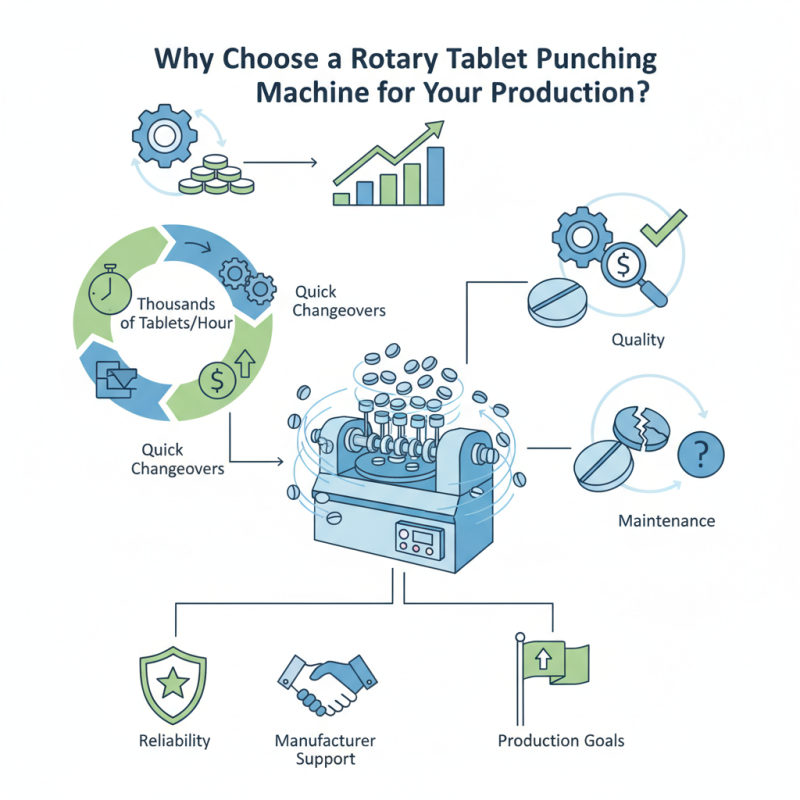
These machines operate seamlessly, capable of producing thousands of tablets per hour. Their design allows for quick changeovers, minimizing downtime during production runs. However, not every rotary tablet punching machine is created equal. Some may struggle with tablet consistency or maintenance issues. Understanding these potential pitfalls is essential for manufacturers looking to optimize output.
Investing in a rotary tablet punching machine can lead to significant cost savings and improved quality. Nevertheless, it is crucial to evaluate specific machine features and manufacturer support. Ultimately, choosing the right rotary tablet punching machine can be a decisive factor in meeting production goals while maintaining high standards of excellence.
Advantages of Rotary Tablet Punching Machines in Production
Rotary tablet punching machines have become a vital asset in various production lines. These machines provide high efficiency and precision in tablet manufacturing. They can create multiple tablets simultaneously, which speeds up the production process significantly. The technology allows for precise dosage and a uniform shape for each tablet, ensuring consistency in quality.
One of the notable advantages of rotary tablet presses is their ability to handle a wide range of materials. From powders to granules, these machines can adapt to varying formulations. Their versatility extends to producing different tablet sizes and shapes as well. However, it’s crucial to note that not all formulations may work perfectly in every machine. Some trial and error might be necessary to find the ideal settings.
The automation features in rotary tablet punching machines enhance reliability. These machines can operate continuously with minimal human intervention. Though they require regular maintenance, their efficiency often outweighs downtime. Nonetheless, manufacturers must be prepared to deal with occasional malfunctions. Understanding the mechanics of the machine can lead to quicker troubleshooting and better production outcomes.
Key Features of Rotary Tablet Punching Machines
Rotary tablet punching machines are essential in various industries, particularly pharmaceuticals. These machines offer precision and efficiency that manual methods cannot match. According to industry reports, rotary machines can produce up to 300,000 tablets per hour. This significantly boosts production rates and minimizes labor costs.
One of the key features of rotary tablet punching machines is their ability to ensure uniformity in tablet size and weight. Advanced models can adjust parameters automatically, ensuring consistent quality. This automation reduces human error. Data suggests that even a minor variance can affect dosage accuracy, making this feature critical.
Tips: Regular maintenance is crucial. Machines require routine checks to sustain performance. Skipping this can lead to decreased productivity and costly repairs.
Another notable aspect is the versatility of these machines. They can produce various tablet shapes and sizes, catering to different formulations. This adaptability allows manufacturers to respond swiftly to market demands. However, transitioning to a new machine might require training and adjustment time, which could impact initial productivity.
Tips: Consider conducting a thorough needs assessment before investing in new equipment. This helps align the machine's capabilities with your production goals.
Comparative Analysis with Other Tablet Press Types
When considering tablet production methods, it's essential to analyze different pressing technologies. Rotary tablet punching machines stand out due to their efficiency and consistency. Unlike single-punch presses, rotary machines can produce tablets at a significantly higher rate. They operate through a continuous process, making them ideal for large-scale production.
However, it's not all positive. Rotary machines can be quite complex and may require skilled operators. Additionally, maintenance can be demanding. On the other hand, single-punch presses, while slower, are easier to operate and maintain. They are suitable for smaller batches and varying formulations.
In contrast, the automatic tablet press offers speed but can also face issues with material consistency. It's crucial to weigh these factors for specific production needs. Each machine type has its merits and drawbacks, making a thoughtful evaluation necessary before making a decision.
Applications of Rotary Tablet Punching Machines in Various Industries
Rotary tablet punching machines play a crucial role in various industries, particularly in pharmaceuticals. The global pharmaceutical market reached approximately $1.5 trillion in 2021. This growth emphasizes the need for efficient production methods. Rotary tablet machines can produce thousands of tablets per hour. They enhance productivity and consistency in tablet formulation.
In industries like food supplements and nutraceuticals, the demand for quality tablets is soaring. According to industry reports, the global nutraceuticals market is projected to reach $722 billion by 2027. Rotary machines ensure high-quality tablets while maintaining tight tolerances. This ensures a reliable dosage in every tablet produced.
The cosmetic industry also leverages these machines. Many brands now offer pressed powders and tablets. Their quality remains essential in maintaining brand reputation. However, some companies struggle with machine calibration. Regular maintenance is required to avoid issues. This highlights the importance of training staff adequately. Understanding machine limitations is vital for success.
Maintenance and Efficiency of Rotary Tablet Punching Machines
When considering the efficiency of rotary tablet punching machines, maintenance plays a crucial role. These machines are known for their high output and consistency, but neglect can lead to reduced production rates. According to a recent industry report, maintaining optimal machine conditions can increase output efficiency by up to 25%. Regular checks and replacements of parts like punches and dies are essential. Every week, operators should inspect these components for wear and tear. This simple practice can significantly enhance machine life and performance.
It's also vital to understand the impact of cleanliness on machine efficiency. Dust and residue can accumulate in moving parts, hampering functionality. Studies indicate that clean machines reduce the likelihood of breakdowns by approximately 30%. Implementing a strict cleaning regimen demonstrates a commitment to preserving machine integrity. However, many facilities struggle with upkeep, often overlooking small issues that can escalate.
Training operators on proper maintenance techniques can have profound effects on productivity. A well-informed team can identify potential problems early. Reports show that organizations investing in operator training see a 15% increase in overall efficiency. Knowledge sharing within teams fosters a proactive approach, which is crucial. Ignoring ongoing maintenance and training can lead to costly downtimes. Establishing a culture of accountability in maintenance practices is often a challenge but is necessary for sustained efficiency.
Efficiency of Rotary Tablet Punching Machines
This bar chart illustrates key performance metrics of rotary tablet punching machines, showcasing their production speed, downtime, and maintenance frequency. These metrics highlight the efficiency and reliability of rotary tablet punching machines in a production environment.