
How to Choose the Best Film Cutting Machine?
Choosing a Film Cutting Machine is not just a matter of selecting the fastest model. The right choice depends on the film you process, the cut quality you need, and how consistently the machine performs across a full shift. A thin stretch film, a laminated packaging web, and a rigid decorative film can behave very differently under blade pressure and web tension. Small details matter.
Industry reports offer useful context, but they are not machine-selection checklists. Smithers’ The Future of Flexible Packaging to 2028 tracks changes in flexible packaging markets and materials, while PMMI’s 2024 State of the Industry report examines pressures affecting packaging operations, including workforce and automation needs. Together, they point to a practical reality: converters must balance production demands with reliable, repeatable operation. Yet market forecasts cannot tell you whether a particular machine will handle your film without edge curl or frequent adjustments.
Start with measurable requirements: film width and thickness, roll diameter, target cut width, tolerance, and daily output. Ask suppliers for a trial using your own material. Watch the edges. Check tension control, blade changes, guarding, setup time, and how operators clear routine faults. A polished demonstration is not enough. Request documented test results and confirm what service and spare parts are available locally. It is easy to overvalue advertised speed; in real production, stability and usable output often matter more. That judgment can be wrong, too—especially when the trial film differs from the production roll.
Understanding What a Film Cutting Machine Does
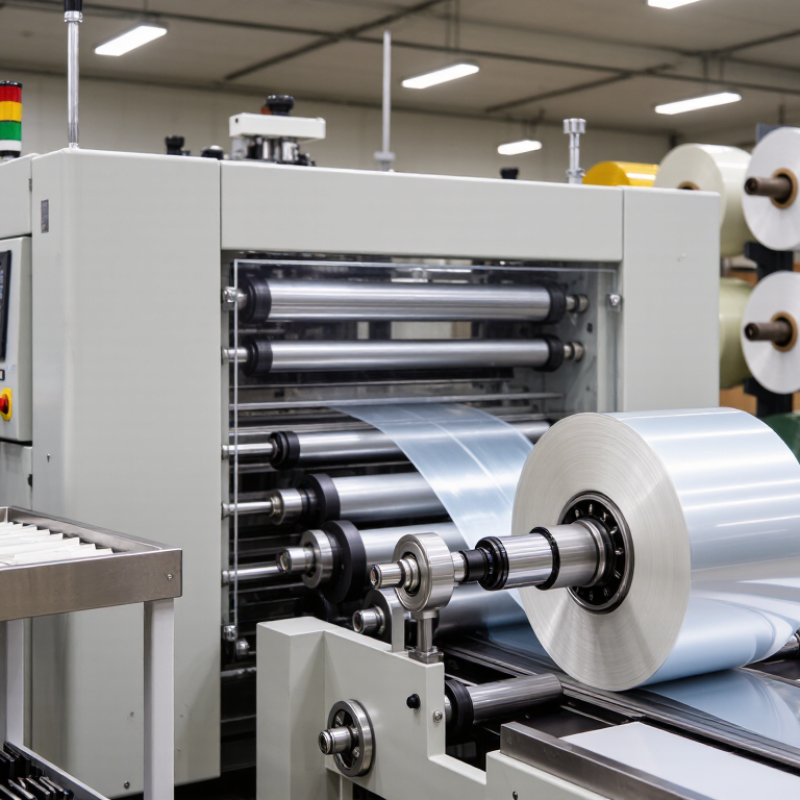
A film cutting machine turns a continuous roll of plastic film into narrower rolls or sheets with defined dimensions. Depending on the setup, it uses rotary or razor blades, guided web paths, and controlled tension. The goal is a clean edge without wrinkles, stretching, or excess trim. Small adjustments matter: a dull blade can leave fuzzy edges, while uneven tension may cause a finished roll to telescope. The machine cuts material; it does not correct flaws already present in the film.
The Flexible Packaging Association’s 2023 State of the U.S. Industry Report estimated that U.S. flexible packaging sales reached $42.9 billion in 2022. That figure describes the market, not cutting-machine performance, but it helps explain why accurate converting is important across many packaging applications. When choosing equipment, match its working width, speed range, and tension controls to your film thickness and production volume. Ask for a trial using your actual material. A specification sheet alone can miss how a film curls or stretches. Worth checking twice.
Tips: Inspect blade condition and edge quality during routine runs. Record the settings that work for each film type. Don’t judge a machine by top speed alone.
How to Choose the Best Film Cutting Machine: Understanding Film Thickness
Film thickness is one factor to check against a machine’s rated cutting capacity. This chart converts selected thickness values from mils to micrometres (µm).
One mil equals exactly 25.4 µm. These are thickness conversions, not recommended machine limits: check the manufacturer’s specifications for your specific film, blade, and cutting method.
Identifying the Film Materials and Cutting Tasks
A film cutting machine should match the material, not just the desired shape. Packaging films, window films, and pressure-sensitive laminates can look similar on a roll but behave differently under a blade. Check the film’s thickness, flexibility, adhesive layer, and release liner. A thin, stretchy film may wrinkle during feeding, while a stiff laminate may need more cutting force. Test a small sample.
Then define the actual cutting task. Are you trimming long rolls, making repeated labels, or producing detailed shapes with tight corners? Roll width and feed length affect machine capacity; small lettering demands steady material movement and a sharp, suitable blade. For adhesive films, check whether the cut should pass through the film only or through every layer. That matters. A cut that reaches the liner can make parts harder to peel and apply.
Material compatibility deserves a practical test before purchase. Run a short sample at the intended speed, then inspect the edges for lifting, tearing, melted spots, or adhesive buildup. Laser systems can affect some plastics and may require suitable ventilation, so confirm the material’s guidance before use. One common mistake is testing a clean scrap but not the actual layered film. Measurements can vary between batches, and I would leave room for another test.
How to Choose the Best Film Cutting Machine? – Identifying the Film Materials and Cutting Tasks
| Film material | Typical characteristics | Common cutting task | Suitable cutting approach | Key selection considerations |
|---|---|---|---|---|
| Polyethylene (PE) | Flexible, tough, and often supplied as a thin web or bag film; may stretch during handling. | Slitting rolls, cutting sheets, and producing simple packaging blanks. | Sharp rotary or shear slitting for continuous rolls; a supported web-cutting system for sheet or pattern work. | Check web tension and feed control to limit stretching, wrinkles, and uneven edges. |
| Polypropylene (PP) | Available as flexible packaging film or stiffer oriented film; stiffness and tear behavior vary by grade. | Roll slitting, label or packaging blanks, and repeat-length cuts. | Rotary or shear slitting for rolls; programmable knife cutting for sheet layouts and repeat cuts. | Match blade geometry and support to film stiffness; test for edge curl and static buildup. |
| Polyester (PET) | Dimensionally stable and relatively tough; used in packaging, electrical insulation, and graphics. | Narrow-width roll slitting, sheet cutting, and accurate component profiles. | Precision shear or rotary slitting for rolls; flatbed knife cutting for varied profiles. | Consider film thickness, required edge quality, dimensional tolerance, and whether the material is coated. |
| Polyvinyl chloride (PVC) | Can be flexible or rigid; plasticizers, coatings, and formulation affect cutting behavior. | Cutting flexible film, sign graphics, or thin rigid sheet. | Drag-knife or flatbed cutting for flexible stock; guarded mechanical cutting for suitable rigid sheet. | Confirm the exact formulation and use ventilation and material-handling controls appropriate to the process. |
| Pressure-sensitive adhesive (PSA) film or label stock | A face film and adhesive layer are carried on a release liner; adhesive can transfer to tools. | Label and decal contour cutting, kiss cutting, and roll slitting. | A controlled-depth knife for kiss cuts; rotary or shear slitting for converting rolls. | Set cut depth to penetrate the face material and adhesive without cutting through the liner; plan for blade cleaning. |
| Multilayer or laminated film | Combines layers with different stretch, stiffness, or bonding properties; construction varies by application. | Packaging web slitting, pouch blanks, and profile cutting. | Shear or rotary slitting for continuous webs; supported knife cutting for individual blanks. | Run trials on the complete laminate to check delamination, edge quality, and layer movement. |
| Metalized plastic film | A thin metal layer is deposited on a plastic film; the surface may be sensitive to scuffing or creasing. | Narrow-roll slitting and converting into packaging or insulation components. | Low-damage, well-aligned rotary or shear slitting with controlled web tension. | Inspect cut edges and surfaces for burr-like defects, wrinkles, scratches, or separation of layers. |
| Thin foam or cushioning film | Compressible and often thicker than packaging film; cutting can deform the material if it is poorly supported. | Cutting pads, liners, protective inserts, and custom shapes. | Oscillating or reciprocating knife cutting on a supported bed; compression cutting for suitable repeat jobs. | Allow for material compression and recovery; choose a tool stroke and support surface suited to the foam. |
Selection note: Material grades, coatings, thickness, roll width, cutting speed, and edge-quality requirements all affect machine suitability. Confirm performance with samples of the actual material before production.
Comparing Machine Types and Cutting Methods
How to Choose the Best Film Cutting Machine? Comparing Machine Types and Cutting Methods
Film slitter-rewinders divide wide rolls into narrower widths using razor, shear, or crush cutting. Razor blades suit thin films and quick changes, while shear knives can give cleaner edges on thicker laminates. Crush cutting is simple, but pressure may distort delicate material. Rotary die cutting is better for repeated shapes and perforations; it needs tooling and careful setup. Laser cutting handles intricate contours without a physical blade, though heat-sensitive films may curl or develop rough edges. The right method depends on film structure, thickness, tolerances, and daily changeovers.
Smithers’ The Future of Global Packaging to 2028 valued the global packaging market at about $1.17 trillion in 2023, with projected growth to $1.42 trillion by 2028. That broad market figure does not identify a best cutter. It does make waste rates and changeover time practical measures to review. Ask suppliers to run your actual film, not just a similar sample. Inspect the cut edge under magnification, then measure width variation across several rolls. A tidy specification sheet can still mislead.
Tips: Match blade geometry to film thickness and tension. Record scrap, speed, and edge defects during trials. Not always. A faster machine may create more waste, and one test roll rarely reveals every production issue. Recheck settings after material or humidity changes. Small details matter.
Evaluating Key Features, Precision, and Safety
A film cutting machine should match the material, sheet width, and daily workload—not just the largest number on its specification sheet. Check the cutting width against your widest film roll, and confirm that the feed system handles the material without pulling or wrinkling it. If possible, test a sample from your actual stock. Different films can behave differently, even when their thickness seems similar. Small errors add up.
Precision depends on more than the blade. Look for stable material support, adjustable settings, and clear calibration steps. Cut several test pieces, then measure their edges and repeatability. A clean first cut is not enough. Ask how often blades need adjustment or replacement, and whether routine maintenance is practical for your team. Safety deserves the same close review: inspect blade guards, emergency-stop access, and the steps required to clear a jam. A fast machine is not useful if operators must reach near moving parts. Specifications can be reassuring, but hands-on checks may reveal awkward controls or vibration.
Tips: Bring sample film and a ruler to a supplier demonstration. Watch the machine cut, pause, and restart. Keep the test notes, including any uneven edges. One detail is easy to miss: operator comfort. If controls feel cramped during a short trial, longer shifts may expose the problem.
Matching Machine Capacity to Your Budget and Workflow
How to Choose the Best Film Cutting Machine?
Match machine capacity to the work you actually run, not your busiest day alone. Check film width, thickness, roll diameter, and required cuts per minute against recent production records. A machine that runs too slowly can create a queue; an oversized model may leave expensive capacity idle. Small is not always cheap.
Budget for more than the purchase price. Compare expected output with setup time, operator hours, blade changes, maintenance, and material waste. The 2024 Deloitte and Manufacturing Institute Talent Study estimates that 1.9 million U.S. manufacturing jobs could go unfilled by 2033. That makes labor-efficient workflows worth considering, but automation only helps when it fits your changeovers and staffing. Measure actual utilization before deciding.
Tips: Ask for a trial using your own film and a representative job. Record usable output per shift, edge quality, changeover time, and scrap. Then compare those figures with your weekly demand and total operating costs. Leave some room for growth, but be honest: forecasts can miss, and flexibility may matter more than peak speed.