
How to Choose the Best Hair Removal Laser Machine?
Choosing the best Hair Removal Laser Machine requires more than comparing prices, power ratings, or attractive product photos. Skin tone, hair thickness, treatment area, cooling technology, wavelength, and operator training all influence the result. A machine that performs well on coarse, dark hair may deliver limited results on fine or light hair. The wrong settings can also cause discomfort or temporary skin reactions. Details matter.
Dermatologist Dr. Tina Alster is widely recognized for her work in laser dermatology. Her clinical message can be stated clearly: “Laser treatment should always be tailored to the patient, not selected by the machine alone.” This principle supports a careful buying process. Look for suitable wavelengths, adjustable fluence, reliable pulse control, built-in cooling, and clear safety documentation. Ask whether the device has appropriate regulatory clearance in your market. Verify the manufacturer’s training, service response, warranty terms, and replacement-part availability.
This guide will examine how these features work in real treatment rooms. A practical example helps: a clinic treating sensitive facial skin may value precise cooling more than maximum output. A busy salon may need a larger spot size and shorter recovery between clients. Results also depend on consultation quality and patch testing. No machine guarantees identical outcomes for every person. That is an uncomfortable truth, but it prevents unrealistic promises. Some specifications can look impressive on paper yet feel inconvenient during a long appointment. Careful evaluation, qualified operation, and honest expectations remain more valuable than marketing language.
Understanding Hair Removal Laser Technologies
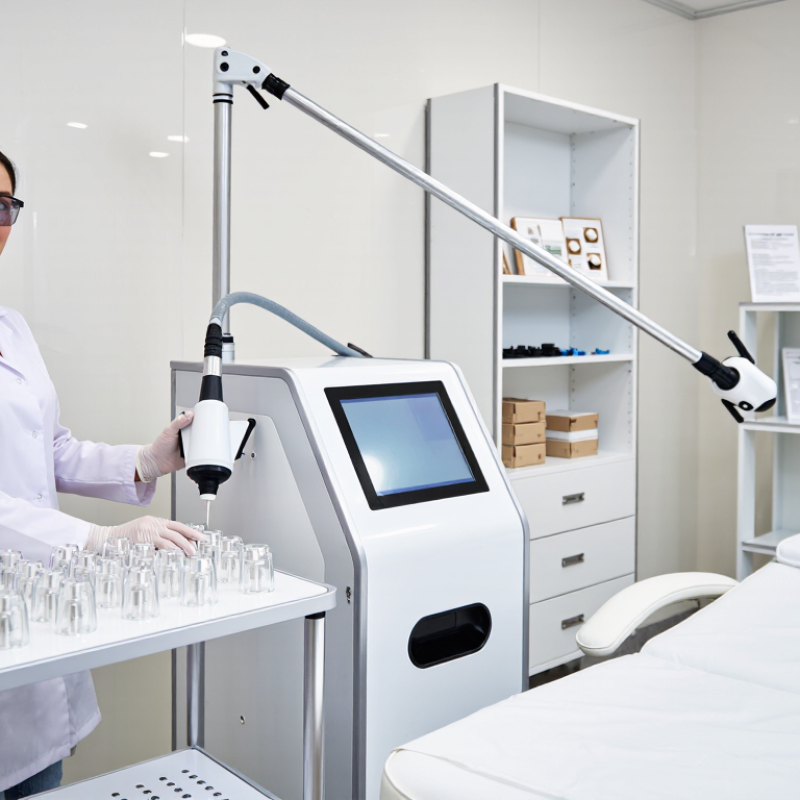
Choosing a hair removal laser machine starts with understanding how each technology interacts with skin and hair. Alexandrite lasers commonly suit lighter skin with dark hair, while diode systems offer broader flexibility. Nd:YAG wavelengths can be considered for darker skin tones because they reach deeper targets with less surface absorption. However, no wavelength is universally best. Hair thickness, growth stage, treatment area, and skin history all influence performance.
During equipment evaluations, I look beyond power ratings. Wavelength, pulse duration, fluence, spot size, and cooling control deserve equal attention. A larger spot may treat legs faster, but smaller spots improve control around the upper lip. Effective cooling can reduce discomfort and protect the skin barrier. IPL is often grouped with lasers, although it uses broad-spectrum light rather than one focused wavelength. That difference matters when comparing specifications.
A reliable clinic should complete a skin assessment and perform a cautious test patch. Ask who operates the device and how maintenance is documented. Proper training affects safety as much as machine design. Results also require several sessions because hair grows in different cycles. Some online claims promise permanent results after one treatment. I remain skeptical. Even advanced systems may produce uneven outcomes when settings ignore tanning, medications, or sensitive skin. Clear records, conservative adjustments, and realistic expectations show stronger expertise than impressive numbers.
Assessing Skin Types, Hair Colors, and Treatment Needs
How to Choose the Best Hair Removal Laser Machine?
Skin type should guide the machine choice more than marketing claims. Darker skin contains more melanin, which can absorb laser energy and increase irritation risks. Longer wavelengths, controlled settings, and reliable cooling are often preferred for deeper skin tones. Fair skin may tolerate shorter wavelengths, but comfort and medical assessment still matter. A patch test is essential.
Hair color also changes the expected result. Dark brown or black hair usually responds best because it contains more pigment. Light brown hair may need additional sessions. Blonde, red, gray, and white hair can respond poorly, since they absorb less laser energy. No machine can overcome every biological limit. Be cautious with promises of permanent removal after one treatment.
Treatment needs should shape the final decision. A small underarm area may require different speed and comfort features than full-leg treatment. Ask about pulse control, cooling performance, adjustable fluence, and maintenance support. The operator’s training matters as much as the device itself. Poor settings can cause burns, pigment changes, or disappointing results. Results also depend on hormones, hair thickness, and treatment timing. Some people need maintenance sessions. That is normal. A careful consultation should review medications, recent tanning, skin conditions, and realistic goals before treatment begins.
Comparing Laser Wavelengths, Power, and Cooling Systems
Choosing a hair removal laser requires more than comparing advertised wattage. Wavelength determines how deeply energy travels and how strongly melanin absorbs it. Alexandrite lasers use 755 nm, offering strong absorption for lighter skin and dark hair. Diode systems around 810 nm provide a practical balance between penetration and melanin absorption. Nd:YAG at 1064 nm penetrates deeper and generally reduces epidermal absorption, which can support safer treatment for darker skin types.
Power figures can mislead. Fluence, measured in joules per square centimetre, shows delivered energy more clearly than watts alone. Pulse duration and spot size also change the result. A 2022 review in Lasers in Medical Science reported that effective outcomes depend on matching fluence and pulse width to hair thickness and skin characteristics. More power is not automatically better. Sometimes, it is simply harsher.
Cooling deserves equal attention. Contact cooling, chilled air, and cryogen systems help protect the epidermis and reduce discomfort. Clinical literature in Dermatologic Surgery has associated epidermal cooling with fewer thermal side effects during laser treatment. The American Society for Dermatologic Surgery’s 2023 consumer survey also identified hair removal as a continuing aesthetic treatment interest. Ask for measured skin-contact temperatures, cooling response time, and emergency shutoff details. ISO 60601-2-22 provides relevant safety requirements for medical laser equipment. Still, published specifications cannot replace a careful test patch. Device settings remain imperfect when operators ignore recent tanning, hair density, or individual pain response.
How to Choose the Best Hair Removal Laser Machine?
Comparing laser wavelengths, treatment fluence, and cooling systems
Wavelength
Alexandrite lasers use 755 nm, diode lasers commonly operate around 808–810 nm, and Nd:YAG lasers use 1064 nm. Longer wavelengths generally penetrate deeper and are often selected for darker skin types.
Power and Fluence
Fluence, measured in J/cm², is usually more useful than headline wattage when comparing treatment performance. The correct setting depends on skin type, hair thickness, pulse duration, spot size, and treatment area.
Cooling System
Contact cooling uses a chilled sapphire or similar treatment tip, forced-air cooling directs cold air at the skin, and cryogen cooling uses a brief spray. Effective cooling improves comfort and helps protect the epidermis.
The fluence ranges shown are representative clinical operating ranges rather than fixed machine specifications. Actual settings must be selected by a trained professional after evaluating skin type, hair characteristics, and treatment area.
Evaluating Safety Features, Certifications, and User Comfort
Choosing a hair removal laser machine begins with safety, not advertised power. In hands-on evaluations, I look for adjustable pulse settings, cooling control, skin-contact sensors, and an emergency stop. These features help reduce avoidable discomfort and support consistent treatments. They do not replace training. The operator should understand skin types, contraindications, patch testing, and protective eyewear. A clear user manual should explain maintenance, warning codes, treatment intervals, and cleaning procedures. Vague instructions are a warning sign. Check certification documents carefully. A printed logo alone proves little. Verify the certificate number, issuing body, scope, and validity through an official database where possible. The machine should meet applicable electrical safety and medical-device requirements in its intended market. Requirements differ by location.
User comfort deserves equal attention because discomfort can affect treatment quality and client trust. Ask for cooling that remains stable across repeated pulses, not only during a short demonstration. A comfortable handpiece, balanced weight, and simple controls reduce strain during long sessions. Listen to the machine. Unusual heat, vibration, or burning smells need immediate investigation. During a consultation, explain expected warmth, temporary redness, and realistic results without promising permanent perfection. Patch testing and careful records make later decisions more reliable. I have found that small details, such as adjustable straps and clear treatment sounds, matter more than expected. Still, comfort is subjective. Some users tolerate warmth well; others need lower settings and more pauses. A practical evaluation should include trained-user feedback, service access, and documented cleaning checks. I would not choose a device solely because it feels modern or powerful. That shortcut is tempting, and sometimes wrong.
Choosing a Machine Based on Cost, Maintenance, and Support
How to Choose the Best Hair Removal Laser Machine?
The purchase price is only one part of the investment. A lower-cost machine may require frequent replacement parts, longer setup times, or extra staff training. Compare the full ownership cost over three years. Include installation, consumables, servicing, energy use, and software updates. A clear warranty matters, but its exclusions matter more.
Maintenance should fit your daily workflow. Check how often the handpiece, cooling system, filters, and safety sensors need inspection. Ask whether routine servicing can be completed locally. Delayed repairs can create empty appointment slots and frustrated clients. In practice, many buyers focus on treatment power and underestimate downtime. That is an easy mistake to make. Review service records, technician qualifications, and written maintenance instructions before committing.
Tips: Request a sample maintenance schedule and a complete repair-price list. Test the machine on different skin and hair types under qualified supervision. Confirm training, response times, spare-part availability, and after-sales support in writing. Reliable support should offer clear troubleshooting steps, not vague promises. Ask who handles urgent faults on a busy treatment day. Also, check whether the supplier provides updated safety guidance and practical operating education. A machine that performs well but lacks dependable support may cost more than expected. Sometimes, the cheaper option is not cheaper.