
How to Choose the Best Loading Robots for Global Sourcing?

Global sourcing is becoming more complex, while warehouses must move goods faster and more consistently. Loading Robots can support pallet handling, trailer loading, and repetitive dock operations. However, choosing the right system requires more than comparing payloads or advertised cycle times. The International Federation of Robotics reported 541,302 industrial robot installations worldwide in 2023, showing the scale of automation investment. Its World Robotics 2024 report also recorded more than 4.2 million industrial robots operating globally. These figures indicate strong adoption, but they do not guarantee a suitable loading solution for every warehouse.

The best choice depends on real operating conditions. A sourcing team should examine carton sizes, pallet patterns, loading heights, dock layouts, temperature changes, and daily volume. Gartner and DHL logistics research continues to highlight robotics, labor availability, and supply-chain resilience as major investment priorities. Yet a robot can perform well in a demonstration and struggle beside a narrow dock, uneven floor, or frequently changing SKU mix. That risk deserves attention.

Measure the details first.

Reliable evaluation should include verified throughput, integration requirements, safety features, maintenance access, and total cost of ownership. Supplier references are valuable, especially when they involve similar trailers, packaging, and shift patterns. Testing representative loads can expose problems that brochures hide. Energy use and operator training also influence long-term results. The International Federation of Robotics provides useful market context, while site-specific trials provide stronger evidence. No system is perfect. A careful sourcing decision combines industry data, practical experience, and honest review of operational limitations.
How to Choose the Best Loading Robots for Global Sourcing?

Define Loading Robots and Their Role in Global Sourcing

How to Choose the Best Loading Robots for Global Sourcing?

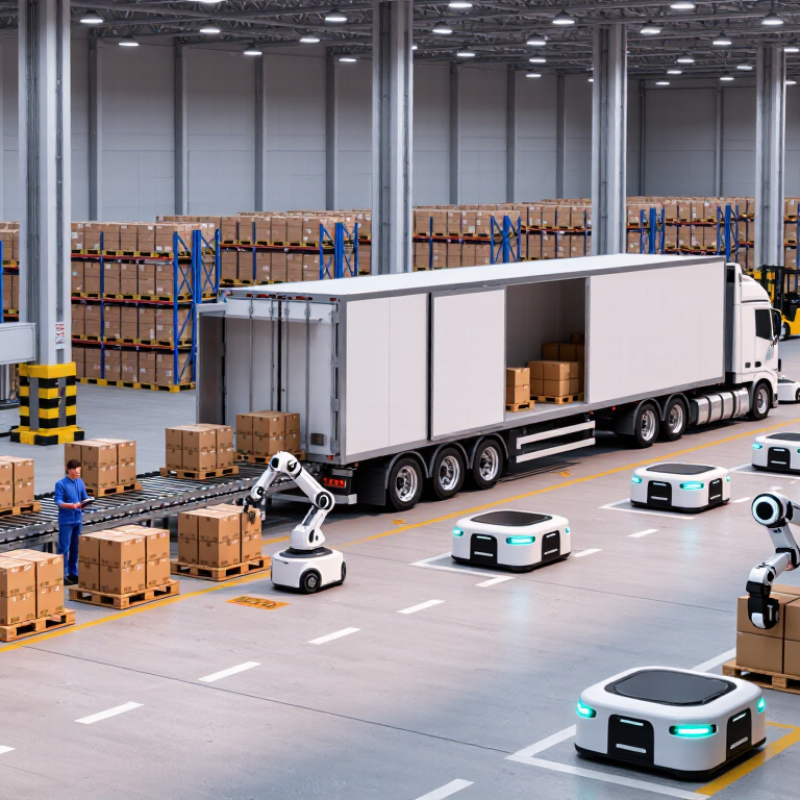
Loading robots are automated systems that transfer cartons, totes, or pallets between storage areas, conveyors, trucks, and shipping containers. They may use robotic arms, mobile platforms, vision cameras, and grippers. Their role is practical: stabilize outbound loading when sourcing networks handle different products, suppliers, and shipping schedules.

The market is expanding quickly. The International Federation of Robotics reported 541,302 industrial robots were installed worldwide in 2023. This figure shows wider automation adoption, although not every robot suits loading work. The 2024 MHI Annual Industry Report found that 43% of supply-chain professionals use robotics and automation. For global sourcing teams, loading robots can reduce repetitive lifting, improve loading consistency, and record movement data across facilities.

Selection should begin with real dock conditions. Measure carton weight, pallet height, container dimensions, loading speed, floor quality, and temperature. Vision systems help when packages arrive slightly misaligned. That happens often. A pilot should test mixed cartons, damaged packaging, and delayed supplier arrivals. I would also compare changeover time, maintenance access, safety sensors, and integration with warehouse software. The best robot is not always the fastest one. A cheaper system may fail when product sizes change weekly. Human supervision remains necessary, especially during unusual loads. The evaluation should include total operating cost, training hours, uptime, and worker feedback, not only the purchase price. (Sources: IFR, World Robotics 2024; MHI, 2024 Annual Industry Report)

How to Choose the Best Loading Robots for Global Sourcing?

Loading robots automate palletizing, depalletizing, container loading, and case handling. Payload capacity is a key selection factor because it must cover the product, packaging, and gripping equipment while maintaining the required reach and cycle speed.

The chart shows common industrial robot payload classes used in logistics and loading applications. The suitable class depends on product weight, gripper mass, pallet pattern, reach, cycle time, and safety requirements.

Identify Your Loading Requirements and Operating Conditions

How to Choose the Best Loading Robots for Global Sourcing?

Identify Your Loading Requirements and Operating Conditions

Choosing a loading robot starts with the real work at your dock, not a brochure specification. Record the payload, pallet dimensions, loading height, and required cycle time. A 40-kilogram carton needs different handling than a mixed pallet with unstable layers. Measure the dock door, trailer opening, aisle width, and turning space. Small gaps can create large delays.

Real sites are rarely tidy. Floors may have uneven joints, oil residue, dust, or changing light conditions. Note the operating temperature, humidity, noise, and available power supply. If trucks arrive in batches, calculate the peak workload rather than the daily average. The robot should handle normal variation without forcing workers to reset it every hour.

Safety conditions deserve practical testing. Check emergency stops, guarding, pedestrian routes, and communication with conveyors or warehouse software. Ask for documented performance data from environments similar to yours. A controlled demonstration is useful, but a site trial reveals more. Watch how the robot responds to crooked pallets, crushed cartons, and short pauses. These details expose weaknesses that polished presentations can hide.

Do not ignore maintenance. Confirm access to wear parts, fault records, training, and remote support across operating regions. Leave room for error. My own assessments have sometimes underestimated cleaning time and changeover work. That mistake matters because a technically capable robot can still fail when operators find it difficult to use.

Compare Robot Types, Capabilities, and Integration Options

How to Choose the Best Loading Robots for Global Sourcing?

Loading robots differ greatly in movement, reach, and installation needs. Robotic arms suit repetitive carton placement near fixed conveyors. Gantry systems handle heavier loads across wide loading zones. Autonomous mobile robots offer flexibility when warehouse layouts change often. The best choice depends on carton weight, pallet height, loading speed, and available floor space. Measure real shipments, not ideal samples.

Capabilities should match daily operating conditions. Check payload capacity, gripping performance, vision accuracy, and recovery after misplaced cartons. A vacuum gripper may work well with smooth boxes but struggle with dusty or uneven surfaces. Layer-loading robots can improve container utilization, while flexible arms may handle mixed carton sizes better. Speed claims need careful testing. A robot that moves quickly but pauses frequently may deliver lower output.

Integration often decides whether a system succeeds. Confirm compatibility with warehouse software, conveyor controls, barcode scanners, and safety equipment. Consider local power standards, maintenance access, operator training, and spare-part availability. During site testing, observe one complete shift. Watch for delayed scans, unstable cartons, and manual interventions. Small problems matter. A spreadsheet cannot reveal every bottleneck. Some evaluations also overlook seasonal volume changes, which can make an efficient system feel inadequate later. Choose modular equipment when future product dimensions remain uncertain, but accept that flexibility can increase cost and programming time.

Evaluate Suppliers, Compliance, Service, and Total Cost

Choosing loading robots for global sourcing requires more than comparing speed and payload. MHI’s 2024 Annual Industry Report found that 67% of supply chain leaders plan to increase technology investment. That figure signals opportunity, not permission to buy quickly. Request supplier records for uptime, mean time between failures, battery life, and performance in dusty loading bays. Ask for a live test with mixed pallets, uneven floors, and narrow dock doors. Real conditions expose weak claims.

Compliance must be measurable. Confirm conformity with relevant machinery, electrical, functional safety, and autonomous vehicle requirements in each destination market. ISO 3691-4 offers useful guidance for driverless industrial trucks. Require risk assessments, emergency-stop testing, software update controls, and documented operator training. Supplier service matters too. Check local technicians, spare-parts stock, remote diagnostics, and guaranteed response times. A robot waiting three weeks for a sensor is not automated productivity. It is delayed cargo.

Total cost should include integration, guarding, mapping, training, batteries, maintenance, downtime, and decommissioning. World Robotics 2024 reported 541,302 industrial robots were installed globally in 2023, showing rapid adoption across manufacturing. Yet loading environments differ sharply from factories. Compare cost per completed loading cycle, not only purchase price. Use a twelve-month pilot with agreed acceptance metrics. I would still challenge the spreadsheet: projected labor savings often look precise, while congestion, seasonal peaks, and failed handoffs remain uncertain. Reliability deserves a financial value.

Select, Test, and Implement the Best Loading Robot Solution

Selecting the best loading robot for global sourcing starts with the warehouse, not the catalogue. Map carton sizes, pallet heights, loading speeds, floor conditions, and temperature changes. A robot handling fragile boxes needs different gripping force than one moving uniform cases. Confirm payload limits and reach against real shipment data. Small details matter.

Testing should use production-like cartons, damaged packaging, mixed orders, and busy shift patterns. Run repeated cycles, not a single impressive demonstration. Measure placement accuracy, cycle time, recovery speed, energy use, and operator involvement. Include safety checks around conveyors, scanners, and manual work areas. Our first trial focused too heavily on speed. It later revealed poor performance with soft cartons. That mistake changed our evaluation method.

Implementation works better through a controlled pilot. Keep one loading zone active while trained staff monitor exceptions and record downtime. Connect the robot with warehouse software, shipment schedules, and maintenance alerts. Define clear acceptance targets before installation, including uptime, error rates, and safe restart procedures. Local technicians should receive practical training, not only digital manuals. Spare parts and remote support also need confirmed response times. Review the data weekly and adjust grippers, routes, or carton rules when evidence supports change. A solution may look efficient yet create hidden delays during peak sourcing periods. Expect revision.

How to Choose the Best Loading Robots for Global Sourcing? – Select, Test, and Implement the Best Loading Robot Solution
Loading Robot Solution Best-Fit Loading Application Typical Payload Typical Throughput Load Accuracy Space Requirement Labor Reduction Potential Integration Complexity Recommended Acceptance Test Typical Implementation Time
Robotic Palletizer
Fixed industrial arm with pallet-pattern programming
Cartons, cases, sacks, and rigid packages at the end of a production or packing line 20–250 kg 10–30 cases/min ±5–15 mm, depending on tooling and package stability Approximately 20–45 m², including guarding and pallet staging 1–3 operators/shift Medium; conveyor, safety, pallet dispenser, and warehouse-interface integration required Run the maximum planned case rate for 2 hours; verify pallet pattern, edge alignment, safety stops, and changeover time 10–20 weeks
Robotic Depalletizer
Automated unloading of mixed or uniform pallet loads
Receiving docks, production feeding, and high-volume unloading of cartons or containers 5–80 kg 8–25 cases/min ±10–25 mm, affected by pallet quality and load condition Approximately 25–60 m², including pallet presentation and empty-pallet handling 1–2 operators/shift High for mixed-SKU pallets; vision, barcode reading, layer detection, and exception handling may be required Test full-height pallets with damaged cartons, SKU changes, missing cases, and at least three pallet conditions 14–28 weeks
Automated Truck-Loading System
Conveyor-based loading and unloading solution
Repetitive trailer loading where dock doors, vehicle dimensions, and package flow are standardized 5–35 kg/package 250–600 packages/hour Typically ±25–50 mm at final placement Approximately 30–100 m², depending on conveyor length and dock layout 2–5 operators/shift High; dock controls, trailer sensing, conveyors, scanners, and warehouse-management interfaces are usually needed Validate loading time per trailer, package damage rate, trailer compatibility, emergency recovery, and dock turnaround 16–32 weeks
Autonomous Mobile Robot with Lift
Self-navigating pallet or container transport platform
Internal movement between receiving, storage, staging, and shipping zones in dynamic facilities 500–1,500 kg 20–60 pallet moves/hour ±10–30 mm at docking points Requires marked travel lanes; turning radius commonly 1.5–2.5 m 1–2 operators/shift Medium to high; traffic control, charging, fleet management, and warehouse-system integration are required Test peak-hour traffic, mixed pedestrian conditions, battery endurance, docking repeatability, and blocked-route recovery 12–24 weeks
Collaborative Palletizing Cell
Lower-speed robotic arm designed for shared work areas
Small and medium-volume operations with frequent product changes and limited fixed guarding 5–20 kg 4–12 cases/min ±10–25 mm, depending on package shape and operator interaction Approximately 8–20 m² 0.5–1 operator/shift Low to medium; safety assessment, conveyor synchronization, and simple recipe management are generally required Verify safe human interaction, product changeover, package handling, pallet stability, and sustained cycle performance 6–14 weeks
Vision-Guided Piece-Picking Robot
Robotic picking from totes, conveyors, or mixed-case flow
E-commerce fulfillment, mixed-SKU order consolidation, and irregular package loading 0.1–15 kg/item 600–1,800 picks/hour Approximately ±5–20 mm for recognized products Approximately 10–30 m² per picking cell 1–3 operators/shift High; vision training, product master data, gripper selection, exception management, and order-system integration are important Test the full SKU mix, transparent or reflective packaging, damaged items, occlusion, grasp failures, and order accuracy 12–26 weeks
Robotic Container or Pallet Loading Cell
Pattern-based loading into containers, cages, or outbound pallets
Export consolidation, cross-border distribution, and standardized container-loading operations 5–50 kg/package 150–500 packages/hour ±10–30 mm, subject to package geometry and load-securing method Approximately 25–70 m², including staging and access clearance 1–4 operators/shift Medium to high; packing rules, dimension data, scanners, conveyors, and export-document workflows may be connected Measure cube utilization, load stability, loading time, package damage, destination accuracy, and performance across product sizes 14–30 weeks
Performance ranges are typical planning benchmarks for industrial logistics environments. Actual results depend on package dimensions, SKU variability, pallet quality, layout, safety requirements, software integration, and operating shifts.

CONTACT US