
How to Choose a Metal 3D Printing Factory?

Choosing a Metal 3D Printing Factory is a production decision, not a machine-shopping exercise. The wrong partner can leave you with rough surfaces, warped brackets, or a part that fails inspection. The stakes are rising. Wohlers Report 2024 estimated that the global additive manufacturing industry generated $20.035 billion in 2023, up 11.1% from 2022. That figure covers additive manufacturing broadly, not metal printing alone, but it signals a maturing supply chain. Growth does not guarantee consistent quality.

Terry Wohlers, founder of Wohlers Associates and a long-time additive manufacturing analyst, has emphasized a useful principle: “Choose the process for the application, not the hype.” Treat that as guidance, not a verbatim quotation from a particular report. A credible factory should explain how its alloy, build orientation, support strategy, heat treatment, and inspection plan fit your part. Ask for evidence: material certificates, build records, dimensional inspection results, and examples of comparable work. A polished sample is not enough. It may hide the hard questions.

This guide compares the details that separate a capable supplier from a persuasive sales pitch. It covers equipment and materials, engineering support, quality controls, lead times, and total cost. Some evidence can be awkward to request. Request it anyway. A thoughtful review should also admit uncertainty: one successful build cannot prove repeatability across every geometry or production run. The goal is a factory that can explain its limits, document its process, and make your next batch as predictable as the first.
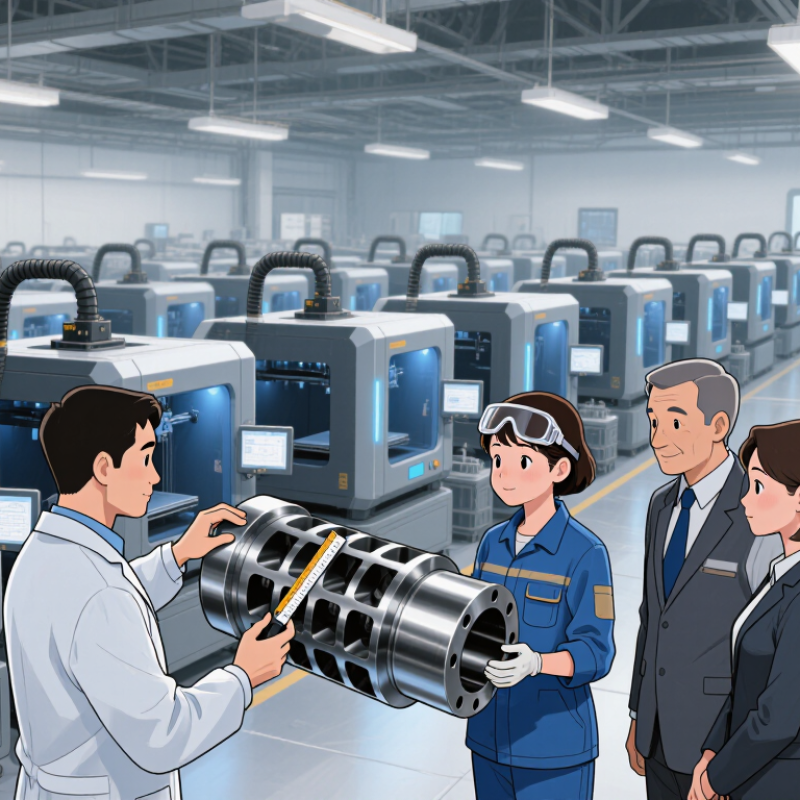
How to Choose a Metal 3D Printing Factory?

Define the Requirements of the Metal 3D Printing Project

Before contacting a metal 3D printing factory, turn the part’s purpose into measurable requirements. Define the load, operating temperature, environment, and expected service life. A bracket inside a warm, vibrating machine needs different material and testing than a display component. Be specific about alloy, quantity, and whether machining, heat treatment, or surface finishing is required. Small details matter.

Set acceptance criteria early. Record critical dimensions, allowable tolerances, surface-finish needs, and inspection methods on the drawing. Identify features that must be machined after printing, such as bearing seats or threaded holes. Ask how the factory will document powder handling, build orientation, and post-processing. ISO/ASTM 52920:2023 provides qualification principles for industrial additive manufacturing processes and production sites, making it a useful reference when discussing process controls.

Budget and lead time belong in the brief too. The Wohlers Report 2024 estimated that the global additive manufacturing industry reached $20.0 billion in 2023, growing 11.1% from the previous year. That figure covers the wider industry, not metal parts alone, but it signals a mature and varied supply chain. Share the intended use, not just a CAD file. I would avoid demanding the tightest tolerance everywhere; it can add cost without improving performance. And be honest about uncertainty. Early prototypes may reveal that a requirement needs revising.

Compare Printing Technologies and Factory Capabilities

Choosing a metal 3D printing factory means matching its process to your part, not just comparing machine names. Laser powder bed fusion can produce intricate channels and thin walls, but support removal and heat treatment may affect the final geometry. Directed energy deposition suits larger repairs or features, though it may leave a rougher surface. Binder jetting can build many parts in a batch, but sintering can cause shrinkage that needs careful compensation. Not always. Ask how the factory checks dimensions after processing.

Factory capability matters just as much as printing technology. Check its build volume, supported alloys, powder handling procedures, and experience with your part’s wall thickness. A small test coupon can reveal porosity, surface texture, or distortion before you commit to a full production run. Ask for inspection records, including measurement methods and results, rather than relying on a general claim of quality control. Also confirm whether machining, heat treatment, and finishing happen in-house or through outside suppliers. One easy-to-miss detail: moving a part between facilities can add time and complicate traceability. The comparison is rarely neat; a factory’s preferred process may not be the best fit for every feature. I would still ask why it recommends that route.

How to Choose a Metal 3D Printing Factory? — Compare Printing Technologies and Factory Capabilities

Comparison Dimension Laser Powder Bed Fusion (LPBF) Electron Beam Powder Bed Fusion (EB-PBF) Metal Binder Jetting Directed Energy Deposition (DED)
How the Process Works A laser selectively melts metal powder in a powder bed, building the part layer by layer. An electron beam selectively melts metal powder in a vacuum environment. A liquid binder joins powder particles; the printed “green” part is then cured, depowdered, and sintered. Metal wire or powder is fed into a focused energy source and deposited onto a substrate or existing part.
Common Material Families Stainless steels, tool steels, aluminium alloys, titanium alloys, nickel alloys, and cobalt-chrome alloys. Commonly titanium alloys and some other materials supported by the machine and process qualification. Stainless steels and tool steels are established options; availability of other alloys depends on the powder, binder, and sintering process. Stainless and tool steels, titanium alloys, nickel alloys, and other weldable metal feedstocks, depending on the system.
Typical Layer Thickness Often approximately 20–60 μm; actual settings depend on the machine, material, and required quality. Often approximately 50–100 μm, with settings varying by machine and application. Often approximately 50–200 μm; the final part also undergoes curing and sintering. Usually substantially thicker than powder-bed layers; bead and layer dimensions vary with the deposition setup.
Detail and Surface Finish Good for small features and complex geometry; as-built surfaces are typically textured and may need finishing. Suitable for complex geometry, but fine-feature capability and surface finish are generally less suited to very small details than LPBF. Can produce complex shapes without support structures in many cases; sintering and powder handling affect detail and finish. Best suited to larger features, near-net-shape deposition, and repair; generally not the first choice for fine details.
Build Size and Geometry Build envelope is machine-dependent. Supports are often needed for overhangs, heat management, and part anchoring. Build envelope is machine-dependent. Elevated powder-bed temperature can help reduce some thermal stresses, but design rules still apply. Build envelope is machine-dependent; parts must be designed to account for debinding, sintering, and dimensional change. Useful for large features and adding material to existing parts; access, toolpath, and part orientation constrain geometry.
Production and Cost Considerations Often selected for high-value, complex parts. Supports, powder handling, and post-processing contribute to total cost. Can suit applications using compatible materials and geometries; vacuum equipment and process-specific requirements affect cost. Can be attractive for batch production of suitable geometries, but furnace capacity, sintering cycles, and shrinkage control matter. Can deposit material efficiently on larger parts or for repair; machining is commonly needed to achieve final dimensions.
Typical Post-Processing Support removal, stress relief or heat treatment, powder removal, machining, and surface finishing as required. Powder removal, support removal where applicable, machining, and any application-specific heat treatment or finishing. Curing, depowdering, debinding, sintering, and often machining or finishing; dimensional compensation is important. Substrate removal where applicable, machining, and sometimes heat treatment or inspection of the deposited region.
Factory Equipment to Check Compatible LPBF machines, controlled powder handling, sieving and storage equipment, heat-treatment capability, and finishing equipment. EB-PBF equipment, suitable vacuum systems, powder recovery and handling procedures, and appropriate inspection capability. Binder-jet printers, curing and debinding equipment, sintering furnaces, and a controlled method for managing shrinkage. DED equipment suited to the specified feedstock, deposition monitoring, fixturing, machining access, and repair or build-up capability.
Quality and Traceability Questions Ask for material and build records, powder-lot traceability, documented process controls, and inspection results for comparable parts. Ask how vacuum and build parameters are monitored, how feedstock is tracked, and how the factory verifies part properties. Ask for documented shrinkage compensation, furnace-cycle control, dimensional inspection, and evidence of repeatable sintering results. Ask how deposition parameters and feedstock are recorded, how interfaces are inspected, and how repair quality is validated.
Best-Fit Applications Complex, relatively small-to-medium parts with internal channels, lattice features, or demanding geometric requirements. Parts suited to compatible materials and geometries where the process’s thermal conditions and material options meet the application. Suitable batches of parts where the design accommodates sintering and the required material and dimensional performance are available. Large components, material addition, and repair or refurbishment where deposited material can be machined to final dimensions.

Values and capabilities are indicative, not universal. Confirm material availability, achievable tolerances, qualified process parameters, inspection methods, and post-processing requirements directly with the factory for your part.

Assess Materials, Quality Controls, and Certifications

Choosing a metal 3D printing factory starts with the alloy, not the brochure. Ask which grades the team prints regularly and how powder is stored, screened, and reused. For powder-bed fusion, request batch records covering chemistry and particle-size distribution; oxygen limits may matter for some alloys. A material certificate is useful, but it does not prove the finished part meets your requirements. That distinction matters.

Look closely at process controls. Ask for build logs, machine calibration records, and agreed inspection criteria. For a sample part, review dimensional results and any density, metallographic, or computed tomography testing relevant to its geometry. A thin coupon beside a build can provide useful evidence, though it may not behave exactly like a complex component. No test tells the whole story.

Check certifications by scope, site, and process. ISO 9001 indicates a quality management system; ISO/ASTM 52920 addresses qualification principles for additive manufacturing production sites. Confirm that the certificate is current and covers the facility making your parts. Ask how subcontracted heat treatment or machining is tracked. A tidy certificate folder is reassuring, but it can hide a weak handoff. I would also ask to see a recent, anonymized inspection record; some factories may hesitate, and that is worth discussing rather than ignoring.

Review Production Costs, Lead Times, and Support

How to Choose a Metal 3D Printing Factory?

A low unit price can hide important costs. Compare quotes for setup, material, support removal, heat treatment, machining, inspection, and shipping. Ask whether the estimate includes the exact alloy and required surface finish. A thin-walled bracket may need different supports and post-processing than a solid test block. Request a cost breakdown, not just a per-part figure. Small details matter.

Lead times should cover the full route from file review to delivery. Ask when production starts, how long the machine queue is, and whether finishing or inspection adds days. Get milestone dates in writing. Then check what happens if a build needs repeating. A fast print is not a fast delivery. I’ve seen early estimates shift after engineers review the geometry; that can be reasonable, but the reason should be clear.

Good support is practical and specific. Look for engineers who flag risks such as trapped powder, thin walls, or difficult support access before production. Ask what inspection records come with the parts, and how changes are documented. A responsive team should explain trade-offs without promising perfection. That matters. No factory can remove every uncertainty, and even a careful review may miss something. Note how clearly the team discusses that possibility.

Verify Factory Experience and Select a Suitable Partner

A metal 3D printing factory’s experience should be visible in its process records, not only in a polished portfolio. Ask how long it has produced parts using your target alloy and process, such as laser powder bed fusion. Request a sample build log showing machine parameters, powder-batch traceability, part orientation, and post-processing steps. Ask for proof. A supplier may own advanced equipment yet have limited experience with thin walls, internal channels, or tight tolerances. Review parts similar in size and function to yours, then discuss defects and corrective actions. Honest answers about failed builds can be more useful than perfect-looking photographs.

Verify quality controls in practice. Ask how operators monitor oxygen levels, calibrate equipment, manage powder reuse, and document heat treatment. Check whether inspection reports include dimensional results and suitable non-destructive testing when your design requires it. Request a first-article part and agree on acceptance criteria before ordering production quantities. A capable factory should explain realistic lead times, batch sizes, and what happens if a part misses specification. Speak with a technical contact who can discuss design changes, not only sales. Share a drawing with critical dimensions and ask about support removal or machining access. Look closely. I would also compare written procedures with what the team actually does on the shop floor. A small gap still matters.

How to Choose a Metal 3D Printing Factory?

Verify Factory Experience and Select a Suitable Partner

Publication years of selected ISO/ASTM standards for additive manufacturing. Ask potential partners for documented process controls, relevant experience, and evidence that their quality systems address applicable standards. Publication year alone does not indicate factory certification.

Source: ISO and ASTM International standard catalogues. Years shown are the edition years.

CONTACT US