What Is a Circular Knitting Machine and How Does It Work?
A Circular knitting machine forms fabric by joining loops in a continuous, usually tubular, structure. Its needles sit around a rotating cylinder or dial, while yarn feeders supply thread as the machine runs. Cams guide each needle up and down, helping it catch yarn and pull a new loop through the one already held. The motion is continuous. That is the basic idea, though real machines involve more moving parts.
On a production floor, the difference between steady fabric and a flawed roll can come down to details: yarn tension, needle wear, machine speed, and the chosen stitch setting. A small snag or uneven feed may leave visible lines, dropped stitches, or changes in fabric weight. Operators check these details during setup and production; settings that work for one yarn may not suit another. Small details count.
This guide explains how a Circular knitting machine works, what its main components do, and how common machine types differ. It also considers practical uses, from T-shirts and ribbed cuffs to socks and seamless garments. The term “circular” can be misleading: not every machine produces the same tube, and some setups can open the fabric into a flat sheet. Understanding those limits makes the equipment easier to evaluate. It is not magic—just precise, repeated loop formation, with plenty of room for human judgment.
What a Circular Knitting Machine Is
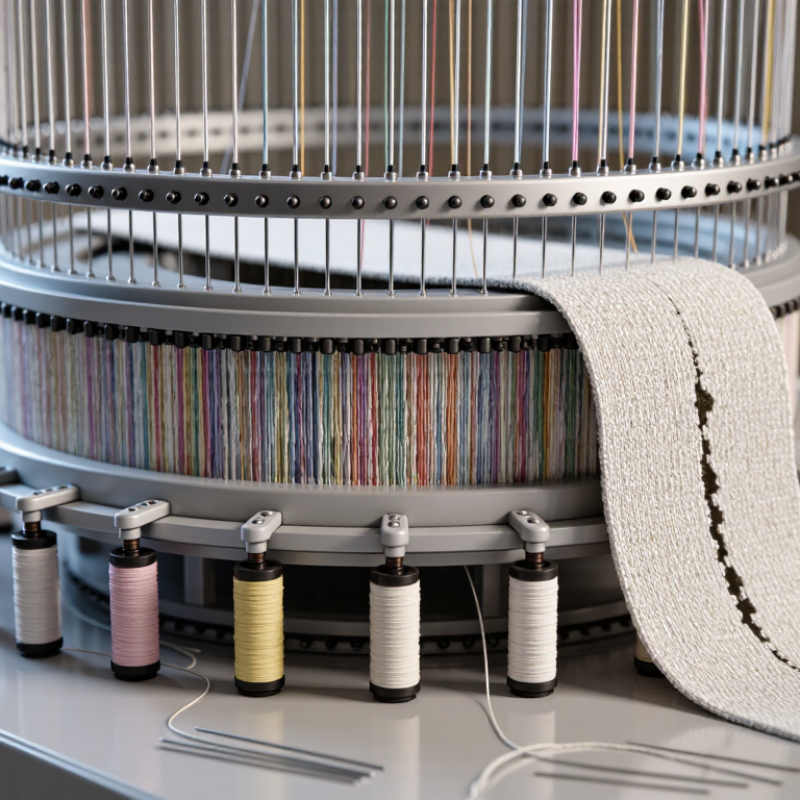
A circular knitting machine is a textile machine that forms knitted fabric in a continuous tube. Rather than working across one flat row, it arranges needles around a cylinder or circular bed. Each needle catches yarn and pulls it through an existing loop to make another. As the machine runs, yarn feeders deliver thread and the fabric grows downward. The result can be used for T-shirts, cuffs, socks, and other tubular garments.
Machine designs differ. Some use one needle bed, while others use two to create different fabric structures. The needle spacing, yarn choice, and machine settings affect the fabric’s weight, stretch, and surface. Unlike weaving, knitting builds fabric from linked loops. The idea sounds simple, but setup can be unforgiving. Uneven yarn tension or a damaged needle may leave visible lines or dropped stitches. Results also depend on careful inspection, not just machine speed.
Tips: Check that the yarn feeds smoothly before starting a long run. Look for dropped loops and uneven rows near the fabric edge. Keep notes on settings that work; small adjustments can change the fabric more than expected.
Main Components and Their Functions
What Is a Circular Knitting Machine and How Does It Work?
Main Components and Their Functions
A circular knitting machine forms fabric in a continuous tube, using needles arranged around a rotating cylinder. The needle cylinder holds the needles in closely spaced grooves. Each needle has a hook and latch that catch yarn and draw new loops through older ones. Small parts, but their timing matters. Cams guide the needles up and down as the cylinder turns, controlling when they take yarn and form stitches. Different cam settings can create varied stitch structures, though the result also depends on yarn and machine setup.
Yarn feeders direct strands toward the needles, while tension devices help keep delivery steady. If tension changes, the fabric may show uneven loops or stripes. Sinkers work beside the needles, holding the fabric down and helping shape each new loop. Below the knitting zone, take-down rollers gently pull the finished fabric downward and keep it from bunching.
The frame supports these moving parts, and control systems let an operator adjust speed or monitor operation. In practice, these components do not work in isolation. A slightly worn needle or poorly aligned feeder can affect the fabric, even when the settings seem correct. That detail is easy to overlook. Operators often need to inspect the knitted surface and make small adjustments, because no single setting guarantees uniform fabric.
How Yarn Becomes Knitted Fabric
A circular knitting machine turns yarn into fabric by forming connected loops, not by crossing lengthwise and crosswise threads as a loom does. Yarn cones feed strands through guides to needles arranged around a rotating cylinder. As the cylinder turns, each needle catches yarn and pulls a new loop through the one already held. The old loop slips off, linking the rows together. It happens continuously.
The fabric’s feel depends on choices made at the machine. Needle spacing, yarn tension, and stitch length affect density, stretch, and surface texture. Sinkers help control the loops, while take-down rollers draw the growing tube away from the needles. Too much tension can distort stitches; too little can leave loose loops or dropped stitches. A small adjustment matters.
This process sits within a large materials system. Textile Exchange’s Materials Market Report 2024 estimates that global fiber production reached 124 million tonnes in 2023. That figure includes fibers used in many products, not just knitted fabric, but it shows why efficient yarn use matters. Still, a neat machine setting does not guarantee a perfect roll. Yarn variation and changing humidity can affect consistency, and operators may need to inspect the fabric as it forms. The process is precise, but never entirely automatic.
What Is a Circular Knitting Machine and How Does It Work? - How Yarn Becomes Knitted Fabric
| Component or Stage | What It Does | How It Contributes to the Fabric |
| Needle cylinder | Holds vertical grooves in which the knitting needles move. In many common circular machines, the cylinder rotates as the needles pass the knitting positions. | Arranges the needles around a circle, allowing the machine to form a continuous knitted tube. |
| Knitting needles | Move up and down to receive yarn and form new loops. Latch needles use a small hinged latch that opens and closes during the knitting cycle. | Interloop the new yarn with previously formed loops, creating knitted fabric. |
| Cams | Guide needle movement along a programmed path. In many machines, the cams remain in position while the needle cylinder rotates past them. | Control when needles rise, take yarn, descend, and draw new loops through existing loops. |
| Yarn feeders | Present yarn to the needles at knitting points around the machine. The number and arrangement of feeders vary by machine and application. | Supply yarn continuously as the needles pass, supporting the production of fabric in a circular process. |
| Loop formation | A needle rises to clear its previous loop, receives yarn, and descends so the new yarn can be drawn through the old loop. | Repeated loop formation produces the intermeshed structure characteristic of knitted fabric. |
| Sinkers and fabric take-down | On machines equipped with sinkers, they help control the yarn and fabric near the knitting zone. A take-down system draws the knitted material away from the needles. | Helps maintain consistent loop formation and moves the growing fabric out of the knitting area. |
| Fabric formation | As knitting continues around the needle circle, successive courses of loops build downward from the knitting zone. | The fabric commonly forms as a tube. Depending on the product and process, it may be kept tubular or opened later by slitting. |
| Machine configuration | Single-jersey machines commonly use needles in a cylinder. Many double-knit machines use needles in both a cylinder and a dial. | The needle arrangement affects the fabric structure and the types of knitted constructions the machine can produce. |
In brief: A circular knitting machine feeds yarn to needles arranged around a cylinder. The needles repeatedly form intermeshed loops, producing knitted fabric—often as a continuous tube.
Common Machine Types and Fabric Structures
Circular knitting machines are often grouped by the needles and fabric structures they produce. Single-jersey machines use one needle bed, usually a cylinder, to form lightweight fabric with a smooth face and looped back. T-shirts are a familiar example. The fabric can curl at its edges, which affects cutting and sewing. Small details matter.
Double-knit machines use two needle beds, commonly arranged as a cylinder and dial. Their needles work together to form thicker, more stable fabrics. Rib structures show raised wales on both sides and stretch readily across the width. Interlock is a denser double-knit structure, with a more even appearance on its face. It can feel substantial without becoming stiff.
Machine names do not always describe the finished cloth precisely. A rib machine, for instance, can make different rib widths by changing needle selection and setup. Some circular machines are configured for terry or plush fabrics, adding loops that create a soft, absorbent surface. In production, yarn choice, stitch length, and take-down tension also change the result. A sample may look right on the machine, then relax after washing. That part is easy to underestimate.
What Is a Circular Knitting Machine and How Does It Work?
Common circular knitting setups use one or two needle beds to form different fabric structures.
Single-jersey machines use needles in a cylinder to produce a single-knit structure. Rib and interlock machines use needles in both a cylinder and a dial; their needle arrangements create distinct double-knit structures. Needle-bed count describes the knitting setup, not machine size or production speed.
Applications and Practical Limitations
Circular knitting machines build fabric in a continuous tube, using needles arranged around a rotating cylinder. Their speed and consistent loops suit T-shirts, underwear, sportswear, ribbed cuffs, and some home textiles. Specialized machines can knit shaped sections, but ordinary circular machines usually produce fabric that still needs cutting and sewing. That distinction matters.
The wider fiber market offers context, not a machine-sales measure. Textile Exchange’s Materials Market Report 2024 estimates that global fiber production reached 124 million metric tonnes in 2023, with polyester representing 57 percent. Synthetic yarns are common in performance knits, while cotton remains widely used in everyday garments. Actual machine choice depends on fabric structure, yarn, order size, and finishing needs.
Practical limits show up on the factory floor. A small change in yarn tension can create visible stripes or dropped stitches. Machine diameter and gauge restrict fabric width and loop fineness, while frequent style changes can cost setup time. Tubular fabric may need slitting before printing or cutting, adding handling and potential waste. Not every job fits. Circular knitting is less suitable when a product requires complex, individually shaped panels; flat knitting may offer more control there. The trade-off is easy to overlook: fast fabric output does not guarantee efficient garment production.