How to Find a Top Outdoor LED Display Manufacturer in China
Choosing a reliable outdoor LED display manufacturer in China requires more than comparing online prices. The real test begins with engineering details, factory evidence, and long-term support. David Haynes, an experienced LED display industry consultant, once said, “Brightness attracts attention, but reliability protects the investment.” That principle matters when a screen must operate under direct sunlight, heavy rain, dust, and changing temperatures.
A capable outdoor LED display manufacturer should explain its cabinet materials, pixel pitch, refresh rate, and brightness without hiding behind vague marketing language. Ask for IP65 test records, LED brand information, power supply specifications, and thermal management details. A serious factory should also show production lines, aging tests, waterproof checks, and completed outdoor installations. Look closely at cabinet seams. Small gaps can become expensive problems after repeated rain. Request a sample module before placing a large order. It may reveal color inconsistency or weak magnetic connections.
Experience also matters after delivery. Confirm spare-part availability, remote diagnostics, warranty terms, and technician response times. Ask how the manufacturer handles dead pixels, power failures, and software updates. Certifications can support trust, but certificates alone do not prove excellent workmanship. Factory photos can mislead. Independent inspection is safer. A second opinion helps.
No supplier is perfect. Even strong manufacturers may have communication delays or occasional quality variation. That deserves honest discussion. Compare several factories using the same checklist, not emotional promises. The best choice balances visible image quality, documented reliability, realistic pricing, and responsive service. A beautiful screen is useful. A dependable one earns its value every night.
Define Your Outdoor LED Display Requirements
How to Find a Top Outdoor LED Display Manufacturer in China
Define Your Outdoor LED Display Requirements
Before contacting an outdoor LED display manufacturer, describe the installation site in measurable terms. Record the screen width, height, viewing distance, and available mounting space. A roadside display needs different specifications from a stadium screen.
Measure twice. Weather changes.
Assess sunlight, rain, wind, dust, and temperature changes throughout the year. An outdoor display may require high brightness, strong sealing, corrosion-resistant cabinets, and reliable heat management. Ask about the IP rating, operating temperature range, power consumption, and drainage design. These details reveal more than a polished product photograph.
Pixel pitch should match the nearest viewing distance. A fine pitch can improve close-up images, but it may increase cost and power use. For distant advertising, a wider pitch may be practical. Consider refresh rate, grayscale performance, viewing angle, and content type. Fast-moving video needs stable motion and minimal flicker, especially when cameras will record the screen.
A clear requirement sheet should also include installation height, maintenance access, cabinet weight, control method, and expected operating hours. Request sample test reports, production quality procedures, warranty terms, and spare-parts support. Reliable manufacturers should explain limits, not only advantages.
One common mistake is choosing brightness without considering nighttime operation. Excessive brightness can reduce visual comfort and waste energy. Another is ignoring maintenance space behind the display. That oversight can make a simple repair expensive. Review the design with an engineer, then challenge your own assumptions before requesting final quotations.
Verify Manufacturer Experience and Technical Capabilities
A reliable outdoor LED display manufacturer should show more than attractive product photos. Ask how many years they have built outdoor screens and which climates they have served. Request project records with installation dates, screen sizes, pixel pitches, and operating conditions. A factory with real experience can explain failures, not only successes.
Inspect the technical process closely. Ask to see LED module sealing, cabinet assembly, power testing, and aging-test records. Check whether the display supports suitable brightness, high refresh rates, front or rear maintenance, and stable heat management. Confirm the claimed IP rating through test documents, not verbal promises. Request samples of calibration reports, quality-control checklists, and spare-parts plans. These details reveal professional habits. A polished showroom can still mislead me.
Tips: Visit the production floor if possible. Watch whether workers follow clear procedures. Ask for a live demonstration under strong sunlight and during content changes. Speak with a previous customer, but verify the reference independently. Review warranty terms, response times, and remote-monitoring capabilities before signing. Small gaps in documentation matter. I once focused too much on image brightness and overlooked cabinet drainage. That mistake taught me to inspect the entire system, not just its screen. Reliable suppliers welcome difficult questions and explain technical limits without exaggeration.
Evaluate Product Quality, Certifications, and Weather Resistance
How to Find a Top Outdoor LED Display Manufacturer in China
A capable manufacturer should prove product quality with measurable evidence, not attractive factory photos. Request pixel uniformity reports, brightness data, viewing-angle tests, and cabinet assembly details. Ask how quality checks are recorded during production. A reliable supplier should provide consistent answers.
Certifications deserve careful review. Check whether test reports match the exact display model, power supply, and operating conditions. Documents should identify the testing laboratory and valid report numbers. Do not accept a certificate copied from another product. Look closely. I have seen impressive samples supported by vague paperwork, which creates unnecessary purchasing risk.
Weather resistance requires more than an IP rating printed on a quotation. Ask for water spray results, dust protection records, corrosion testing, and temperature-cycle data. Examine cabinet seals, drainage paths, connector covers, and coating thickness. These details often decide whether a screen survives heavy rain and summer heat. Test it outdoors. A short trial can reveal condensation, uneven brightness, or loose modules. However, one small sample cannot represent every production batch. Require pre-shipment inspection photos, aging-test records, and clear warranty terms. A manufacturer that welcomes independent inspection usually demonstrates stronger professional confidence. Be cautious when technical answers change between sales staff and engineers. Reliable communication is part of product quality.
Outdoor LED Display Manufacturer Evaluation: Weather-Resistance Benchmarks
Compare the water-jet test flow rates defined by IEC 60529 when checking an outdoor LED display enclosure. A higher test level requires greater resistance to water exposure.
IP6X Dust Protection The first digit 6 indicates a dust-tight enclosure under IEC 60529.
IK10 Impact Protection IK10 corresponds to an impact energy of 20 joules under IEC 62262.
Certification Review Request verifiable CE, EMC, RoHS, and quality-management documentation for the actual product and factory.
Reference basis: IEC 60529 ingress-protection test levels and IEC 62262 impact-protection classifications. Certification scope should be verified from current test reports.
Compare Pricing, Customization, and Production Capacity
Finding a top outdoor LED display manufacturer in China requires more than comparing the lowest quotation. Ask for a line-by-line price breakdown covering modules, cabinets, control systems, packaging, testing, and delivery. A surprisingly low figure may exclude weatherproofing or spare parts. Check carefully.
Customization affects both cost and reliability. Confirm the required screen size, pixel pitch, brightness, viewing distance, cabinet material, and maintenance method.
A factory should provide drawings, power calculations, and a prototype before mass production. Ask how outdoor tests are performed, including water resistance, heat exposure, and continuous operation.
Details matter.
Production capacity also deserves close attention. Request recent project photos, monthly output data, and a realistic production schedule.
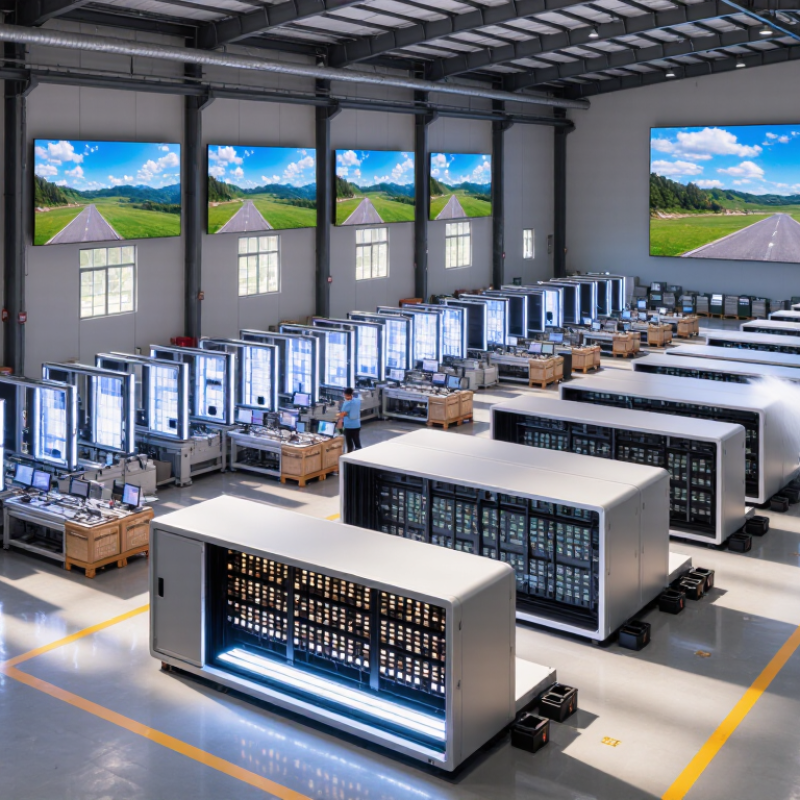
A large workshop is not automatically efficient. Inspect assembly areas, aging-test rooms, quality records, and component storage if possible.
Ask whether key processes are handled in-house or outsourced. That answer can reveal hidden delays.
Do not judge quality from a polished showroom alone. Speak with the technical team about failure rates, replacement procedures, software support, and warranty terms. Compare two or three samples under daylight, not only in a dark room. I have found that written promises can sound precise while delivery dates remain flexible. Leave room for delays, especially during peak seasons. The best decision balances transparent pricing, practical customization, and proven capacity rather than choosing one impressive number.