
How to Choose the Right Fuel Pump for Your Vehicle?
Choosing the right Fuel Pump is not a matter of picking the biggest or cheapest unit. It must match your vehicle’s engine, fuel type, required pressure, and delivery rate. A pump that looks identical may still have the wrong electrical connector or flow capacity. That mismatch can cause hard starts, hesitation, or poor performance.
Automotive engineer John B. Heywood is widely known for his work on engines and combustion. A practical principle consistent with careful fuel-system engineering is: “Match the pump to the engine’s required pressure and flow, not appearance alone.” This is a guide principle, not a verified direct quotation from Heywood. Check your owner’s manual and the vehicle’s service information before buying.
Look closely at the details. Is your vehicle fuel-injected or carbureted? Does it use an in-tank pump, an external unit, or a pump module with a sender? Confirm the part number, operating pressure, flow rating, and voltage. A pump that fits the tank but misses the specification is not the right choice. Neither is one selected from a vague online listing.
Real-world symptoms can offer clues, but they do not prove the pump has failed. A weak battery, clogged filter, damaged wiring, or faulty relay can produce similar signs. Diagnosis matters. This guide explains how to compare pump types, verify specifications, and avoid common fitment mistakes. One detail is easy to overlook: installation quality can affect a new pump’s service life.
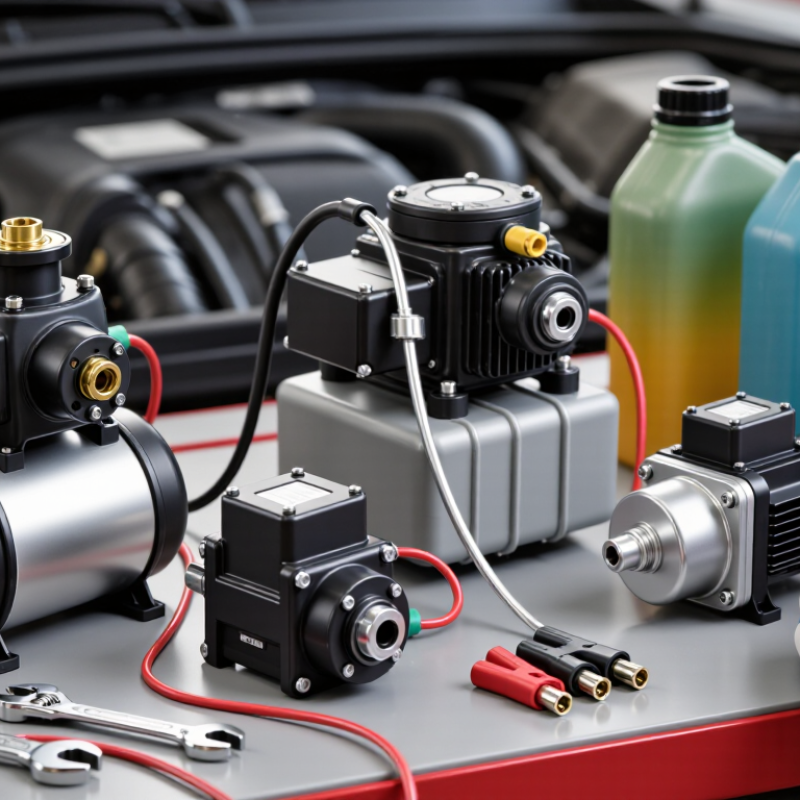
Understand the Fuel Pump’s Role and Main Types
A fuel pump moves fuel from the tank to the engine and maintains the pressure needed for steady delivery. Too little pressure can cause hard starting, hesitation, or stalling. Most modern gasoline vehicles use an electric pump inside the tank. Older carbureted engines may use a mechanical pump, while gasoline direct-injection systems add a separate high-pressure pump. Diesel systems also rely on high-pressure pumps. These designs serve different engines. They are not interchangeable.
The U.S. Environmental Protection Agency’s 2023 Automotive Trends Report recorded average real-world fuel economy of 26.0 miles per gallon for model-year 2022 vehicles. That figure describes the vehicle fleet, not the pump’s performance; it cannot tell you which pump fits your car. Match the replacement to the engine, fuel system, required pressure, and vehicle specifications. A familiar-looking connector is not enough. I have seen that detail overlooked.
Tips: Check the service manual for the specified pressure and flow rate before buying. Confirm whether your system uses a low-pressure feed pump, a high-pressure pump, or both. If symptoms persist after replacement, pause and test fuel pressure rather than guessing. A wrong match can waste time.
How to Choose the Right Fuel Pump for Your Vehicle?
Understand the Fuel Pump’s Role and Main Types
Fuel pumps deliver fuel at the pressure required by the engine’s fuel system. This chart compares typical gasoline-system pressure ranges; actual specifications vary by vehicle. For direct-injection systems, the range shown is for the high-pressure side.
Use your vehicle’s manufacturer specifications when choosing a replacement pump. A pump designed for one fuel-system type may not provide the pressure or flow required by another.
Identify Your Vehicle’s Fuel System Requirements
Identify the fuel system before comparing pump listings. Check the vehicle’s year, engine, fuel type, and injection design. Port-injected engines typically use an in-tank pump to supply the fuel rail. Gasoline direct-injection systems also need a separate high-pressure pump. A pump that fits the tank may still deliver the wrong pressure or flow. Small mismatch. Big trouble. Confirm the required pressure, flow rate, electrical connector, and control method in the service information for your exact vehicle.
Fuel compatibility matters too. The U.S. Department of Energy’s Alternative Fuels Data Center reports that E85 can reduce fuel economy by 15–27% compared with gasoline, largely because it contains less energy per gallon. That figure is not a pump-sizing rule. It is a reminder to verify whether the vehicle is designed for the fuel you use, and whether the pump and seals are compatible. A catalog match can still be wrong; part listings may omit control details or differences between engine versions.
Tips: Match the pump to the vehicle identification number, then compare the original part number and service specifications. Check whether the assembly includes a regulator or filter. If pressure readings are available, compare them with the manufacturer’s test range before replacing parts. Do not assume a higher-flow pump is automatically better; an incorrect match can cause drivability problems.
Match Pump Flow Rate, Pressure, and Electrical Specs
A fuel pump must deliver the required flow at the engine’s specified pressure, not just show an impressive free-flow rating. Estimate demand from engine power and fuel type. For example, a 300-hp gasoline engine using an illustrative brake-specific fuel consumption of 0.50 lb/hp-hour needs about 150 lb of fuel per hour. At roughly 6.1 lb per gallon, that is approximately 24.6 gallons per hour before adding a safety margin. This is a planning estimate, not a universal specification.
Fuel choice changes the calculation. The U.S. Department of Energy’s Alternative Fuels Data Center lists gasoline at 112,114 Btu per gallon and ethanol at 76,330 Btu per gallon. Lower energy per gallon can mean greater volume demand, so confirm the fuel blend and engine setup before choosing a pump.
Pressure matters. Check flow at the vehicle’s operating pressure, using the manufacturer’s service specifications—not a pump’s unpressurized headline figure. SAE J2044 covers fuel-system quick-connect interfaces; it does not define the pressure your engine needs.
Electrical fit matters too. Compare the pump’s operating voltage and current draw with the vehicle’s supply, wiring, fuse, and ground capacity. Measure voltage at the pump while it is running; a weak connection can reduce output even when the pump appears correctly sized. I’d verify it again. A flow estimate can look precise while resting on an assumed fuel-consumption rate, so validate it against actual engine data and the correct pressure requirement.
Check Fitment, Connector, and Installation Compatibility
Choosing a fuel pump by engine size alone can lead to a poor fit. S&P Global Mobility reported that the average age of U.S. light vehicles reached 12.6 years in 2024. Older vehicles may have production changes within the same model year, so verify the exact year, engine, and fuel-system configuration using the vehicle identification number. A near match is not enough.
Check the pump’s mounting shape, outlet position, and electrical connector before ordering. Compare the connector’s pin count and keying, not just its color; two plugs can look similar but connect differently. SAE International’s J2044 standard covers fuel-system quick-connect couplings, highlighting why connector dimensions and interface type matter. Also confirm that the replacement’s pressure and flow specifications match the vehicle’s requirements. Installation details matter, too: inspect the seal, strainer, wiring, and access area, and follow the service procedure. One small mismatch can mean repeating the job.
Tips: Photograph the original pump and connector before removal. Compare the part numbers and measurements, then check the vehicle’s service information. If details conflict, pause and verify. Guessing here is tempting, but not wise.
| Check | What to Verify | Why It Matters | Practical Guidance |
|---|---|---|---|
| Vehicle fitment | Make, model, model year, engine, fuel type, and production details such as build date or drivetrain where applicable. | Vehicles with similar names can use different fuel systems or pump assemblies. | Match the vehicle details to a reliable application catalog, then confirm against the original part number and service information. |
| Original equipment reference | The number on the original pump or module, plus any documented superseding part number. | A matching reference can help distinguish assemblies that look alike but have different specifications or connections. | Use the number as a cross-check—not as the only check—and confirm that the replacement is listed for the exact vehicle configuration. |
| Pump and assembly type | Whether the application uses an in-tank pump, an inline pump, or a complete module with a pump, housing, filter, and sender. | A pump-only replacement may not include components required for the vehicle’s original setup. | Compare the replacement with the parts being removed and follow the vehicle’s service procedure. |
| Fuel system specification | Required operating pressure and flow, as specified for the particular engine and fuel system. | A pump that does not meet the vehicle’s requirements can contribute to poor operation or fuel-delivery faults. | Check the manufacturer’s service data. Do not select a pump based only on a general pressure or flow figure; requirements vary by application. |
| Electrical connector | Connector shape, terminal count, keying, wire arrangement, and any differences between pump and sender connections. | A connector that appears similar may not lock, make the correct electrical connections, or match the vehicle harness. | Compare connector photos and terminal layouts with the original unit. Avoid cutting or splicing wiring unless the approved installation instructions specifically allow it. |
| Electrical requirements | Specified operating voltage, current demand, polarity, and compatibility with the vehicle’s wiring and control system. | Incorrect electrical requirements can cause unreliable operation, excessive circuit load, or pump damage. | Use application-specific specifications and check the related fuse, relay, wiring, and ground during diagnosis. |
| Fuel-line connections | Connection style, size, position, and whether the vehicle uses a quick-connect fitting or another specified coupling. | Incorrect fittings can prevent secure attachment or cause fuel leakage. | Compare the ports with the original assembly and use the correct seals and connection procedure for the vehicle. |
| Sender and fuel-level gauge | Whether the sender is included, its connector and mounting arrangement, and its compatibility with the vehicle’s gauge system. | An incompatible sender can cause inaccurate fuel-level readings even if the pump operates. | Confirm whether the application requires a complete module or a pump-only unit and test the gauge circuit if readings were already incorrect. |
| Physical dimensions and mounting | Overall assembly height, diameter, mounting points, seal size, orientation, and clearance inside the tank. | A unit that does not seat or fit correctly may damage the seal, interfere with the float, or fail to install securely. | Compare dimensions and mounting features with the original. Install the specified tank seal and retaining components. |
| Installation compatibility | Required tools, access method, tank service steps, pressure-relief procedure, and any vehicle-specific initialization or relearn procedure. | Safe installation and correct operation depend on following the vehicle’s service instructions. | Relieve fuel-system pressure as directed, work in a well-ventilated area away from ignition sources, and check carefully for leaks after installation. |
| Final verification | Correct part and connector, secure fittings, proper sealing, stable operation, and no fuel leaks or diagnostic faults. | Visual fit alone does not confirm that the pump is operating to specification. | Follow the service manual’s test procedure and verify fuel pressure and electrical performance using the specified tools and limits. |
Compare Reliability, Warranty, and Replacement Options
A dependable fuel pump should maintain the pressure and flow specified for your engine, not merely fit the opening. Before ordering, compare the vehicle’s year, engine, connector shape, and whether the replacement includes the complete module. A pump-only part may cost less, but an aging sender or worn strainer can make the repair less complete. Fit matters. Ask whether the part has documented testing and clear installation guidance, rather than relying on a broad “fits most” claim.
Warranties differ in length and detail. Check whether coverage includes the pump alone, labor, and damage linked to contaminated fuel or incorrect installation. Keep the receipt. Some sellers require a professional installation record, while others offer a simpler exchange period. Read those conditions before opening the package; returns may be limited once a part has been installed. A longer warranty can be reassuring, but it does not prove the pump will last longer. When comparing replacement options, include delivery time, return shipping, and access to a nearby repair shop. A cheaper unit can be reasonable, though I would pause if its specifications and support are vague. That judgment is not perfect: vehicle history and fuel-system condition can change what makes sense.