
How to Choose the Right Rake System in 2026?

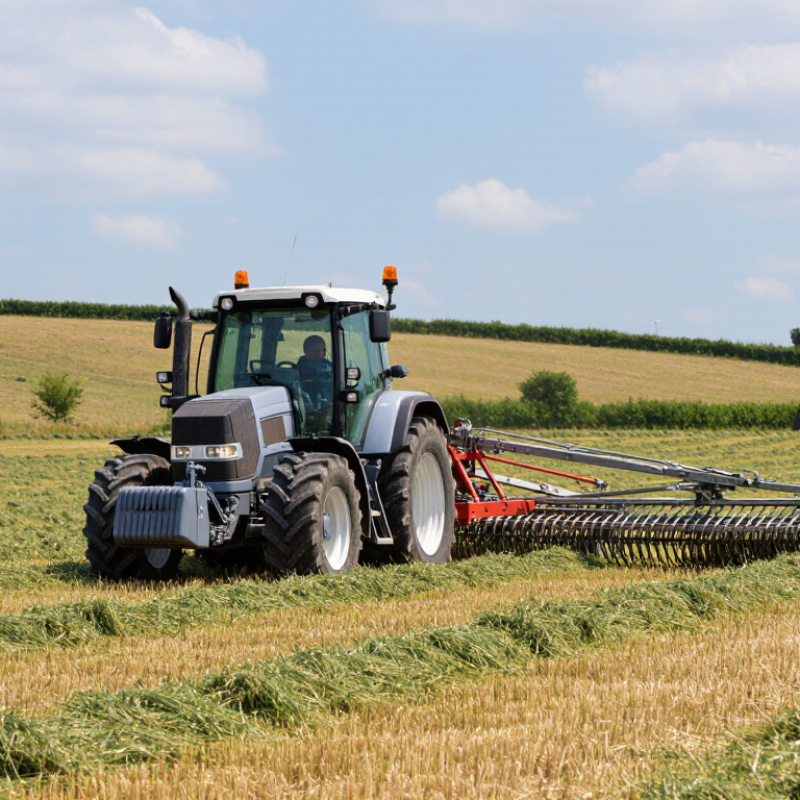
Choosing the right Rake System in 2026 requires more than comparing prices or counting working widths. Today’s equipment must match crop type, soil conditions, tractor capacity, field shape, and labor expectations. A system that performs beautifully on dry hay may damage delicate forage or struggle in damp, uneven fields. That difference becomes visible in the windrow: clean and consistent, or scattered with unnecessary losses.

Dr. Elena Marquez, an agricultural machinery consultant with field-testing experience, explains, “A rake should protect forage quality before it chases field speed.” Her point matters when comparing rotary, wheel, belt, and parallel-bar designs. Rotary systems often provide flexible adjustment and gentle handling. Wheel rakes can cover large areas quickly, but they may pull stones or disturb fragile ground. Belt systems can produce uniform windrows, although maintenance demands may be higher.

Look closely at practical details. Check adjustment controls from the tractor seat. Inspect tine clearance, frame strength, transport width, and replacement-part access. Ask how the system behaves after several seasons, not just during a dealer demonstration. Fuel use matters. So does operator fatigue.

The choice is rarely perfect.

A wider rake is not automatically better. Higher speed can also reduce consistency. I have seen buyers focus on capacity and overlook field losses. That mistake deserves reflection. The best Rake System balances productivity, forage preservation, service support, and long-term operating confidence. In 2026, careful selection means measuring real conditions before trusting impressive specifications.
How to Choose the Right Rake System in 2026?

What a Rake System Is and How It Works

How to Choose the Right Rake System in 2026?

What a Rake System Is and How It Works

In solar construction, “rake system” usually means the racking system supporting photovoltaic modules. It includes rails, clamps, roof attachments, ballast, and sometimes tracking drives. The structure holds each panel at a planned angle. It also transfers wind, snow, and equipment loads into the roof or ground. Small details matter. A loose clamp can create movement, noise, or uneven stress across a module.

The system works as a load path. First, the panel transfers force to its clamps. Rails distribute that force to attachments or foundations. Engineers then check uplift, sliding, corrosion, drainage, thermal expansion, and electrical bonding. Roof geometry also matters. A system that fits a flat roof may perform poorly on a steep metal roof. Field measurements are essential, although installers sometimes trust drawings too much.

Demand is growing quickly. IRENA’s Renewable Capacity Statistics 2025 reported 452 gigawatts of solar additions in 2024. IEA PVPS reported global photovoltaic capacity exceeded 1.6 terawatts by the end of 2023. These figures increase pressure for faster, lighter, and more adaptable structures. Choose by wind and snow data, roof condition, module dimensions, installation method, and maintenance access. Cost alone is a weak filter. I would also question optimistic corrosion claims, because coastal exposure can punish inexpensive decisions. The perfect system rarely exists. The right one matches the site.

The Main Types of Rake Systems Available in 2026

In 2026, rake systems are designed for different soil, crop, and landscape conditions. A landscape rake uses angled steel teeth to level gravel, spread soil, and clear light debris. It works well on driveways and building sites. Operators can adjust the working angle and depth. That control matters near fences, tree roots, and drainage channels. It is simple and reliable. However, it may struggle with wet clay or heavy stones.

Rotary rakes are common in hay production. Their spinning arms gather cut grass into clean, continuous windrows. They are useful when drying speed and uniform rows matter. Wheel rakes move quickly across large fields and need less maintenance. Tine rakes offer gentle handling for fragile forage, although their performance can change on uneven ground. Power rakes use a rotating drum to remove shallow debris and prepare seedbeds. They provide strong surface control but can disturb soil too aggressively.

Choosing the right system requires more than comparing working width. Check tractor power, hitch compatibility, ground speed, tooth spacing, and replacement-part access. In my field experience, operators often choose a wider rake too soon. It saves passes but can leave uneven rows in rough terrain. Measure the work area first. Watch the soil after one trial pass. Dust, buried stones, and moisture can expose weaknesses that a specification sheet misses. I still reconsider settings after changing fields. Conditions rarely stay consistent.

How to Choose the Right Rake System in 2026?

The main hay rake systems available in 2026 differ in working width, crop handling, field speed, and windrow consistency. The chart shows typical published working-width ranges for common configurations.

Parallel-bar rakes are simple and suitable for smaller fields. Wheel rakes generally provide high field speed and wide coverage in dry forage. Rotary rakes are valued for consistent, gentle windrows, while belt rakes are designed for high-capacity operation and careful crop handling. Actual working width varies by machine configuration, crop conditions, and operating setup.

Key Factors for Comparing Rake System Options

How to Choose the Right Rake System in 2026?

Comparing rake system options requires more than checking working width or purchase price. Start with your crop, field size, terrain, and target windrow shape. A rotary system may handle delicate forage gently, while a wheel system can suit dry material and faster field coverage. Moisture levels matter too. Uneven fields expose weaknesses quickly.

Then compare adjustment range, ground-following ability, transport width, and maintenance access. Check rated capacity and service intervals in technical documents. Inspect bearings, guards, teeth, and hydraulic connections before judging long-term reliability. Field technicians often find that simple adjustments prevent most quality problems. However, specifications can look impressive without matching real field conditions.

Tips: Test the system on your own crop. Measure pickup losses and windrow consistency. Check how easily one person can adjust it. Ask about parts availability and repair support. Leave room for doubt. The cheapest option may become expensive after repeated downtime. A careful comparison should include fuel use, labor time, soil contact, and resale value. Record these results during different moisture conditions, because one successful afternoon proves very little.

How to Match a Rake System to Your Specific Needs

Choosing a rake system starts with the field, not the brochure. The USDA National Agricultural Statistics Service reported 1.9 million U.S. farms in its 2022 Census of Agriculture. Their average size was about 463 acres. That range explains why one rake design cannot suit every operator.

Match the system to crop type, windrow density, terrain, and daily output. A wheel rake can work well on dry, light hay and uneven ground. A rotary rake usually handles delicate forage with more controlled movement. A belt rake may protect leaf quality, but it can demand more careful adjustment. Check pickup width against your tractor’s horsepower and transport limits. Oversizing creates wasted fuel and uneven rows. Under-sizing causes extra passes.

Tips: Measure three windrows before purchasing. Record moisture, width, and ground speed. The American Society of Agricultural and Biological Engineers recommends consistent test conditions for comparing machine performance. Use that principle during field trials. Watch for soil pickup, broken leaves, and missed edges. Small losses become expensive across hundreds of acres. No chart replaces a field walk. I would also test in damp conditions, even when the manual favors dry work. Real fields are rarely perfect. Review service access, replacement-part availability, and adjustment time. A system that performs brilliantly for one hour may frustrate operators after a full day.

How to Choose the Right Rake System in 2026? - How to Match a Rake System to Your Specific Needs

Use this comparison to select a hay or forage rake according to crop condition, field size, terrain, windrow requirements, tractor capacity, and transport needs.

Rake System Best Fit Typical Working Width Typical Operating Speed Tractor Power Guidance Windrow Quality Field Conditions Main Advantages Key Limitations
Wheel Rake Large, open fields where productivity and low purchase cost are priorities 4.5–12 m 8–15 km/h Approximately 35–100 hp, depending on width and configuration Good in dry, uniform hay; quality depends strongly on ground speed and adjustment Best on relatively level, firm ground with consistent crop density High capacity, simple mechanical design, low maintenance, and generally low power demand Can pick up more dirt or stones on uneven ground and may be less gentle with fragile forage
Rotary Rake High-quality hay production and operations requiring clean, consistent windrows 3.0–12 m 6–12 km/h Approximately 45–120 hp, depending on the number of rotors Very good; adjustable rotor speed and tine height help control crop handling Suitable for level to moderately uneven fields and a broad range of forage conditions Gentle crop handling, consistent windrow formation, and strong adjustment flexibility Higher purchase cost and more moving parts than wheel or parallel-bar systems
Parallel-Bar Rake Small and medium farms seeking clean raking with moderate equipment complexity 2.5–7.5 m 5–10 km/h Approximately 25–70 hp Good when correctly adjusted; performs best with dry, evenly spread forage Best on maintained fields with moderate crop volume and limited obstacles Simple operation, relatively low weight, and good maneuverability in smaller fields Usually lower capacity and less suitable for heavy or highly variable crops
Belt Rake Fragile forage, leafy crops, and situations where low crop contamination is important 3.0–9.0 m 5–10 km/h Approximately 40–100 hp, depending on width and drive system Very good; the belt can form low-contamination windrows with gentle handling Works well on level fields and dry forage; field cleanliness is important Gentle crop movement, good leaf retention, and reduced soil disturbance Belts and drive components require inspection; performance can decline in wet or tangled material
PTO-Driven Rotary Rake Heavy crops, high-throughput contracting, and precise windrow control 4.0–15 m 7–12 km/h Approximately 60–150 hp, depending on rotor count and working width Excellent when rotor speed, tine height, and forward speed are matched correctly Suitable for medium to large fields with variable crop volumes High capacity, accurate adjustment, and effective handling of dense forage Higher fuel use, maintenance requirements, and purchase cost than simpler systems
Side-Delivery Rake Operations that need to merge several passes into one windrow for baling 2.5–8.0 m 6–12 km/h Approximately 30–90 hp Good to very good, provided the crop is dry enough and the rake is correctly set Useful in small to medium fields and for flexible windrow placement Can rake and consolidate forage efficiently while simplifying baler or harvester pickup Windrow size may vary in heavy or uneven crops; setup is important for uniform output
Landscape and Pasture Rake Seedbed preparation, pasture renovation, debris collection, and light soil surface work 1.2–3.0 m 4–8 km/h Approximately 20–60 hp Not designed primarily for hay windrow formation Suitable for soil, gravel, pasture, and light surface debris when adjusted correctly Versatile for non-forage applications and useful for maintaining field surfaces Not a substitute for a dedicated hay rake when forage quality and windrow consistency are priorities

Selection note: The ranges shown are typical industry operating values rather than fixed specifications. Actual performance depends on rake design, crop moisture, yield, terrain, tine or wheel adjustment, tractor hydraulics, and operator settings.

Installation, Maintenance, Safety, and Long-Term Value

How to Choose the Right Rake System in 2026?

Choosing the right rake system in 2026 starts with the roof, not the product photograph. Measure the roof pitch, valley length, drainage paths, and access points. The system must fit existing gutters and local weather conditions. During installation, I check fixing points before lifting any panels. Weak fascia boards can turn a simple job into a costly repair. Leave expansion space where temperature changes are significant. Small alignment errors may create standing water or uneven debris flow. I have learned that universal parts rarely behave universally.

Maintenance should be planned before installation. Inspect fasteners, mesh edges, joints, and gutter outlets twice yearly. After storms, remove trapped leaves with a soft brush, not sharp tools. Never lean an unsecured ladder against a fragile gutter edge. Use stable access equipment and follow applicable safety rules. A well-fitted system can reduce cleaning, but it cannot eliminate it. Long-term value depends on repair access, corrosion resistance, replacement availability, and installer workmanship. Cheap installation often becomes expensive when removal damages the roofline. I still allow extra time for awkward roof sections; rushing is an avoidable mistake.

Tips: Ask for written load limits, material details, warranty conditions, and maintenance instructions. Request a small test section before full installation. Watch water flow during rainfall, if safely possible. Keep dated inspection photos. Do not ignore minor sagging or loose clips. Review the system after one winter, because real weather reveals assumptions that drawings cannot.

Article Source:

CONTACT US