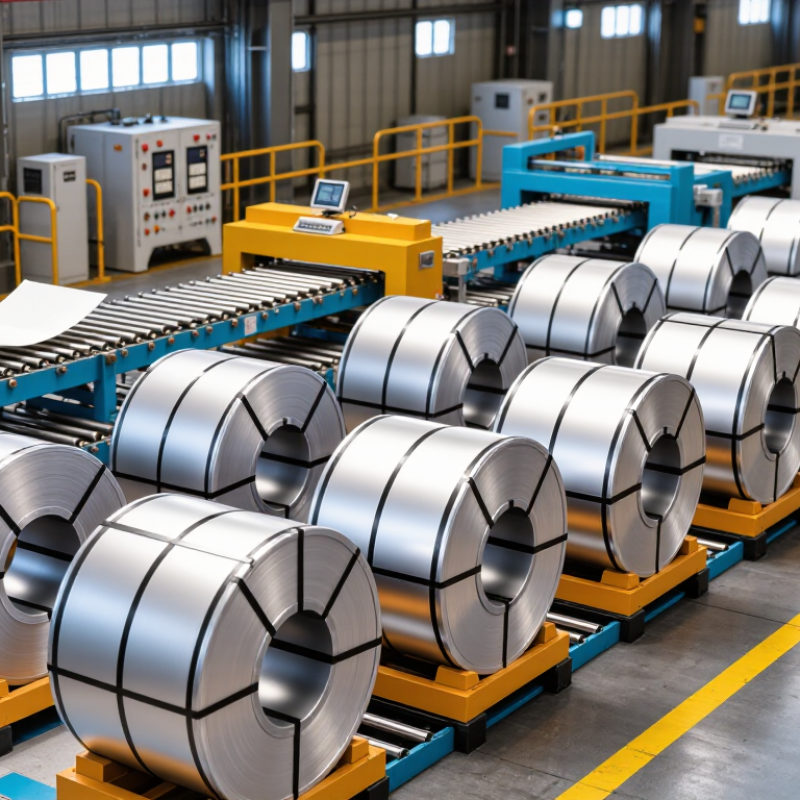
China Top Cold Rolled Steel Strips Suppliers?

Choosing among China’s top Cold Rolled Steel Strips suppliers requires more than comparing price lists. Buyers need evidence. A dependable supplier should demonstrate stable thickness, controlled width, clean surfaces, accurate edge conditions, and consistent mechanical properties. These details matter when strips enter stamping, electrical components, automotive parts, or precision fabrication.

Dr. George E. Totten, a respected authority in steel processing, has emphasized, “Process control is the foundation of consistent steel quality.” This principle remains practical. A supplier may present polished samples, yet production performance can still vary. Independent testing, batch records, mill certificates, and traceable inspection reports deserve close attention.

This guide examines leading Chinese suppliers through technical capability, export experience, quality systems, and customer support. It considers carbon steel and stainless options separately. It also reviews thickness ranges, temper conditions, surface finishes, packaging, and delivery reliability. Small differences can create costly problems.

Some evaluations remain imperfect. Public supplier data may be incomplete. Marketing claims may also exceed factory evidence. Buyers should verify certifications directly and request recent test results before placing large orders. A factory visit is useful, but it cannot replace ongoing batch inspection.

The strongest suppliers usually communicate clearly. They confirm specifications before production. They explain tolerances without vague promises. They also respond when defects appear.

That matters.

China offers extensive manufacturing capacity, but capacity alone does not guarantee dependable Cold Rolled Steel Strips. This overview provides a practical starting point for identifying suppliers that combine technical expertise, measurable quality, and accountable service.

China Top Cold Rolled Steel Strips Suppliers?

What Are Cold Rolled Steel Strips?

Cold rolled steel strips are thin, flat steel products processed at near-room temperature. Mills usually pickle hot rolled coil first, removing scale, then reduce its thickness through several rolling passes. The process improves dimensional accuracy and surface smoothness. It also increases strength through work hardening.

Strip may then receive annealing, temper rolling, slitting, or leveling. Annealing softens the steel and improves formability. Temper rolling controls flatness and surface texture. According to ASTM A1008/A1008M, cold rolled carbon steel grades are commonly specified by chemistry, yield strength, tensile strength, and elongation. Buyers should check these values, not rely on the phrase “premium quality.”

The market has substantial upstream capacity. World Steel Association data recorded about 1,888 million tonnes of global crude steel production in 2023, with China contributing roughly 1,019 million tonnes. That scale supports a broad Chinese supply base for cold rolled strips. However, crude steel volume does not prove strip consistency. A practical supplier review should examine mill certificates, thickness tolerance, coil weight, edge condition, surface inspection, and independent testing. Small defects matter. A bright surface may still hide uneven hardness or residual stress. Even supplier comparisons can be imperfect, because test methods, sampling points, and packaging conditions vary.

How to Evaluate China’s Cold Rolled Steel Strip Suppliers

China Top Cold Rolled Steel Strips Suppliers?

China produced 1,019.1 million tonnes of crude steel in 2023, according to World Steel in Figures 2024. This scale offers buyers many options, but capacity alone proves little. Evaluate the supplier’s actual cold rolling capability. Request recent mill certificates, heat numbers, chemical analysis, and mechanical results for matching coils. Check thickness, width, flatness, edge condition, surface finish, and packaging against ASTM A1008/A1008M or EN 10130. Ask for tolerance tables and sample inspection records. Short samples can mislead.

In practical procurement, I also examine traceability from steelmaking to final slitting. Each coil should connect clearly to production records and inspection results. Verify ISO 9001 procedures, corrective-action records, lead-time history, and claim handling. The IEA’s Iron and Steel Technology Roadmap identifies steel as responsible for about 7% of energy-sector carbon dioxide emissions. Therefore, request measured energy or emissions data, not vague sustainability statements. A spreadsheet may look complete and still hide inconsistent batches. I remain cautious when a supplier shares perfect results but cannot explain process variation. An independent inspection before loading can compare actual dimensions with certified values. Supplier evaluation is never only a price exercise.

China Top Cold Rolled Steel Strips Suppliers? - How to Evaluate China’s Cold Rolled Steel Strip Suppliers

Evaluation Dimension What to Check Relevant Technical Reference Recommended Benchmark Verification Method Suggested Weight
Product Standard Compliance Whether the cold rolled strip is produced according to the buyer’s required grade and standard. ASTM A1008/A1008M, EN 10130, JIS G3141, or ISO 3575 The quotation, test certificate, and inspection report should identify the same grade, delivery condition, and applicable standard. Review mill test certificates and compare chemical and mechanical requirements with the purchase specification. 15%
Chemical Composition Carbon, manganese, phosphorus, sulfur, and other elements required for the selected grade. The applicable product standard and the agreed purchase specification All reported values should remain within the specified limits, with heat or batch traceability. Check heat numbers, laboratory reports, and independent testing where the application is safety-critical. 10%
Mechanical Properties Yield strength, tensile strength, elongation, hardness, and forming performance. ASTM A1008/A1008M, EN 10130, or JIS G3141, depending on the ordered grade Measured values should meet the selected grade and remain consistent across samples from the same lot. Verify tensile-test data, hardness results, and sample performance during forming or stamping trials. 15%
Thickness and Width Tolerance Actual thickness, width, crown, edge condition, and dimensional consistency. The dimensional tolerance table in the agreed product standard or purchase specification Tolerance should be agreed before production; tighter tolerances should be priced and documented separately. Use calibrated micrometers and width gauges at several points along each coil or strip bundle. 15%
Surface Quality Scratches, pits, roll marks, rust, stains, laminations, and surface cleanliness. The ordered surface finish and acceptance criteria in the technical specification Surface should be suitable for the intended process, including bending, stamping, painting, plating, or welding. Conduct visual inspection under adequate lighting and define defect limits using approved samples. 15%
Coil Shape and Edge Condition Flatness, coil set, camber, burrs, edge cracks, telescoping, and winding quality. Buyer-defined flatness and edge requirements; applicable dimensional standard where specified Edges should be compatible with slitting, stamping, roll forming, or welding without excessive burrs or cracking. Inspect the coil edge and winding condition; run a trial through the buyer’s processing equipment when possible. 10%
Production Capacity and Lead Time Available rolling, annealing, tempering, slitting, and packaging capacity. Capacity should be demonstrated for the required thickness, width, coil weight, and monthly volume. Supplier should provide a realistic production schedule and a contingency plan for delays. Review production planning records, sample lead times, and historical on-time delivery performance. 10%
Quality Management Process control, calibration, nonconformance handling, corrective action, and traceability. ISO 9001 certification or an equivalent documented quality-management system Records should link raw material, heat number, production line, inspection results, and final shipment. Audit procedures, calibration certificates, inspection records, and corrective-action reports. 10%
Packaging and Export Documentation Moisture protection, coil securing, labeling, packing dimensions, and shipping documents. Purchase contract, destination-country import rules, and agreed packing instructions Packaging should prevent corrosion and deformation during inland transport, ocean shipment, and storage. Approve packing photos or a packaging sample and verify invoice, packing list, certificate of origin, and test certificate. 5%
Commercial Terms and Total Cost Material price, slitting fees, tooling or setup charges, freight, insurance, duties, and payment terms. Incoterms® 2020 and the buyer’s landed-cost calculation Compare total landed cost rather than headline price, while maintaining the required technical specification. Request a detailed quotation with validity period, quantity basis, delivery term, payment terms, and surcharge policy. 5%
Recommended scoring approach: Rate each dimension from 1 to 5, multiply the rating by the suggested weight, and require full compliance with mandatory chemical, mechanical, dimensional, and documentation requirements before placing a production order.

Key Manufacturing Standards and Quality Certifications

China’s top cold rolled steel strip suppliers are often distinguished by process control, not advertising. Buyers should check whether products meet standards such as EN 10130, ASTM A1008/A1008M, or JIS G3141. These standards define grades, dimensional tolerances, surface quality, and mechanical performance.

Look for ISO 9001 certification supported by current audit records. Automotive applications may require IATF 16949, while qualified laboratories should follow ISO/IEC 17025 practices. A reliable supplier should provide a mill test certificate for each coil, including chemical composition, yield strength, tensile strength, elongation, thickness, and coil number. Ask for traceability from the hot rolled feedstock to the finished strip.

Details matter. Check thickness variation across the strip, edge condition, burr height, oil coverage, and surface marks under practical lighting. A clean certificate does not automatically prove stable production. Request recent inspection samples, calibration records, and corrective-action reports when defects occur. This is where experience helps.

Not every supplier interprets standards identically. Confirm the exact edition and agreed testing method before placing an order. Samples can look excellent. A production coil may behave differently during stamping, slitting, or welding. Independent testing is sensible for critical applications, although it adds time and cost. No certification replaces regular incoming inspection.

Leading Supplier Regions and Production Capabilities in China

China’s cold rolled steel strip suppliers are concentrated in several strong manufacturing regions. Jiangsu and Zhejiang are known for precision slitting, narrow-width strips, and stable thickness control. Guangdong serves electronics, appliances, and light industrial buyers with flexible processing lines. Hebei and Shandong often support larger orders, offering annealing, skin passing, leveling, and custom cutting.

Production capability varies sharply between factories. Some mills handle ultra-thin strip for stamped components, while others focus on wider coils for automotive or construction applications. Reliable suppliers should provide mill test certificates, heat numbers, coating details, and inspection records. Ask about thickness tolerance, edge condition, surface finish, and minimum order quantities. These details reveal more than a polished website.

Tips: Request trial coils before signing a long contract. Compare samples under actual stamping or bending conditions. Check whether packaging protects the edges during ocean transport. Confirm compliance with the required GB, ASTM, or EN standard. A low quote may hide weaker flatness control or inconsistent hardness. That matters later. Even experienced buyers can overlook slitting burrs, especially when reviewing only certificates. A factory visit, video inspection, or independent pre-shipment test can reduce that risk. Suppliers with clear corrective-action procedures are usually more dependable when specifications drift.

China Cold Rolled Steel Strip Supply Landscape: National Steel Output Trend

China’s crude steel output remained above 1 billion tonnes annually from 2020 to 2024, supporting a large upstream base for cold rolled steel strip production. The leading supply regions are concentrated in Hebei, Jiangsu, Shandong, Liaoning, Shanxi, and the Yangtze River Delta, where integrated steelmaking, cold rolling, annealing, slitting, and surface-finishing capabilities are widely established. Crude steel output is an upstream indicator and does not represent cold rolled strip capacity directly.

Source: World Steel Association, World Steel in Figures 2025. Values shown in million tonnes.

How to Select the Right Chinese Supplier for Your Needs

Selecting the right Chinese cold rolled steel strips supplier requires more than comparing quotations. China produced about 1,005 million tonnes of crude steel in 2024, according to World Steel Association data. That scale offers capacity, but it does not guarantee consistent strip quality.

Ask for recent mill test certificates, surface-finish samples, and thickness-tolerance records. Check whether the supplier follows ISO 9001 procedures and can provide EN 10204 3.1 inspection documents. Confirm the steel grade, hardness range, width tolerance, coil weight, and oiling method before signing a purchase contract. Details matter. A 0.03 mm thickness variation may be acceptable for one stamping line but costly for another.

Request a trial coil before placing a large order. Inspect its edges under warehouse lighting, not only in photographs. Test yield strength, tensile strength, elongation, and coating or oil coverage through an independent laboratory when the application is critical. The International Trade Administration notes that steel transactions require careful attention to specifications, documentation, and customs classification. This makes traceability practical, not decorative.

Evaluate communication during sampling. Can the supplier explain corrective action clearly? Can it share production dates and packaging photos? A strong supplier should protect coils with moisture-resistant paper, steel straps, and suitable edge protection. Still, do not assume one successful shipment proves long-term reliability. I would review at least three deliveries, because my first supplier assessment can be wrong. Price should remain important, but unstable tolerance or late documentation can erase a small saving quickly.

CONTACT US