
What Are the Top China Wireless WiFi Modules?

Choosing the top China Wireless Wifi Module requires more than comparing prices or antenna photos. Engineers must examine chipset stability, certification support, security updates, operating temperature, and long-term supply. A module that works on a laboratory desk may fail inside a metal appliance, factory gateway, or crowded apartment.

Edgar Figueroa, former president and CEO of the Wi-Fi Alliance, once said, “Wi-Fi is the most successful technology platform in history.” That success creates difficult choices for product teams. Chinese suppliers offer compact modules based on platforms from Espressif, Realtek, Broadcom, and other chipset developers. Their differences become visible in real projects: a 2.4 GHz signal crossing two concrete walls, a device reconnecting after router failure, or firmware remaining stable during a hot summer.

This guide compares leading Chinese Wireless Wifi Module options through practical criteria. These include throughput, sleep current, antenna design, SDK quality, cloud compatibility, manufacturing support, and documented security practices. It also considers whether vendors provide clear datasheets and responsive engineering assistance.

No ranking stays perfect.

A cheaper module may deliver excellent performance, yet its documentation can feel incomplete. A premium option may offer stronger support but exceed a small product’s budget. These trade-offs deserve honest attention. The “best” module depends on the device, market, certification plan, and expected service life. Readers should verify current specifications with suppliers before making final purchasing decisions.
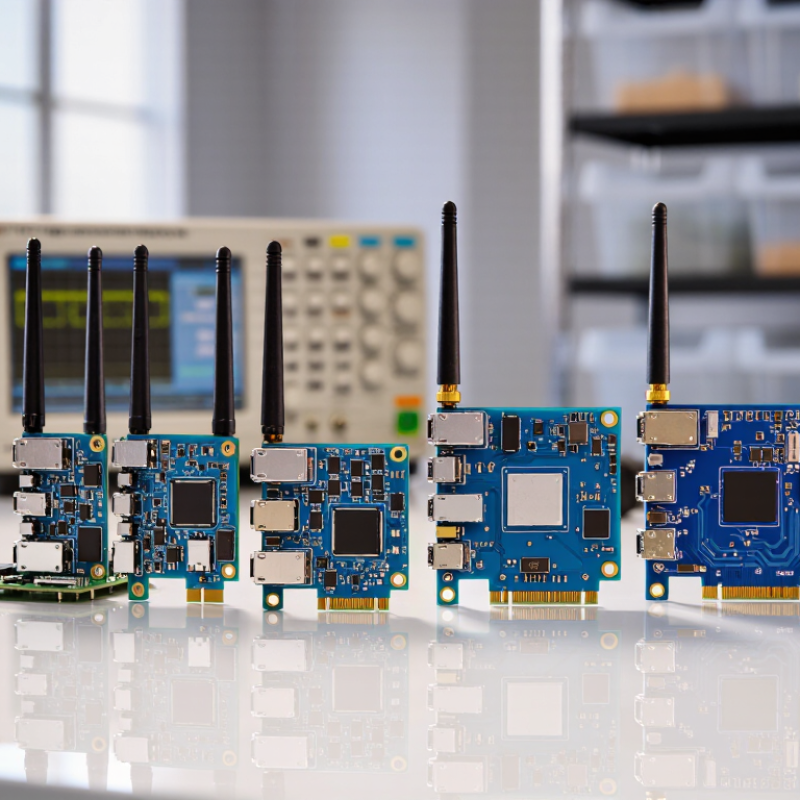
What Are the Top China Wireless WiFi Modules?

Definition and Role of Wireless WiFi Modules in China

A wireless WiFi module is a compact electronic unit that adds wireless networking to a device. It usually combines a radio transceiver, processor, memory, firmware, and an antenna connection. In China, these modules support smart appliances, factory sensors, security equipment, gateways, and connected meters. They move data between local devices and cloud platforms. More importantly, they reduce development time. Engineers can reuse tested communication functions instead of designing the radio section from zero. That role is practical. But it is not simple.

A top module is not automatically the fastest one. Its value depends on range, power use, operating temperature, packet stability, and software support. During evaluation, engineers should test walls, metal cabinets, crowded 2.4 GHz channels, and recovery after power loss. Small details matter. A module that works on a desk may fail inside a steel enclosure. China-focused projects also need clear compliance documents, local radio approval requirements, lifecycle information, and traceable security updates. Claims without test conditions deserve caution.

Reliable selection includes checking driver quality, interface options, antenna design, and supply consistency. Designers should ask whether firmware can be maintained for several years, not merely whether the sample connects quickly. A cheaper module may reduce the first bill but increase debugging labor later. This is where judgment becomes imperfect. Field conditions vary, and laboratory results can mislead. The strongest choice is usually the module that fits the product’s real environment, production volume, and support capability, not the one with the longest feature list.

Key Types of China Wireless WiFi Modules

What Are the Top China Wireless WiFi Modules?

Key Types of China Wireless WiFi Modules

China wireless WiFi modules generally fall into several practical categories. Single-band 2.4 GHz modules offer strong coverage and low hardware cost. They suit smart plugs, sensors, meters, and basic appliances. Dual-band modules support 2.4 GHz and 5 GHz networks. They provide faster data transfer for cameras, gateways, and home devices. Newer 6 GHz modules support WiFi 6E and WiFi 7 applications. They need compatible routers and careful regional frequency checks.

System-on-module designs integrate the radio, processor, memory, and security functions. They reduce development time for compact products. Industrial modules often add extended temperature ranges, stronger antennas, and long-term firmware support. WiFi HaLow modules target low-power, longer-range connections. They fit warehouses, agriculture, and large facilities. IoT Analytics reported 16.6 billion connected IoT devices worldwide in 2023. This scale increases demand for stable, manageable wireless hardware. Wi-Fi Alliance has also reported more than 18 billion WiFi devices in global use. These figures show market potential, but they do not guarantee module quality.

Tips: Check certification records, antenna performance, operating temperature, SDK documentation, and firmware update policies. Test crowded networks, not only laboratory conditions. A cheaper module may require more engineering work later. That lesson is easy to underestimate. Engineers should also verify supply continuity and security maintenance before mass production. Industry reports offer useful direction, yet real testing remains essential.

What Are the Top China Wireless WiFi Modules? - Key Types of China Wireless WiFi Modules

Module Type Typical Wi-Fi Standard Frequency Bands Common Host Interface Typical Data Capability Recommended Applications Key Advantages Important Design Considerations
2.4 GHz IoT Module IEEE 802.11 b/g/n 2.4 GHz UART, SPI, or SDIO Suitable for low-to-moderate throughput, commonly up to tens of Mbps depending on configuration Smart plugs, sensors, lighting controllers, home appliances, and basic industrial devices Longer indoor range, strong device compatibility, and generally lower hardware cost The 2.4 GHz band can be congested because it is also used by Bluetooth and other wireless equipment
Dual-Band Wi-Fi 4 Module IEEE 802.11 a/b/g/n 2.4 GHz5 GHz SDIO, PCIe, USB, or UART for control functions Moderate throughput with improved channel flexibility compared with single-band modules Networked appliances, gateways, point-of-sale terminals, and embedded consumer electronics Supports both legacy 2.4 GHz networks and less congested 5 GHz connections 5 GHz generally offers shorter range through walls and may require more careful antenna placement
Dual-Band Wi-Fi 5 Module IEEE 802.11 a/b/g/n/ac 2.4 GHz5 GHz SDIO or PCIe for embedded systems; USB for development and external designs High throughput using wider channels and multi-stream operation; actual performance depends on antenna and network conditions Video terminals, smart displays, industrial gateways, cameras, and high-speed embedded products Higher throughput and better support for streaming and large data transfers than Wi-Fi 4 Performance depends on channel width, spatial streams, regulatory settings, thermal design, and antenna isolation
Dual-Band Wi-Fi 6 Module IEEE 802.11 a/b/g/n/ac/ax 2.4 GHz5 GHz PCIe, SDIO, USB, or a processor-integrated wireless interface High efficiency in dense networks, with higher peak performance than Wi-Fi 5 when supported by the access point Smart home hubs, enterprise terminals, robotics, video equipment, and industrial IoT gateways OFDMA, improved multi-user scheduling, and Target Wake Time can improve network efficiency and power management Requires compatible software, drivers, access points, and regulatory configuration; peak speeds are not guaranteed
Wi-Fi 6E Module IEEE 802.11 ax 2.4 GHz5 GHz6 GHz PCIe, SDIO, or USB High throughput with access to additional 6 GHz spectrum where legally permitted Low-latency industrial systems, advanced AR/VR equipment, high-performance gateways, and professional multimedia devices More available channels and less legacy-device congestion in the 6 GHz band 6 GHz availability varies by country; range is typically shorter than 2.4 GHz and indoor operation may be subject to local rules
Wi-Fi 7 Module IEEE 802.11 be 2.4 GHz5 GHz6 GHz PCIe, USB, SDIO, or a high-speed processor interface Very high throughput and lower latency potential through features such as wider channels and Multi-Link Operation Premium networking equipment, industrial vision, immersive media, advanced robotics, and high-performance edge devices Higher capacity, improved link flexibility, and better performance for demanding multi-device workloads Requires compatible network infrastructure, advanced software support, careful thermal management, and regional spectrum approval
Wi-Fi and Bluetooth Combo Module Wi-Fi 4, Wi-Fi 5, or Wi-Fi 6 combined with Bluetooth Classic and Bluetooth Low Energy 2.4 GHz Wi-Fi5 GHz Wi-FiBluetooth 2.4 GHz SDIO or PCIe for Wi-Fi; UART, USB, or PCM/I²S for Bluetooth audio and control Wi-Fi provides network connectivity while Bluetooth supports peripherals, provisioning, and short-range links Smart speakers, medical devices, wearables, home automation hubs, and connected consumer products Reduces board space and simplifies integration of two widely used wireless technologies Coexistence between Wi-Fi and Bluetooth must be managed through antenna design, scheduling, filtering, and firmware
Cellular-Backhaul Wi-Fi Gateway Module Wi-Fi 4, Wi-Fi 5, or Wi-Fi 6 with a separate cellular modem interface 2.4 GHz5 GHzCellular bands depend on modem USB, PCIe, Ethernet, or a high-speed system bus Wi-Fi serves local devices while cellular provides wide-area Internet access Remote monitoring, fleet equipment, temporary networks, smart kiosks, and rural connectivity systems Enables Internet access where wired broadband is unavailable or difficult to install Requires separate cellular certification, SIM or eSIM support, appropriate antennas, and careful power budgeting
Industrial-Grade Wi-Fi Module Usually IEEE 802.11 n/ac/ax, depending on the design 2.4 GHz5 GHzOptional 6 GHz PCIe, SDIO, USB, or UART-controlled embedded interface Throughput varies by standard, but the design prioritizes stable operation and long service life Factory automation, machine vision, warehouse equipment, transportation systems, and rugged controllers May support extended temperature ranges, long-term availability, industrial mounting, and enhanced diagnostics Verify operating temperature, vibration tolerance, software maintenance, electromagnetic compatibility, and certification requirements
Low-Power Wi-Fi Module IEEE 802.11 b/g/n or Wi-Fi 6 with power-saving features 2.4 GHzOptional 5 GHz SPI, SDIO, or UART-controlled system interface Optimized for intermittent data transfers rather than continuous high-bandwidth streaming Battery-powered sensors, asset trackers, smart meters, and portable monitoring devices Can reduce energy consumption through sleep modes, optimized wake-up cycles, and efficient packet handling Battery life depends on transmit power, connection interval, signal quality, firmware behavior, and network security settings
Note: Actual wireless range, speed, power consumption, and reliability depend on the chipset, firmware, antenna design, enclosure, regulatory region, network configuration, and surrounding radio interference.

Leading Chinese WiFi Module Manufacturers and Product Lines

Chinese WiFi module manufacturers now serve several clear product lines: low-power IoT modules, dual-band home networking modules, industrial gateways, and newer WiFi 6 or WiFi 7 platforms. Their portfolios often combine compact SMD modules with development boards, antennas, firmware support, and certification services. This structure helps appliance makers shorten design cycles. It also reduces radio testing work.

Market demand is moving upward. The Wi-Fi Alliance’s Global Economic Value of Wi-Fi report projects annual WiFi economic value to reach 4.9 trillion dollars in 2025. Counterpoint Research also forecast more than 200 million WiFi 7 devices shipping in 2024. These figures explain why Chinese suppliers are expanding high-throughput module lines, not only low-cost 2.4 GHz products.

Yet performance claims need careful checking. A fast chipset cannot fix a poor antenna, weak thermal design, or unstable firmware.

For buyers, the strongest product line is not always the newest one. IoT devices may need low sleep current and long supply continuity. Industrial equipment needs wider temperature support, secure updates, and dependable certification records. Home routers need multi-device scheduling and mesh compatibility. Ask for measured throughput, current consumption, packet-loss results, and lifecycle commitments. On paper, many modules look similar. Field testing often tells a different story.

How to Compare China WiFi Modules by Features and Performance

What Are the Top China Wireless WiFi Modules?

Comparing China WiFi modules requires more than checking the advertised speed. Start with the wireless standard, antenna design, processor, memory, and operating temperature. Wi-Fi Alliance data lists Wi-Fi 6 with a theoretical maximum of 9.6 Gbps, compared with 3.5 Gbps for Wi-Fi 5. Real performance is lower. Walls, interference, and firmware quality matter greatly.

For industrial gateways, choose modules supporting dual-band 2.4 GHz and 5 GHz operation. Wi-Fi 6 features, such as OFDMA and MU-MIMO, can improve performance when many devices share one network. IDC’s worldwide WLAN research continues to show strong enterprise demand for newer wireless generations. However, peak throughput should not decide the purchase alone. Check latency, packet loss, driver stability, and long-term thermal behavior. A compact module may reach high speeds in a laboratory, then slow down inside a warm metal enclosure.

Tips: Request test samples and measure throughput at three distances. Record latency with ten or more connected devices. Check certification documents, SDK quality, update policies, and pin compatibility. The module should also support secure boot and encrypted communication. These details often matter more than a larger speed number.

Engineers should compare real power use, especially for battery products. A module with lower sleep consumption may outperform a faster one in daily operation. Reviewers from independent testing laboratories often measure standby current below 1 mA on optimized designs, but results vary by firmware. That uncertainty deserves attention. A careful comparison should include at least two weeks of testing, not one impressive demonstration.

Common Applications and Selection Criteria for WiFi Modules

What Are the Top China Wireless WiFi Modules?

China-made WiFi modules serve smart appliances, industrial sensors, gateways, cameras, and portable medical equipment. The right choice depends on the application, not only the advertised speed. For a battery sensor, low sleep current matters more than peak bandwidth. A home gateway may need dual-band support, stable roaming, and several simultaneous connections. Industrial devices also require reliable firmware, thermal testing, and long-term supply planning. A stronger antenna is not always better. Poor placement behind metal can still weaken the signal.

Tips: Check WiFi standards, operating temperature, antenna options, flash memory, and certification documents. Test the module inside the final enclosure. Measure throughput, latency, reconnect time, and power use. Ask for software development support and clear firmware update procedures. Security should include encrypted communication, secure boot, and controlled access to debugging ports.

During selection, compare real test data instead of trusting one laboratory number. A module rated for long range may perform differently in a concrete building. I have seen designs fail because the antenna clearance was ignored. That mistake is easy to repeat. Also review regional radio requirements before production, since approval rules can vary by market. Cost is important, but unstable drivers or limited technical support can create larger expenses later. A small pilot run usually reveals problems that a specification sheet cannot show.

What Are the Top China Wireless WiFi Modules?

Common Applications and Selection Criteria for WiFi Modules

The chart compares the theoretical maximum PHY rate of widely used Wi-Fi generations under representative 2×2 MIMO configurations. Actual throughput depends on antenna design, channel width, interference, distance, firmware, and network conditions.

For module selection, consider the target application, supported frequency bands, required data rate, range, power consumption, antenna layout, operating-system support, security features, certification requirements, and long-term supply stability. Typical applications include smart-home devices, industrial gateways, cameras, consumer electronics, access points, and embedded IoT systems.

CONTACT US