Top Cold Plunge Tub Manufacturers for Global Buyers?
Choosing the right Cold Plunge Tub manufacturer is more complex than comparing prices and product photographs. Global buyers need dependable materials, verified production standards, practical shipping support, and clear after-sales service. A polished website proves little.
Dr. Susanna Søberg, a leading cold-exposure researcher, has said, “Cold exposure is a stressor that can train the body to respond better to stress.” Her view reminds buyers that equipment quality matters, but responsible use matters too. A well-designed tub should offer stable temperature control, safe electrical protection, effective filtration, and surfaces that are easy to clean. Look closely at the insulation around the basin. Weak insulation can waste energy and create uneven water temperatures.
Manufacturers also differ in their real-world experience. Some build commercial wellness systems, while others mainly serve home users. Ask about stainless steel grades, compressor performance, water sanitation, warranty coverage, replacement parts, and international compliance documents. Request factory photos, test reports, and references from buyers in similar climates. These details reveal more than marketing claims.
No shortlist is flawless. Even respected suppliers may have slow responses or limited regional support. That weakness deserves attention. A reliable manufacturer should explain installation, maintenance, drainage, and safe operating limits without exaggeration. The best choice is not always the cheapest or most technologically impressive. It is the supplier that combines engineering discipline, transparent communication, and consistent support after delivery. This guide examines leading Cold Plunge Tub manufacturers through those practical standards, helping global buyers make a more informed and realistic decision.
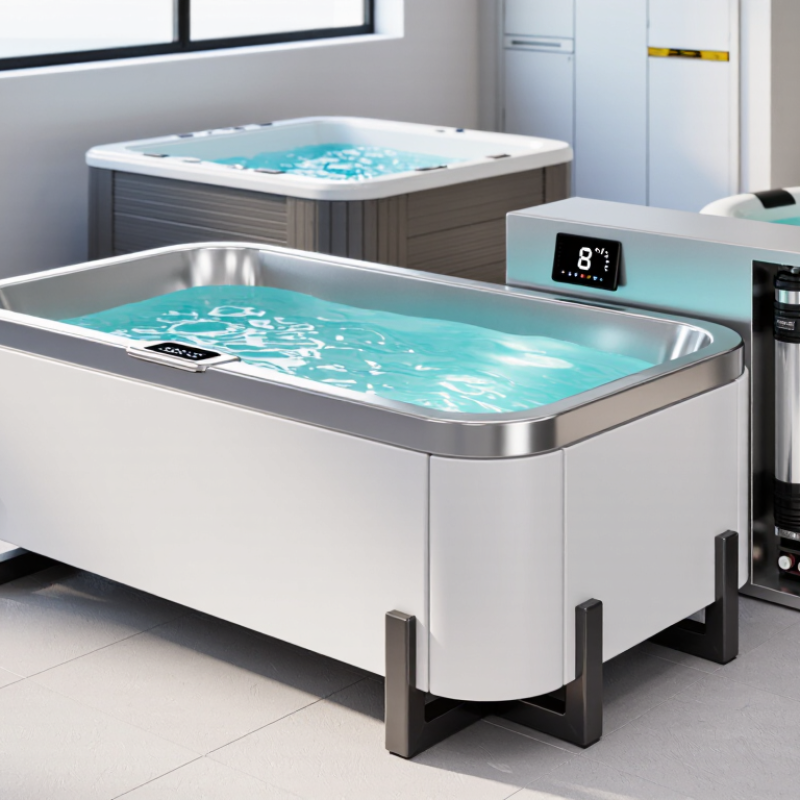
Cold Plunge Tubs Defined: 3–15°C Water, 2–10-Minute Sessions
Cold plunge tubs are controlled immersion systems, usually set between 3°C and 15°C. Sessions commonly last 2–10 minutes, depending on temperature, experience, and health status. At 3–5°C, even two minutes can feel intense. At 10–15°C, longer exposure may be more manageable.
A 2022 review in Sports Medicine found that cold-water immersion may reduce post-exercise muscle soreness, but the ideal temperature and duration remain uncertain. That matters when comparing manufacturers for global buyers. Ask for verified temperature stability, water-flow performance, insulation ratings, and independent electrical safety testing. A digital display alone proves little.
The Global Wellness Institute valued the global wellness economy at $6.3 trillion in 2023. Rising demand has encouraged more suppliers to publish technical specifications, though marketing language can outrun evidence. Look for transparent cleaning procedures, replaceable filters, emergency shutoff systems, and clear operating limits. The coldest setting is not automatically the best setting. Personal tolerance varies, and some users may stay too long because the water feels manageable at first. Medical guidance is sensible for people with cardiovascular conditions, circulation problems, or unusual cold sensitivity.
Global Market Data: Regional Demand, Growth Rates, and Buyer Segments
Global demand for cold plunge tubs is rising with the wider wellness economy. The Global Wellness Institute reported that this economy reached $6.3 trillion in 2023. Recovery services are gaining attention in gyms, hotels, clinics, and private homes.
Regional demand is uneven. North America remains a strong market because fitness clubs and sports facilities increasingly offer recovery areas. Europe shows steady interest, supported by sauna culture, boutique wellness centers, and hotel redevelopment.
Asia-Pacific may deliver faster growth, especially in urban markets where premium fitness and hospitality services are expanding. Grand View Research forecasts continued growth for the cold plunge pool category through 2030, although estimates differ because reports define the market differently. That limitation matters.
Buyer segments are becoming more distinct. Home users often want compact tubs, simple drainage, and quiet operation. Fitness operators usually prioritize durability, filtration, and rapid water turnover. Hotels and wellness resorts may require custom dimensions, energy monitoring, and service support across several locations. Commercial buyers also examine installation rules, electrical standards, water treatment, and after-sales response before choosing a manufacturer.
The numbers look promising. Reality is harder.
Cold water systems need disciplined cleaning and maintenance. A low purchase price can create higher operating costs later. Manufacturers serving global buyers should publish test data, warranty terms, spare-parts policies, and regional compliance information. These details build trust more effectively than aggressive growth claims.
Manufacturer Comparison: Cooling Capacity, 1–3 HP Chillers, and Filtration
Global buyers should compare cold plunge tub manufacturers by verified performance, not horsepower alone. Cooling capacity shows how quickly a system removes heat from the water. Ask for test conditions, including water volume, starting temperature, room temperature, and insulation quality. Without these details, advertised cooling times can mislead procurement teams.
A 1 HP chiller may suit a compact residential tub with moderate daily use. Larger tubs or busy wellness facilities may need 2–3 HP for faster recovery. However, higher power increases energy use and may overload unsuitable electrical systems. Check the compressor type, operating noise, voltage options, and service access before ordering. Measure recovery time.
Filtration also affects cooling performance and water quality. A cartridge filter should capture fine debris without restricting circulation. Reliable systems often combine mechanical filtration with ozone or ultraviolet treatment, where permitted by local requirements. Confirm pump flow, replacement filter availability, and cleaning intervals. Small details matter. A clogged filter can reduce flow and make a powerful chiller perform poorly.
In practical comparisons, insulated covers and sealed plumbing can matter as much as the chiller rating. I have seen specifications look impressive until real operating conditions exposed slow recovery. That weakness deserves attention. Manufacturers should provide clear test data, maintenance instructions, warranty terms, and export support. Buyers should request independent performance records when possible, while recognizing that laboratory results may not reflect a hot outdoor installation.
Top Manufacturers: CE, UL, ISO 9001, Warranty, and MOQ Standards
For global buyers, a cold plunge tub manufacturer should prove more than attractive product photographs. During supplier evaluations, request the CE declaration, technical file references, and test reports relevant to the exact model. CE marking supports European conformity, but it does not replace product-specific verification. For North American projects, ask whether UL certification or listing covers the complete tub, electrical system, and installation conditions. Partial coverage can create costly surprises.
ISO 9001 shows that a factory operates a documented quality management system. It does not guarantee perfect products. Ask how incoming materials, welding, insulation, pumps, and temperature controls are inspected. A useful factory should provide sample inspection records and explain corrective actions. Details matter. Check water leakage tests, electrical safety checks, and packaging drop tests before placing a large order.
Warranty terms require equal attention. Confirm coverage length, excluded parts, response time, replacement procedures, and responsibility for international freight. Ask for written support commitments. Do not accept vague promises. MOQ should match your sales plan, warehouse capacity, and seasonal demand. A low MOQ may increase unit costs, while a high MOQ can trap working capital. One practical weakness is often overlooked: buyers verify certificates but neglect spare-part availability. That mistake can delay repairs for weeks. Evaluate documentation, factory communication, and after-sales evidence together before approving a supplier.
Top Cold Plunge Tub Manufacturers for Global Buyers
Buyer-readiness benchmark based on commonly requested compliance and purchasing criteria. CE and UL requirements depend on the target market and product configuration, while ISO 9001 certification is generally maintained through a three-year certification cycle with periodic surveillance audits. Warranty and MOQ are commercial terms negotiated with each supplier.
The chart uses a normalized 0–100 buyer-readiness scale to compare the importance of CE compliance, UL/NRTL acceptance, ISO 9001 quality systems, warranty coverage, and MOQ flexibility during global supplier screening.