
Top Incinerator Manufacturers for Global Buyers
Selecting an incinerator manufacturer is not just a matter of comparing purchase prices. Global buyers must match equipment to waste type, daily volume, moisture levels, site conditions, and operator skills. A unit designed for dry, consistent material may struggle when the feed composition changes. That difference can affect throughput, fuel use, maintenance, and operating records. Brochures show capacity, but real operating conditions tell a fuller story. Ask for clear design limits, process diagrams, and examples from installations handling similar material. Small details matter. A door seal, ash-handling arrangement, or spare-parts lead time can shape routine performance.
This guide compares manufacturers through more than product range. It considers combustion control, temperature monitoring, emissions-control options, automation, commissioning, operator training, and after-sales support. Assess these features against the waste profile and local operating requirements; they are not interchangeable checkboxes. Request documented performance data and, where possible, speak with existing customers. Claims deserve verification. Supplier responsiveness also matters when a sensor fails or a maintenance question arrives across time zones. No manufacturer suits every project, and published specifications may not reveal every limitation. That is worth remembering. Use this guide as a starting point for practical questions, not as a substitute for site-specific engineering review.
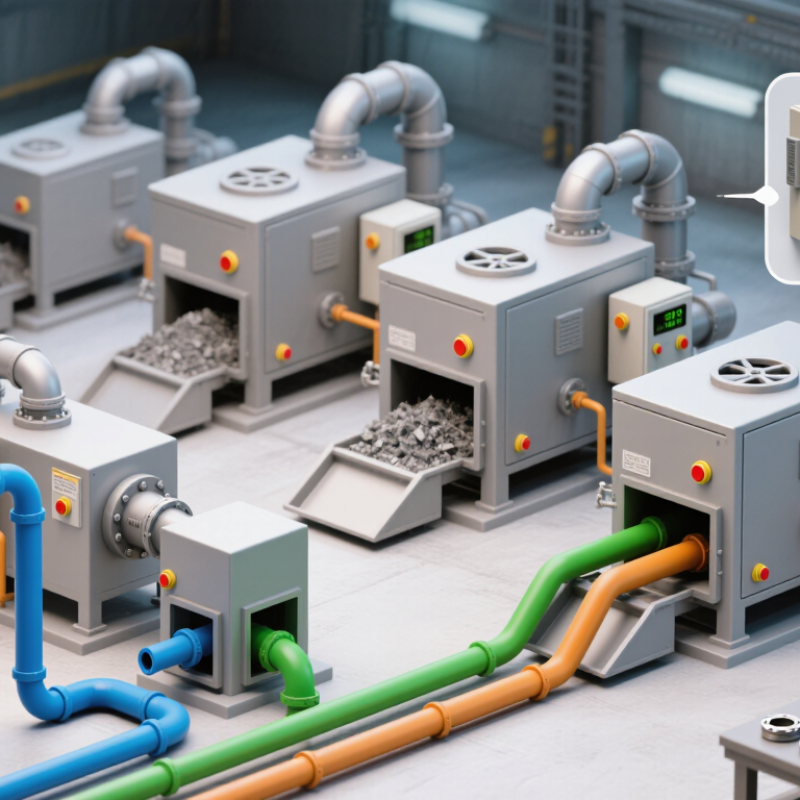
What Incinerators Do and Where They Are Used
Incinerators use controlled combustion to reduce waste volume and treat materials that cannot be reused or recycled safely. In municipal facilities, they commonly handle residual waste after recyclable materials have been removed. Heat from combustion may generate steam or electricity, while pollution-control systems capture particles and reduce certain harmful emissions. The process also leaves bottom ash and air-pollution-control residues that require appropriate handling. Incineration is not a substitute for waste prevention.
The scale is significant. UNEP’s Global Waste Management Outlook 2024 estimates that the world generated 2.1 billion tonnes of municipal solid waste in 2023; without major changes, annual volumes could reach 3.8 billion tonnes by 2050. In healthcare, the World Health Organization reports that about 15% of waste is hazardous, including infectious or chemical waste. Carefully managed incineration can treat some suitable healthcare waste, but not every clinical item belongs in a furnace. That distinction matters. Facility choice depends on waste composition, operating controls, local infrastructure, and verified emissions performance. A practical detail often missed: wet, mixed waste can reduce combustion efficiency and complicate treatment. Incineration can help manage selected waste streams, yet its benefits depend on what enters the plant and what happens to its residues.
Incinerator Uses and EU Combustion Temperature Benchmarks
Incinerators use controlled combustion to treat waste. They are used for municipal solid waste, hazardous waste, and healthcare waste. The chart compares EU minimum combustion-chamber temperature requirements for two waste categories.
EU requirements: at least 850°C for a minimum of two seconds for waste incineration; at least 1,100°C for a minimum of two seconds when hazardous waste contains more than 1% halogenated organic substances, expressed as chlorine. Requirements are from Directive 2010/75/EU, Article 50(2).
Key Incinerator Types and Their Applications
Incinerators serve different waste streams, so buyers should match the equipment to the material, not just the plant’s daily capacity. Moving-grate systems commonly handle municipal solid waste, where mixed refuse travels across a heated bed. Rotary kilns can process varied solid and containerized waste, with a secondary chamber helping complete combustion. They need careful feed control. Fluidized-bed units suit prepared, relatively consistent fuels, such as processed residual waste. Uneven particle sizes can disrupt stable operation. Fixed-hearth designs are simpler and may suit smaller, controlled batches, but usually require more hands-on loading.
Applications shape the details. Healthcare facilities may use dedicated systems for appropriately segregated clinical waste, while industrial sites often need equipment matched to specific process residues. Ask suppliers for references involving similar waste, not merely similar tonnage. Review feed composition, moisture, required uptime, ash handling, emissions monitoring, and operator training. During a site visit, inspect the feed area and control screens. A polished specification sheet can still miss seasonal changes in waste. That is worth questioning.
Tips: Request a representative waste analysis before sizing. Confirm local permitting and emissions requirements with qualified professionals. Compare lifecycle costs, including maintenance and residue disposal—not purchase price alone. When feed data is incomplete, state that uncertainty clearly; sizing may need revision.
Leading Incinerator Manufacturers in the Global Market
Leading incinerator manufacturers in the global market are assessed by engineering quality, process control, and support after installation—not by equipment size alone. Buyers should compare systems against the material they actually handle, including its moisture, consistency, and heating value. A unit designed for steady, predictable feed may struggle when waste composition changes. Details matter.
A careful supplier can explain how the combustion chamber, refractory lining, and feed system work together. Ask for documented operating data, maintenance schedules, commissioning plans, and training details. Request clear information about flue-gas treatment and emissions monitoring, then verify that the proposed configuration can meet applicable local requirements. Specifications are useful, but they do not replace checks on site references and service capacity in the intended region.
Global manufacturers vary in how they manage spare parts, remote troubleshooting, and operator support across borders. These factors can shape uptime as much as the core equipment. Even a thorough comparison can miss practical issues, such as access for routine inspection or delays in replacing a worn component. Not always obvious. Buyers may also need to revisit their assumptions after reviewing actual feed samples; early estimates are sometimes too neat. A credible supplier should welcome those questions and explain limitations without promising identical results at every facility.
How to Compare Manufacturers and Equipment
Top Incinerator Manufacturers for Global Buyers
How to Compare Manufacturers and Equipment
A fair comparison starts with the material being treated, not the largest capacity figure in a brochure. Ask manufacturers to assess typical load size, moisture, heating value, and daily operating hours. These details affect fuel use, loading frequency, and equipment selection. Small differences matter. Request a process description showing how primary and secondary combustion stages work, and how temperature and residence time are monitored. Check whether emissions-control equipment is included in the quoted scope or priced separately. A low initial price can hide costly omissions.
Look beyond the machine itself. Ask for references from facilities handling similar materials and operating in comparable climates. Request performance data, commissioning steps, operator training plans, spare-parts availability, and written warranty terms. If possible, review a site or speak with an operator about routine cleaning and downtime. Real experience is revealing. Compare energy and fuel estimates using the same assumptions; otherwise, the numbers are difficult to judge. No test can represent every operating day, and forecasts deserve scrutiny. Still, a manufacturer that explains limits clearly may be more dependable than one promising effortless operation. Check that proposed equipment fits the available footprint, utility connections, and maintenance access before signing a purchase agreement.
Top Incinerator Manufacturers for Global Buyers - How to Compare Manufacturers and Equipment
| Comparison Factor | Rotary Kiln Incinerator | Moving-Grate Incinerator | Fluidized-Bed Incinerator | Batch-Fed Medical Waste Incinerator |
|---|---|---|---|---|
| Common applications | Heterogeneous hazardous and industrial wastes; suitable designs can handle solids, liquids, and some sludges. | Municipal solid waste and other combustible, relatively high-throughput waste streams. | Prepared, relatively uniform wastes such as certain sludges and finely divided fuels. | Small or intermittent loads of healthcare waste, subject to local rules and the equipment design. |
| Feed preparation | May accept varied feed forms, but oversized items, liquids, and incompatible materials require defined handling procedures. | Often accepts mixed waste after removal of unsuitable or recoverable materials; bulky items may need preparation. | Typically requires controlled particle size, moisture, and feed consistency; pretreatment may be necessary. | Waste is loaded in batches; segregation, packaging, and removal of prohibited items remain important. |
| Process characteristics | A rotating refractory-lined chamber tumbles waste; a secondary combustion chamber is commonly used for gases. | Waste moves across a mechanical grate while drying, igniting, and burning; combustion air is supplied through the grate. | Air or another gas fluidizes a bed of hot inert material, promoting mixing and heat transfer. | Waste is treated in discrete cycles, commonly using a primary chamber followed by secondary combustion. |
| Operational considerations | Requires management of refractory wear, seals, feed variability, and both bottom ash and fly ash. | Requires reliable grate operation, continuous feed handling, and maintenance of ash-removal systems. | Requires bed-material control, stable operating conditions, and attention to feed preparation and pressure drop. | Requires operator procedures for loading, cycle control, cooling, and safe handling of treated residues. |
| Air-pollution control | System design may include particulate removal, acid-gas treatment, activated carbon, and nitrogen-oxide controls as required. | Flue-gas treatment is selected according to waste composition, plant design, and applicable emission limits. | Emissions controls are still required; the combustion process does not replace flue-gas treatment. | Appropriate particulate and gas treatment must be selected based on feed, capacity, and local emission requirements. |
| Useful supplier evidence | References for comparable waste chemistry, feed testing, refractory life, and demonstrated operating performance. | References for comparable waste composition and throughput, plus grate availability and maintenance data. | Evidence that the proposed system can handle the buyer’s actual feed characteristics, including pretreatment needs. | Validated cycle information, operator training, applicable permits, and clear limits on acceptable waste. |
| Questions to ask manufacturers | What feed limits, auxiliary-fuel assumptions, residue outputs, and refractory maintenance intervals apply? | What waste preparation, uptime assumptions, ash handling, and emissions-control configuration are included? | What feed specifications, bed-management procedures, and pretreatment equipment are required? | What batch size, cycle time, daily operating limits, and monitoring procedures are documented? |
| Best comparison basis | Request a design based on representative waste analyses and a clearly defined operating envelope. | Compare guaranteed throughput and emissions against the same waste composition and operating conditions. | Compare feed-preparation costs and process guarantees using representative samples of the intended feed. | Compare complete-cycle performance, including loading, heating, treatment, cooling, and residue handling. |
Buyer note: Equipment suitability and emissions requirements depend on waste composition, plant capacity, site conditions, and local regulations. Request project-specific performance guarantees, emissions data, references, and a defined scope of supply; verify all claims independently.
Factors to Consider When Choosing an Incinerator Supplier
A supplier’s quoted capacity can look precise, yet feedstock rarely behaves like a spreadsheet. Moisture, particle size, and heating value can shift daily operation and fuel demand. The World Bank’s What a Waste 2.0 estimated 2.01 billion tonnes of municipal solid waste in 2016. It projected 3.40 billion tonnes by 2050. This growth makes adaptable sizing and documented throughput assumptions crucial. Ask for references from facilities handling waste with similar moisture and heating values. Small details matter.
Check combustion design, flue-gas treatment, ash handling, and emissions monitoring as one integrated system. The European Commission’s 2019 waste-incineration BAT conclusions give daily-average dust emission levels of 2–5 mg/Nm³ for relevant operating conditions. Compare proposed controls with local permit requirements, not a generic checklist. Ask suppliers to explain commissioning tests, operator training, spare-parts access, and service response times. A polished brochure cannot show how quickly a failed sensor will be replaced. Request test protocols, warranty exclusions, and energy-balance assumptions in writing. Not just promises.