
Top 10 Textile Lamination Machine Manufacturers 2026
The Top 10 Textile Lamination Machine Manufacturers 2026 guide examines the companies shaping modern fabric bonding. These machines combine heat, pressure, adhesives, and controlled web movement. Their output can influence waterproofing, breathability, durability, and production consistency.
Dr. Subhash K. Batra, a respected textile scientist and educator, offers a useful principle: “Textile performance depends on the relationship between material structure and process control.” That relationship remains central to every Textile Lamination Machine. A strong machine must handle delicate knitted fabrics without distortion. It should also maintain stable temperature across the working width. Small thermal differences can create visible wrinkles, weak bonds, or uneven coating lines.
Real factories reveal more than brochures. Operators watch the fabric enter the nip rollers, listen for tension changes, and inspect the laminated surface under bright light. Practical details matter. Web width, line speed, adhesive compatibility, cooling design, cleaning access, and spare-parts support deserve careful comparison. Energy consumption matters too, especially during long production runs.
This ranking does not assume one universal winner. A machine suited to automotive textiles may perform poorly on medical laminates or outdoor fabrics. That is an uncomfortable limitation. Available specifications may also differ between regions, models, and reporting years. Buyers should verify test conditions directly with manufacturers and request sample trials before investing.
The selected manufacturers represent different strengths, including precision engineering, flexible customization, automation, and after-sales service. Their technologies are not identical. That is the point. This guide helps readers compare equipment realistically, with attention to measurable performance and everyday factory experience.
What Textile Lamination Machines Are and How They Work
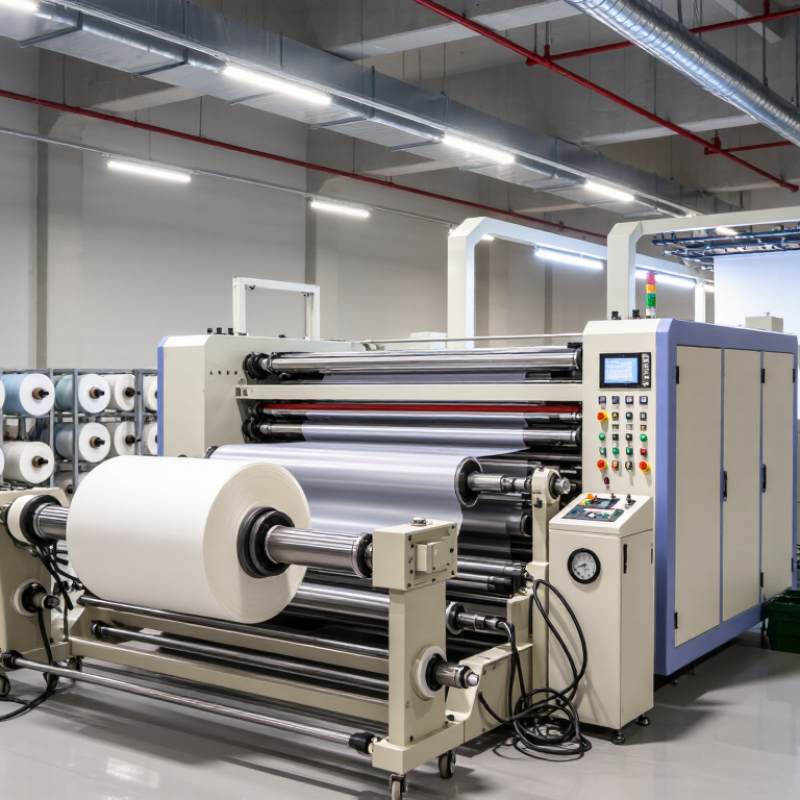
A textile lamination machine bonds two or more fabric layers into one functional textile. It may combine fabric with foam, film, membrane, or adhesive web. The result can improve waterproofing, insulation, softness, or dimensional stability. In practical production, operators choose the process according to fiber type, coating sensitivity, and required bonding strength.
The machine begins with an unwinding unit that feeds each layer at a controlled speed. Tension sensors help prevent stretching, curling, or misalignment. An adhesive system then applies a measured coating, powder, web, or film. Heated rollers activate the bonding layer. A nip roller presses the materials together under controlled pressure. Cooling rollers stabilize the laminate before rewinding. Some lines include edge guides, thickness gauges, and vision inspection.
Small changes matter. Excessive heat can damage delicate fibers or create a stiff hand feel. Low pressure may leave weak areas or visible bubbles. From production trials, stable tension often matters as much as adhesive temperature. Operators should record speed, pressure, temperature, and fabric moisture during every run. Test peel strength and wash durability before approving a batch. Not every wrinkle signals machine failure; incoming fabric variation may be responsible. Still, that assumption needs checking. A reliable process combines calibrated sensors, trained operators, documented tests, and regular roller maintenance.
Top 10 Textile Lamination Machine Manufacturers 2026 - What Textile Lamination Machines Are and How They Work
| No. | Machine Configuration | Typical Lamination Method | Compatible Textile Materials | Common Adhesive | Working Width | Typical Line Speed | Typical Temperature | Primary Application | Main Operating Advantage |
|---|---|---|---|---|---|---|---|---|---|
| 1 | Hot-melt powder coating line | Powder scattering, heating, and pressure bonding | Woven fabrics, knitted fabrics, nonwovens, and foam-backed textiles | Thermoplastic adhesive powder, commonly TPU, PA, PES, or EVA | 1,600–3,200 mm | 8–35 m/min | 110–180°C | Interlinings, protective clothing, automotive fabrics | Uniform adhesive distribution with solvent-free processing |
| 2 | Hot-melt film laminator | Thermal activation of a preformed adhesive film followed by nip bonding | Technical textiles, coated fabrics, apparel fabrics, and membranes | TPU, PES, PA, or EVA film | 1,600–3,400 mm | 10–45 m/min | 100–170°C | Waterproof garments, medical fabrics, and soft composites | Accurate coat weight and clean edges |
| 3 | Flame lamination machine | Controlled surface melting of polyurethane foam followed by immediate bonding | Polyester, nylon, cotton blends, microfiber, and polyurethane foam | Melted polyurethane foam acting as the bonding layer | 1,600–2,800 mm | 15–60 m/min | Flame zone approximately 800–1,200°C | Upholstery, automotive interiors, mattress covers | High production speed without separately applied adhesive |
| 4 | Hot-air coating and laminating line | Liquid or paste adhesive coating, hot-air drying, and nip lamination | Woven fabrics, nonwovens, fleece, and coated textiles | Water-based acrylic, polyurethane, or synthetic latex adhesive | 1,600–3,600 mm | 10–50 m/min | 80–160°C drying and bonding zones | Curtains, filtration media, home textiles, and industrial fabrics | Suitable for adjustable wet coating weights |
| 5 | Dot coating and powder-point laminator | Adhesive dots are applied, fused, and pressed between textile layers | Apparel fabrics, stretch fabrics, knits, and lightweight woven materials | Thermoplastic PA, PES, TPU, or co-polyamide adhesive powder | 1,400–2,800 mm | 8–30 m/min | 100–180°C | Garment interlining, collars, cuffs, and waistbands | Maintains fabric hand and breathability better than full-surface coating |
| 6 | Thermal oil or heated-cylinder laminator | Heated roller activation combined with controlled nip pressure | Heavy woven fabrics, canvas, coated textiles, and multilayer composites | Hot-melt film, web, powder, or pre-coated adhesive | 1,600–3,200 mm | 5–25 m/min | 90–200°C | Banners, floor coverings, tarpaulins, and reinforced fabrics | Stable heat transfer for thick or dense material stacks |
| 7 | Ultrasonic textile laminator | High-frequency mechanical vibration creates localized heat and bonding | Synthetic nonwovens, spunbond fabrics, films, and lightweight laminates | Thermoplastic layers or compatible adhesive webs | 600–2,400 mm | 5–35 m/min | Localized process heat, generally below 160°C bulk temperature | Hygiene products, disposable medical textiles, and filter assemblies | Low bulk heating and rapid intermittent bonding |
| 8 | Radio-frequency laminator | Dielectric heating of polar polymer layers under pressure | PVC, PU-coated textiles, synthetic leather, and technical films | PVC, polyurethane, or other RF-responsive thermoplastic layers | 1,000–2,500 mm | 3–20 m/min | Material-dependent dielectric heating | Inflatable products, synthetic leather, and sealed technical goods | Fast internal heating for selected thermoplastic materials |
| 9 | Calender laminating machine | Continuous pressure and heat between one or more calender rolls | PVC-coated fabrics, coated cloth, films, and synthetic leather | Thermoplastic coating, adhesive film, or pre-coated substrate | 1,600–4,000 mm | 15–80 m/min | 100–220°C | Architectural membranes, truck covers, flooring, and wall coverings | High throughput and consistent surface finish |
| 10 | Low-temperature web laminator | Adhesive web activation using heated rollers and controlled pressure | Delicate knits, functional fabrics, fleece, and heat-sensitive textiles | PES, PA, TPU, or EVA adhesive web | 1,400–3,000 mm | 8–40 m/min | 70–140°C | Sportswear, outdoor clothing, footwear components, and soft furnishings | Reduces thermal damage, shrinkage, and fabric distortion |