
What Is the Best Multi Effects Pedal?

A Multi-effects pedal can replace several individual stompboxes, simplify a guitar rig, and open up sounds that would otherwise require extra gear. Yet the best choice depends on how you play, what equipment you already own, and how much time you want to spend adjusting settings. One size rarely fits.

A bedroom player may value quiet practice, headphones, and simple presets. A gigging guitarist may care more about rugged construction, quick footswitch access, and reliable outputs. This guide will compare the features that matter, including effect quality, amp and cabinet simulations, signal routing, editing controls, and connectivity. It will also consider price and long-term support, since a crowded feature list does not guarantee an easy or dependable experience.

Specs only tell part of the story. A pedal that sounds polished through headphones may feel different through a real amplifier, and complex menus can slow down a hurried soundcheck. We will look at those trade-offs rather than assume one model suits everyone. If possible, try a unit with your guitar and amp before buying; even small differences in feel and workflow can matter. Sometimes, the simpler option wins. The aim is to help you identify a multi-effects pedal that fits your playing habits, not merely the one with the longest list of effects.
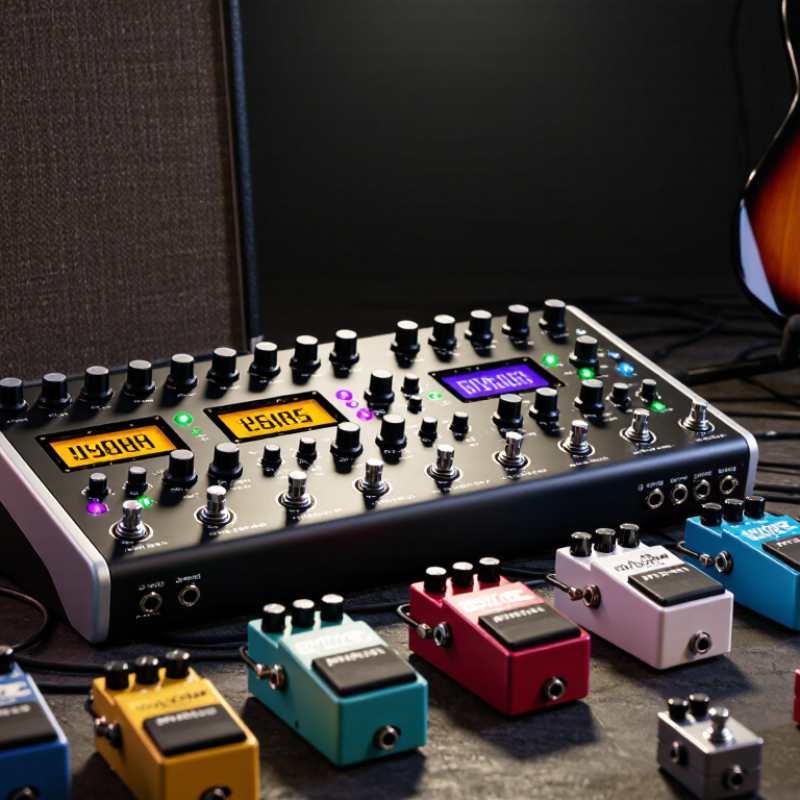
What Is the Best Multi Effects Pedal?

What Is a Multi-Effects Pedal and How Does It Work?

A multi-effects pedal is a compact signal-processing system. Your guitar’s analog signal enters an input, where a converter changes it into digital data. A digital signal processor then applies selected effects, such as compression, delay, or distortion. The pedal converts the result back to an analog signal for an amplifier or headphones. In practical terms, a delay effect can repeat a note while a compressor evens out its volume. The order matters: distortion before delay sounds different from distortion after delay. Small changes are audible.

Some units also store presets, route effects in different orders, or accept expression pedals for real-time control. These features make one floor unit useful for rehearsal and live performance, but menus can slow a quick adjustment. Not magic.

A 2022 economic-impact study by the NAMM Foundation and Cebr estimated that the U.S. music-products industry contributed $17.5 billion to the economy. That figure covers a broad sector, not multi-effects pedals alone; it shows the larger market these tools belong to. When comparing a unit, check its inputs, outputs, editing controls, and whether it preserves your playing dynamics. Specifications help, but they do not tell you how quickly you can find a usable sound under stage lights.

Which Features Matter Most When Choosing a Multi-Effects Pedal?

Choosing a multi-effects pedal is less about counting effects and more about how naturally it fits your rig. Check whether its signal chain can be rearranged, and whether it supports the connections you actually use: stereo outputs, an effects loop, or an expression pedal. If you play through headphones or a direct recording setup, inspect the cabinet simulation and output options. A bright screen helps onstage, but clear footswitches matter more when the lights are low.

Latency, preset control, and editing software deserve a real test. The MIDI Association’s MIDI 1.0 Detailed Specification sets the serial data rate at 31.25 kbit/s. That figure matters when synchronizing tempo or controlling several devices; reliable clock and switching may be more useful than elaborate routing. Try changing a preset while playing, not just scrolling through menus at home. Feel it live. I still find some editing workflows less intuitive than their feature lists suggest.

Tips: Bring your own guitar and headphones to a shop. Compare the same clean and distorted sounds at matched volume, then check whether switching presets causes an abrupt level jump. Save one simple patch before experimenting.

How Do Multi-Effects Pedals Differ by Use Case and Budget?

A multi-effects pedal is best when its features match how you play, not when its effects list is longest. For home practice, prioritize a headphone output, simple preset editing, and quiet operation. You can shape a whole sound without waking the household. NAMM’s 2023 Global Report estimated that the global music products industry generated $17.5 billion in 2022. That figure covers far more than pedals, but it reflects a large market where musicians balance gear choices against real budgets.

For a first setup, roughly $100–$250 can cover basic amp and effect models, practice tools, and a few presets. Check the controls in person if possible; tiny screens can slow down quick changes. For gigs, consider sturdy footswitches, clear displays, and enough preset access to change sounds between songs. A unit around $250–$500 may offer more routing and control, though the price alone does not guarantee easy operation. In a studio, USB recording, flexible signal routing, and detailed editing can matter more than rugged construction. Premium units may add these options, but they can also make simple tasks feel complicated. I would not assume every advertised effect is equally convincing; test the sounds you actually use, especially through your own amp or headphones.

What Is the Best Multi-Effects Pedal?

How multi-effects pedals differ by use case and budget

These approximate USD price ranges illustrate common budget tiers: entry-level units for practice, mid-range options for compact live setups, and higher-priced units for advanced live or studio use. Features and prices vary by model and retailer.

Which Multi-Effects Pedals Stand Out in Key Categories?

The best multi-effects pedal depends on where it earns its place: underfoot onstage, beside a recording interface, or in a small travel rig. For live use, prioritize readable screens, sturdy footswitches, and patch changes without abrupt volume jumps. Test a full song, not just one impressive preset. That matters.

For studio flexibility, look for editable signal chains, dependable USB recording, and clear control over noise and output levels. A useful test is comparing the same clean guitar passage through several amp and cabinet simulations at matched loudness. Small level differences can make one preset seem better than it is.

For portability, check weight, power requirements, and whether essential sounds remain accessible without menu diving.

The NAMM Global Report recorded $17.5 billion in global music-product retail sales in 2022, a 3.2% rise from 2021; this broad figure signals a substantial gear market, but does not measure pedal quality or category winners. Category claims deserve caution. (NAMM Global Report, 2023.)

A pedal that excels at live switching may feel slow in a studio workflow, while a compact unit can sacrifice hands-on controls. I would compare those trade-offs before trusting a feature list.

How Can You Choose the Best Multi-Effects Pedal for Your Setup?

Choosing a multi-effects pedal starts with your actual signal chain, not the longest effects list. NAMM’s 2024 Global Report estimated the worldwide music products industry at about $17.5 billion in 2023. That scale reflects broad demand, but it cannot tell you which pedal will fit your setup. Check whether you need amp and cabinet simulation, or only effects before a physical amplifier. If you use an amp effects loop, confirm that the pedal supports the required routing. Small detail. It matters.

Next, match the unit’s connections to your daily rig: guitar input, stereo outputs, headphones, USB, and expression control. IFPI reported global recorded-music revenues of $28.6 billion in 2023, but a thriving recording industry does not make every home setup more complex. Choose based on where you play and how you switch sounds. For a rehearsal room, test whether one footswitch can move between clean and driven tones without a volume jump. For direct recording, listen through headphones and check whether cabinet simulation can be switched off when needed. Read the manual before buying; routing diagrams often reveal limitations that product summaries gloss over. I’d also leave room for doubt: a huge preset library may look useful, yet a few well-adjusted sounds are easier to manage on a dark stage.

What Is the Best Multi Effects Pedal? - How Can You Choose the Best Multi-Effects Pedal for Your Setup?

Pedal type Best suited to Typical controls Common connections Main advantage What to check before buying
Compact floor unit Practice, small pedalboards, and players who need a few ready-to-use sounds A small number of footswitches; often a built-in expression pedal or assignable control Usually instrument input, mono or stereo outputs, and headphone output; some include USB Portable and simple to set up Confirm that the number of footswitches and simultaneous effects meet your needs
Advanced floorboard Gigging musicians who switch between presets and individual effects during a song Multiple footswitches, editable signal chains, and often an expression pedal Often includes stereo outputs, MIDI, USB, and connections for an external expression pedal or effects loop Flexible live control and more detailed sound editing Check the switching layout, preset navigation, output options, and ease of editing on stage
Desktop processor Home recording, headphone practice, and computer-based music production Usually edited with onboard controls, a screen, or companion software; hands-free control may be limited Often includes USB audio, headphone output, and instrument or line-level connections Convenient direct recording and quiet practice Check computer compatibility, audio input/output needs, and whether external foot control is supported
Amp-and-cabinet modeling unit Players who need amplifier and speaker-cabinet sounds for direct recording, headphones, or a full-range PA system Preset-based control with adjustable amp, cabinet, and effects parameters Commonly offers direct outputs and USB; connection options vary by unit Can provide a complete direct-to-mixer or recording signal chain Check output formats, cabinet simulation options, and whether it suits your amplifier or PA setup
Modular multi-effects system Experienced players who want custom routing or integration with existing pedals and amplifiers Assignable controls, configurable effect order, and potentially parallel signal paths May include effects loops, MIDI, stereo I/O, and external control connections Adapts to complex rigs and individualized signal chains Verify routing limits, setup complexity, and compatibility with your existing pedals and amplifier

Quick selection guide: Choose based on how you play and connect: prioritize footswitch access for live use, USB audio for recording, headphone output for quiet practice, and the right mono or stereo connections for your rig. Specifications vary by unit, so check the manufacturer’s documentation before purchase.

CONTACT US