
Why Choose a Swivel Recliner Chair for Your Home?
A Swivel Recliner Chair can change how a room feels and functions. It combines supported seating, gentle movement, and easier viewing angles. You can turn toward a conversation, window, or television without twisting your back. That small movement often matters during long evenings.
AARP’s 2021 Home and Community Preferences Survey found that 77% of adults aged 50 and older want to remain in their current homes. This preference highlights the value of practical comfort and adaptable furniture. The National Institute on Aging also recommends reducing fall risks and improving household accessibility as people age. A stable recliner with a controlled footrest may support these goals, although it cannot replace professional mobility advice. Features matter. Look for firm armrests, smooth controls, adequate lumbar support, and enough clearance around the base.
The choice is not only about age. Parents may appreciate easier transfers after a tiring day. Remote workers may use the chair for reading, calls, or recovery between tasks. A rotating base can also protect flooring from repeated dragging. Still, a Swivel Recliner Chair is not automatically comfortable. Seat depth, cushion firmness, and body proportions differ widely. I would not choose one from photographs alone. Sit in it, test the handle, and check whether your feet rest flat. The right chair should move quietly and support ordinary routines. It should not dominate the room or promise more than it can deliver. Comfort is personal, but careful selection makes the decision more reliable.
What Is a Swivel Recliner Chair?
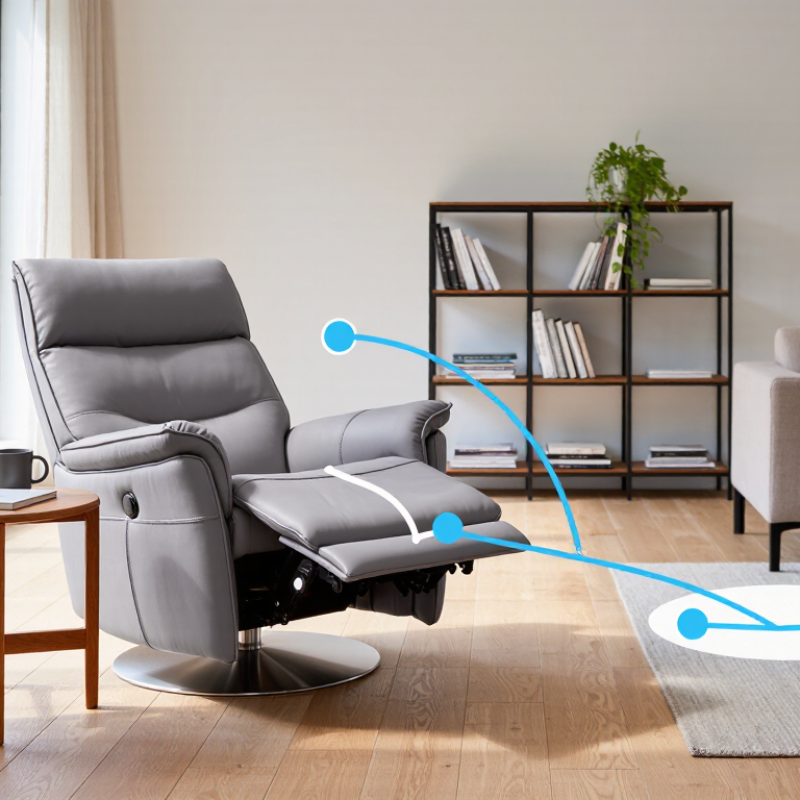
A swivel recliner chair combines two useful movements in one seat. It can turn from side to side, while its backrest leans backward and its footrest rises. This design lets you face a television, window, or conversation without dragging the chair across the floor. The swivel base usually rotates smoothly beneath a padded seat. Some models recline with a side handle, while others use a quiet electric control.
In everyday use, the advantage is easy to notice. You can turn toward a lamp to read, then face the room when someone speaks. The raised footrest may also support tired legs after a long day. However, the chair needs enough surrounding space. A crowded corner can limit its rotation and make the feature feel wasted. I also find that very soft cushions feel comfortable at first, but they may not provide firm support for everyone.
Tips: Measure the chair’s full reclining length, not just its upright width. Check the seat height, armrest position, and weight capacity. Test the swivel motion for wobbling or scraping sounds. Keep the chair away from walkways and allow space behind it. If children use the room, supervise moving parts carefully. A power model needs a nearby outlet, which can affect furniture placement. The perfect chair is not always the softest one. Support matters.
Why Choose a Swivel Recliner Chair for Your Home? - What Is a Swivel Recliner Chair?
| Data Dimension | Typical Information | How It Benefits the Home | Important Considerations |
|---|---|---|---|
| Basic Definition | A padded armchair that reclines and rotates horizontally on a swivel base. | Combines the comfort of a recliner with flexible movement for conversation, reading, or viewing a screen. | Confirm that the chair includes both a reclining mechanism and a rotating base, as some recliners offer only one function. |
| Horizontal Rotation | Many residential models rotate through approximately 180° to 360°, depending on the base design. | Allows users to turn toward different areas of a room without moving the entire chair. | Leave enough clearance around the chair to prevent contact with tables, walls, lamps, or other furniture. |
| Reclining Positions | Common positions include upright sitting, partially reclined, and a deeper reclined position for relaxation. | Supports different activities such as sitting upright, watching television, reading, resting, and taking a short nap. | Manual models usually require a side lever or body pressure, while powered models require an electrical connection and controls. |
| Space Requirement | Typical chair widths are about 75–100 cm, with additional space needed for rotation and reclining. | Can provide versatile seating in living rooms, bedrooms, nurseries, offices, or reading corners. | Measure the room, doorway, elevator, and delivery path before purchase. Check the fully reclined depth, not only the upright depth. |
| Comfort Support | Usually includes a high back, padded armrests, a cushioned seat, and an adjustable footrest. | Can reduce pressure on the legs and provide a more supported posture during extended sitting. | Seat height, seat depth, lumbar support, and cushion firmness should match the user’s body size and comfort preference. |
| Common Upholstery | Frequently available in fabric, faux leather, leather, microfiber, or other upholstery materials. | Offers a range of appearances, textures, cleaning requirements, and price levels for different interiors. | Review the care instructions, stain resistance, breathability, and durability of the chosen material before use. |
| Manual vs. Power Operation | Manual versions use a lever or push-back action; powered versions use a motor and wired or rechargeable controls. | Manual chairs are generally simple to operate, while powered chairs can provide smoother and more precise adjustment. | Powered chairs need access to a suitable outlet and may be heavier. Keep electrical cables clear of walkways. |
| Weight Capacity | Capacity varies by construction; many household models support approximately 113–159 kg. | Provides a basic safety and suitability reference for selecting a chair for a particular user. | Always follow the manufacturer’s stated weight limit and consider the combined load of the user and any added pressure during reclining. |
| Base Stability | A wide metal or reinforced base helps support rotation and reduces unwanted movement. | Improves confidence when sitting down, standing up, or changing the chair’s direction. | Place the chair on a level, stable surface. Avoid loose rugs or uneven flooring that may interfere with movement. |
| Floor Compatibility | Suitable for many hard floors and carpets when the base is properly supported. | Allows the chair to be used in multiple rooms without requiring permanent installation. | Use a suitable floor protector where needed, especially on delicate wood, laminate, or polished surfaces. |
| Accessibility and Convenience | Swivel movement can make it easier to face a side table, doorway, window, or caregiver. | May reduce the need for twisting the body or repeatedly repositioning the chair. | People with limited mobility should select an easy-to-operate mechanism and ensure sufficient space for safe transfers. |
| Maintenance Needs | Routine care typically includes vacuuming upholstery, cleaning spills promptly, and checking moving parts. | Regular maintenance helps preserve appearance, smooth operation, and long-term usability. | Do not use harsh cleaners or lubricants unless they are approved for the specific upholstery and mechanism. |
| Best Room Applications | Common locations include living rooms, bedrooms, home offices, media rooms, and reading areas. | Its rotating and reclining functions make one chair useful for several household activities. | Choose a style and size that leave clear walking paths and complement the room’s existing furniture. |
| Primary Advantage | Combines directional flexibility, adjustable comfort, and dedicated support in one seating unit. | Can improve the usability of a room by allowing one seat to serve multiple orientations and purposes. | The best choice depends on available space, user dimensions, preferred operation, upholstery needs, and budget. |