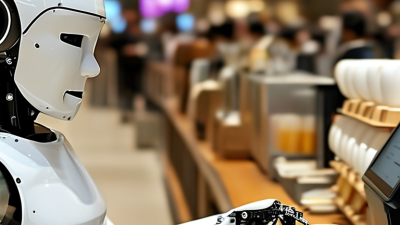
What Is the Best Coffee Shop Robot for Your Business?
At 7:30 a.m., the queue reaches the door, milk pitchers crowd the counter, and one delayed order can unsettle the whole morning. A Coffee Shop Robot may help with repetitive tasks, but the right choice depends on your menu, floor plan, staffing, and customer expectations. It is not simply a question of buying the fastest machine.
The International Federation of Robotics reported about 205,000 professional service robots sold worldwide in 2023, a 30% increase from the previous year. That figure covers many service industries, not coffee shops alone. It signals growing commercial interest, but it does not prove that a robot will pay off in your café. The National Restaurant Association’s 2024 State of the Restaurant Industry report also highlights technology’s expanding role in restaurant operations. These reports offer useful context, not a substitute for testing equipment in your own workflow.
Look closely at what each system actually does: grind beans, tamp espresso, steam milk, prepare drinks, or carry orders. Then compare output during a real rush, cleaning time between shifts, staff training, service support, and integration with your point-of-sale system. Small details matter. A machine that saves seconds but blocks the pickup counter may create a new bottleneck. And a polished demo can hide awkward resets. Before choosing, ask vendors for live trials, clear maintenance terms, and performance data from comparable cafés. The best robot is not necessarily the most advanced. It is the one your team can operate reliably, your customers welcome, and your business can justify.
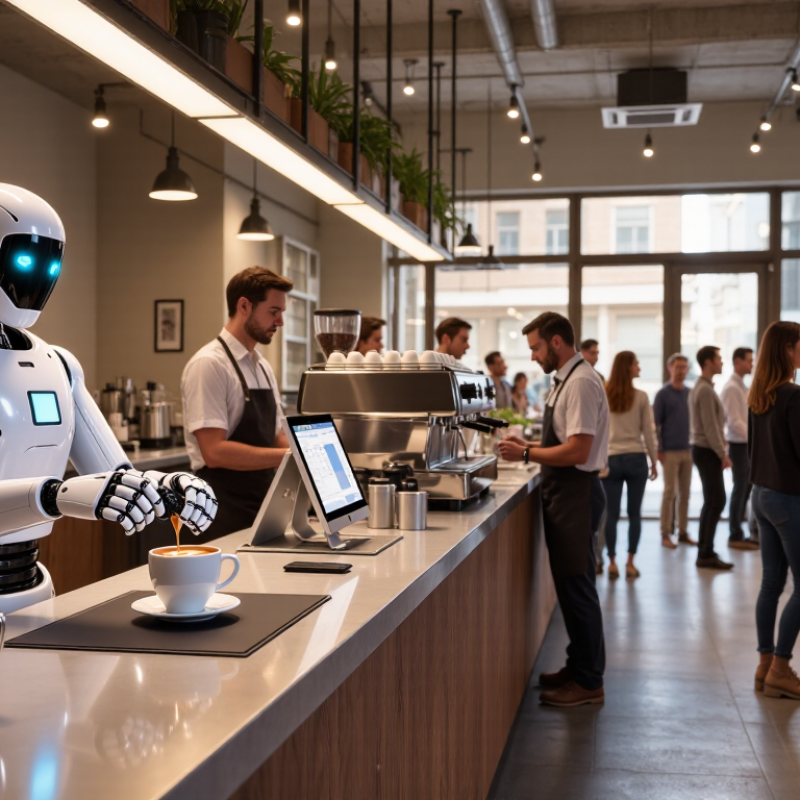
What a Coffee Shop Robot Is and How It Works
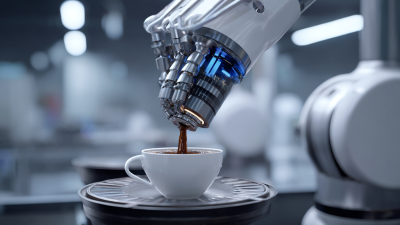
A coffee shop robot is an automated system that prepares drinks or assists with repeated tasks. It may use a robotic arm, drink dispensers, sensors, and software connected to an order queue. The exact setup varies. Some systems handle only pouring, while others grind beans, brew espresso, and move cups between stations.
Here is the basic workflow. A customer’s order enters the system, often through a register or ordering screen. Software matches the drink to a recipe, including its size and ingredients. The machine positions a cup, doses coffee, and operates connected equipment. Sensors can check cup placement or detect a blocked station. Small details matter: a cup sitting slightly off-center can interrupt a pour. Milk texture and espresso quality may still need human checks.
Not magic. A person typically restocks beans, milk, and cups, cleans parts that contact food, and responds to errors. Staff may also adjust grind settings as beans age or room humidity changes. Automation can make routine preparation more consistent, but it does not guarantee faster service during every rush. Orders with substitutions, equipment faults, or an empty ingredient bin can slow the line. A useful system should fit the shop’s menu, counter layout, cleaning routine, and staff workflow—not just look impressive.
Types of Robots Used in Coffee Shops
Coffee shops use several distinct robot types, and each solves a different bottleneck. Automated espresso systems handle repeatable tasks such as dosing, tamping, brewing, and milk steaming. Robotic arms can move cups between stations, but they need careful calibration and clear counter space. Small footprint matters. A machine that slows staff during a rush is not an upgrade.
Mobile service robots carry drinks or dishes between the counter and tables. They work best on wide, uncluttered paths; narrow aisles and crowded queues can make them awkward. Cleaning robots can sweep floors after closing, while self-service kiosks are automated ordering tools rather than physical robots. The International Federation of Robotics reported nearly 205,000 professional service robots sold worldwide in 2023, up 30% from 2022. That figure covers many industries, not coffee shops specifically, so it signals broader adoption rather than café demand. The National Coffee Association’s 2024 National Coffee Data Trends report found that 67% of American adults had coffee the previous day. That suggests a substantial customer base, but not that every shop needs automation. Not magic. Before choosing a type, observe one real peak period: note queue length, drink remakes, floor space, and staff movement. A polished demonstration can still disappoint at 8:15 a.m.
Key Criteria for Evaluating Coffee Shop Robots
A coffee shop robot should fit the way your business actually serves people, not just look impressive in a demonstration. Check drink consistency across several orders, including milk-based drinks and customizations. Ask for a timed trial during a busy period. A robot that makes one perfect latte slowly may not help a morning queue. Taste matters. So does repeatability.
Evaluate the footprint, power and water needs, cleaning steps, and staff training before comparing purchase prices. Request clear details on maintenance intervals, replacement parts, remote support, and downtime procedures. Check whether the system can connect with your ordering and payment workflow without adding confusing steps. It may be tempting to prioritize speed, but a cramped counter or difficult daily cleaning can erase that advantage. I would also review how the robot handles unusual orders; this is easy to overlook, and no setup handles every request gracefully.
Ask for references from businesses with similar traffic and staffing, then compare total operating costs over a realistic period. A small pilot can reveal awkward handoffs that a polished demo misses.
How Robot Capabilities Match Different Business Needs
The best coffee shop robot depends on the work your team needs done. A compact kiosk may suit a small counter with a short drink menu. A mobile unit may help in a spacious café where staff carry orders across the room. Start with the work. Watch where queues form, where spills happen, and which tasks interrupt baristas most often.
Match the robot’s capabilities to your busiest hours, not just to a product demonstration. If it prepares drinks, check whether it handles your cup sizes, milk options, and custom orders. If it delivers, measure aisle width and observe how customers move around chairs. A machine that serves quickly but blocks a narrow walkway may create a new problem. Small details matter.
Consider cleaning, refill frequency, and staff training alongside speed. Ask who will wipe the dispensing area during a rush and how the machine signals that ingredients are low. A short on-site trial can reveal awkward handoffs that a showroom cannot. Some tasks may still be faster by hand. That is worth admitting. Compare service time, order accuracy, and employee workload before deciding which capabilities genuinely fit your business.
Steps for Selecting and Integrating a Coffee Shop Robot
Selecting a coffee shop robot starts with the queue, not the catalogue. Track orders during the morning rush, note drink customization, and measure how long staff spend steaming milk or carrying cups. The National Restaurant Association’s 2025 State of the Restaurant Industry report projected $1.5 trillion in U.S. restaurant and foodservice sales and 15.7 million jobs. That scale makes labor planning and reliable service important, but it does not prove a robot will suit every café. Match the machine to one repeatable task. Check its drink range, cleaning routine, counter footprint, noise, and recovery process when an order fails. A demo is not enough.
Test it during a real rush. Record drinks per hour, remake rates, wait times, and staff interventions before and after installation. The U.S. Bureau of Labor Statistics projects 6% growth in food-preparation worker employment from 2023 to 2033, with about 179,900 openings each year. That context supports designing automation around staff capacity, not assuming it replaces a team. Before purchase, confirm power and water needs, network access, maintenance response times, and who handles daily cleaning. Run a limited pilot beside the existing workflow; let baristas flag awkward handoffs. The first layout may feel clumsy. That is useful evidence. Set acceptance targets, train every shift, and review results after several weeks, including quieter periods. Keep a manual service option for outages and complex orders.
| Step | Decision Area | Data to Collect | Selection or Integration Guideline |
|---|---|---|---|
| 1 | Define the business goal | Current order volume, peak periods, labor constraints, service hours, and the tasks causing the most delays. | Choose a clear objective, such as improving peak-hour consistency, extending service hours, or reducing repetitive drink preparation. Do not assume automation will eliminate staffing needs. |
| 2 | Choose the robot format | Menu complexity, available counter or floor space, expected human interaction, and whether drinks are prepared at a fixed station. | A robotic espresso station suits a defined espresso workflow; a bean-to-cup unit suits a compact, standardized menu; a kiosk-style cell can automate more steps but usually needs more space and integration work. Compare complete workflows, not just the robot arm or machine. |
| 3 | Measure required capacity | Orders per 15-minute interval, average drinks per order, drink preparation time, and peak queue length. | Use observed peak demand rather than daily averages. As a planning target, assess capacity with roughly 20% headroom above the measured peak, then verify real throughput in a site trial. Published cycle times may exclude payment, handoff, cleaning, or replenishment. |
| 4 | Check menu coverage | Drink sizes, hot and cold options, milk alternatives, customization rules, toppings, and allergen-handling requirements. | Test the most frequently ordered drinks and important customizations. Confirm how the system handles unavailable ingredients, recipe changes, allergen requests, and drinks that require staff preparation. |
| 5 | Verify site readiness | Equipment footprint, access for maintenance, electrical supply, water connection, drainage, ventilation, network coverage, and storage space. | Obtain the installation requirements for the exact configuration and check them against the site before purchase. Include space for staff access, ingredient replenishment, cleaning, and customer pickup. |
| 6 | Calculate total operating cost | Purchase or lease cost, installation, software fees, utilities, consumables, service visits, replacement parts, and staff time for cleaning and restocking. | Compare total cost over the intended ownership period with the current process. Include downtime and maintenance assumptions; do not base the decision on equipment price or labor savings alone. |
| 7 | Review safety and food hygiene | Moving-part hazards, emergency stop access, cleaning procedures, food-contact materials, temperature controls, and allergen cross-contact risks. | Complete a site-specific risk assessment and confirm that the installation, operating procedures, and food-safety controls meet applicable local requirements. Define who may enter the robot’s work area and how cleaning is performed safely. |
| 8 | Plan software and payment integration | Point-of-sale workflow, order routing, menu and price updates, payment handling, order status, reporting, and network or API requirements. | Map the order journey from placement to pickup. Test payment failures, duplicate orders, cancellations, refunds, offline behavior, and communication between the ordering system and the preparation station. |
| 9 | Run a controlled pilot | Actual drinks per hour, order accuracy, average and peak wait time, availability, staff interventions, waste, and customer feedback. | Trial the system during representative service periods using the intended menu and staffing plan. Set pass/fail thresholds before the pilot and record both normal operation and recovery from faults. |
| 10 | Train staff and launch | Staff roles, opening and closing checks, cleaning schedule, replenishment tasks, troubleshooting steps, and escalation contacts. | Train staff to supervise operations, handle exceptions, maintain the equipment, and serve customers when the system is unavailable. Keep a documented fallback workflow for outages and peak demand. |
| 11 | Monitor performance after launch | Weekly throughput, uptime, drink remake rate, maintenance events, ingredient waste, and customer satisfaction. | Review results against the pilot baseline and business goals. Adjust recipes, staffing, replenishment routines, or operating hours based on measured results, and schedule preventive maintenance. |
Planning figures and suitability vary by equipment configuration, menu, site conditions, and local requirements. Confirm specifications and expected performance with a site assessment and an operational pilot.
Related Posts
-
10 Best Robot Cafe Solutions for Global Buyers
-
China Best Robotic Coffee Bar Supplier and Manufacturer
-
Maximize Efficiency and Quality: How Coffee Robot Machines Are Revolutionizing Global Coffee Production
-
Key Factors to Identify Top Manufacturers for the Best The Robot Coffee Machine
-
How to Choose the Best Coffee Machine Robot for Your Home?
-
How to Choose the Best Robot Coffee Counter for Your Business?