How to Choose a Robot Coffee Barista in 2026?

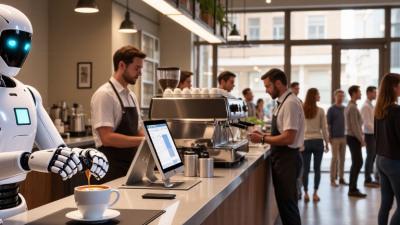
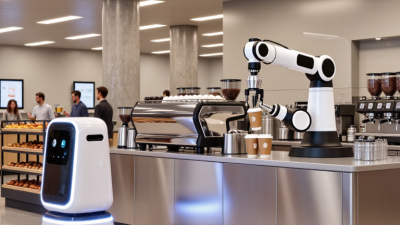
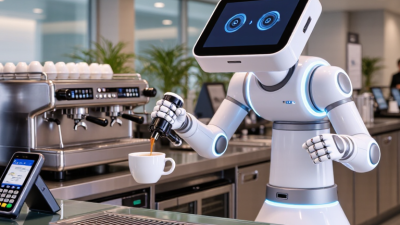
Choosing a Robot Coffee Barista in 2026 is not just a question of speed or futuristic design. It is a decision about drink quality, daily reliability, and how well automation fits your service space. A polished launch video tells only part of the story. Watch the machine prepare several drinks during a busy service, then inspect the espresso, milk texture, and handoff at the counter. Small details matter.

Cafe X founder Henry Hu is a relevant voice in automated coffee service. I cannot verify a verbatim quotation from him on this specific buying question, so I will not invent one. A fair, non-verbatim takeaway from the field is this: judge the robot by the cup and the consistency, not the spectacle. That standard helps buyers ask better questions about cleaning routines, ingredient refills, maintenance response, and staff training. Test it live.

This guide will compare the features that affect real-world performance, including menu flexibility, order integration, footprint, and service support. It will also separate measurable claims from showroom impressions. Ask for operating data, sample drinks, and a clear maintenance plan before making a decision. A robot may perform beautifully in a quiet demo yet struggle when orders arrive together. That gap deserves attention. No machine is perfect, and the right choice depends on your menu, traffic, and team. The goal is not automation for its own sake. It is dependable coffee service that works on an ordinary Tuesday, too.
How to Choose a Robot Coffee Barista in 2026?

Define Your Coffee Service Needs and Operating Environment

Before choosing a robot coffee barista, map the work it must actually handle. A kiosk serving espresso and milk drinks needs different capacity from a lobby offering a short menu. Estimate drinks per hour during the busiest periods, not just the daily average. Measure counter depth, doorway width, and clearance for refilling supplies. Check access to power, water, drainage, and reliable network service. Small details matter. A machine that fits on paper may block a staff walkway in practice.

Tips: Record peak-hour orders for a week. List each drink and its preparation steps. Ask who will refill beans, milk, and cups, and who will clean the machine between rushes. Confirm how quickly staff can take over if service pauses.

The operating environment shapes the right level of automation. In a quiet office, sound and a compact footprint may matter most. In a busy food hall, queue speed, spill management, and easy cleaning may deserve more attention. Consider heat, dust, and customer access around the serving area. Also check what routine maintenance requires and whether your team can perform it. A checklist can still miss something; watch the actual service area during a busy shift before committing.

How to Choose a Robot Coffee Barista in 2026?

Define Your Coffee Service Needs and Operating Environment

These are illustrative planning estimates, not published industry benchmarks. Estimate your busiest hour from local order data, then check that the robot’s tested peak capacity, menu, staffing plan, and site layout can meet that demand.

Compare Brewing Systems, Menu Range, and Customization Options

How to Choose a Robot Coffee Barista in 2026?

A robot coffee barista should fit your service pattern, not just look impressive. Compare its brewing system, menu range, and customization options side by side. The National Coffee Association’s 2024 National Coffee Data Trends report found that 67% of U.S. adults had coffee in the past day. That daily demand makes speed and repeatable taste worth testing. Consistency matters.

Check how the machine handles espresso and milk drinks during a busy period. Ask about dose control, temperature stability, cleaning time, and recovery between orders. A broad menu is useful only if each drink comes out reliably. Test core recipes first, then try changes to strength, milk, sweetness, and serving size. Watch the cup, not just the touchscreen. Small differences can matter.

Tips: Run a timed trial with your expected menu. Record preparation time, drink temperature, and cleaning steps. Ask staff to make the same order twice. If customization adds too many taps or slows service, simplify it. I would not choose by menu count alone; that can be a tempting, imperfect shortcut.

Assess Automation, Reliability, Cleaning, and Maintenance Requirements

How to Choose a Robot Coffee Barista in 2026?

Assess Automation, Reliability, Cleaning, and Maintenance Requirements

Automation should match the menu, not just look impressive. The International Federation of Robotics reported 4.28 million industrial robots operating worldwide in 2023. That shows robotics is established, but it does not prove a café machine can handle a morning rush. Ask vendors for uptime records, drink cycle times, and recovery steps after a failed order. Watch a live service test: Can staff clear a jam without tools? How many drinks can it make before refilling? Small details matter. The National Coffee Association’s 2024 National Coffee Data Trends report found that 45% of American adults had specialty coffee the previous day. A varied menu makes repeatable recipes and accurate customizations especially important.

Cleaning and maintenance can quietly determine daily performance. Look for removable drip trays, accessible milk lines, and clear prompts for rinsing and descaling. Check whether routine cleaning needs a technician or can be completed by trained staff between shifts. Request the maintenance schedule, replacement-part lead times, and written service-response targets. Then estimate labor and downtime costs, not only the purchase price. A glossy interface is easy to assess; hidden cleaning steps are not. It is tempting to trust a “self-cleaning” label, but that may not cover every milk-contact surface. Ask to see the cleaning process and record how long it takes. That gap matters.

Review Safety Standards, Software, and Integration Capabilities

A robot coffee barista should be assessed as workplace equipment, not just as a fast way to pour a latte. Ask for current safety documentation and check that it matches the exact machine configuration. Look for guarded moving parts, emergency stops, clear warnings, and safe access during cleaning. Confirm how the system handles hot water, steam, spills, and a blocked cup dispenser. That matters. Ask for evidence. A polished demonstration may not reveal what happens when a sensor fails or a customer reaches across the counter. Test the awkward cases, including power loss and routine maintenance, with staff present.

Software deserves the same scrutiny. Check how updates are tested, scheduled, and rolled back, and whether operators can review error logs without specialist help. Ask what data the machine stores, who can access it, and how long records are retained. Integration should cover the actual workflow: orders, payment status, menu changes, inventory, and sales reporting. Request a live test using your existing point-of-sale setup, then deliberately disconnect the network. Does the barista pause safely, preserve queued orders, and explain the problem clearly? I still find integration easy to overestimate; a connection on a feature sheet is not proof of a reliable handoff. Get responsibilities and support response times in writing.

How to Choose a Robot Coffee Barista in 2026? - Review Safety Standards, Software, and Integration Capabilities

Evaluation Area What to Verify Evidence or Useful Benchmark Why It Matters
Risk assessment and robot safety Confirm that the supplier has assessed hazards for the complete installation, including the robot, tools, coffee equipment, work area, cleaning tasks, and interaction with staff or customers. Request the documented risk assessment and applicable conformity documentation. ISO 12100:2010 provides general machinery risk-assessment principles. ISO 10218 and ISO/TS 15066 may be relevant to industrial or collaborative robot applications, depending on the system and jurisdiction. A robot’s safety features alone do not establish that the finished coffee-bar installation is safe. Layout, guarding, operating modes, and foreseeable misuse also matter.
Electrical and appliance safety Check electrical protection, emergency-stop arrangements, safe access for maintenance, and the compliance route for the complete machine and its commercial beverage equipment. Ask for test reports or declarations identifying the standards and editions used. IEC 60204-1 addresses electrical equipment of machinery; IEC 60335-2-75 may be relevant to commercial dispensing appliances. Confirm local applicability with the supplier or a qualified assessor. Robots, grinders, boilers, pumps, and dispensers can create different electrical, heat, pressure, and maintenance hazards.
Food-contact materials and hygiene Verify material suitability for the intended drinks, temperatures, cleaning chemicals, and contact duration. Review cleaning access, drainage, milk-line sanitation, and allergen-changeover procedures. Request material declarations and cleaning instructions for wetted parts. Requirements vary by market; examples include EU Regulation (EC) No 1935/2004 for food-contact materials in the EU and applicable FDA food-contact requirements in the United States. Robot motion does not replace sanitary design or validated cleaning procedures. Milk, water, and other ingredients require appropriate handling and cleaning controls.
Software and remote operations Check menu and recipe management, user roles, audit logs, alerts, remote diagnostics, software-update controls, and behavior during network or power loss. Request a software-support policy covering update frequency, support period, vulnerability reporting, backup and restore, and rollback. Test offline behavior and confirm that recipes and settings can be restored after an update. Software support affects service continuity, access control, and the ability to manage recipes consistently across locations.
Cybersecurity and payment handling Ask how the system is segmented from business networks, how accounts are authenticated, and whether payment data is handled by the coffee system or an external payment terminal. Request a network diagram and security responsibilities matrix. If cardholder data is in scope, confirm the relevant PCI DSS responsibilities with the payment provider; avoid storing sensitive payment data in the robot unless required and properly assessed. Clear boundaries reduce security exposure and help establish which party is responsible for payment and network controls.
Point-of-sale and business-system integration Confirm supported order, menu, pricing, inventory, and sales-reporting interfaces, plus error handling for duplicate, delayed, or cancelled orders. Request API documentation and a live integration test. Verify authentication, data fields, retry behavior, timeouts, and whether the interface supports the existing point-of-sale workflow. A technically available API is not enough; order states and failure recovery must match the store’s actual operating process.
Capacity and serviceability Measure drinks per hour under the expected menu and staffing conditions. Check refill frequency, cleaning time, consumable access, spare-parts availability, and service response arrangements. Run an acceptance test using the intended recipes and peak-period order mix. Set site-specific targets for output, availability, cleaning time, and support response; these are buyer requirements, not universal industry thresholds. Realistic testing reveals bottlenecks such as milk handling, cup placement, ingredient replenishment, or cleaning that may not appear in a short demonstration.

Selection note: Standards and regulatory requirements depend on the robot type, installation, intended use, and sales region. Confirm the applicable current editions and local requirements before purchase; no single standard should be treated as proof that every part of an installed coffee bar is compliant.

Calculate Total Cost and Verify Vendor Support Before Choosing

How to Choose a Robot Coffee Barista in 2026?

Calculate the full cost, not just the machine price. Include delivery, installation, electrical or plumbing work, software fees, ingredients, cleaning supplies, and staff training. Then estimate the cost per drink at both quiet and busy times. A robot may serve quickly during a rush, but idle hours still affect payback. One estimate will be wrong; leave room for that.

The International Federation of Robotics’ World Robotics 2024 report recorded nearly 205,000 professional service robots sold in 2023, a 30% increase from 2022. This signals wider adoption, not guaranteed savings. Ask vendors for a written service plan covering response times, replacement parts, software updates, and loaner equipment. Check references from operators with similar drink volumes, and test how quickly staff can clear a jammed cup or refill milk. Small delays matter.

Tips: Request a three-year cost breakdown and a live demonstration during peak service. Confirm support hours, travel fees, and who handles routine maintenance. If those answers are vague, pause before signing.

CONTACT US