Top Coffee Machine Robots for Global Buyers?
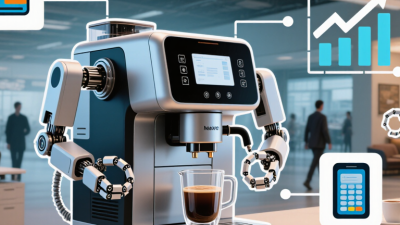
A Coffee Machine Robot can turn a busy counter into a steady, repeatable service station. It grinds beans, tamps a puck, brews espresso, and may steam milk with little staff intervention. But a polished video is not proof of reliable performance. Buyers need to examine the machine behind the demo.
Coffee educator James Hoffmann is known for explaining how brewing choices shape the cup. A useful buying principle, distilled from that approach rather than offered as a verbatim quotation, is: “Choose consistent coffee and dependable service over impressive features alone.” That distinction matters. A robot that serves a smooth espresso at 8 a.m. should still deliver one during a lunch rush, with clear cleaning steps and accessible support.
Global buyers also face practical differences. Counter height, power supply, water access, payment systems, and local maintenance coverage can change a machine’s fit. Ask for measured drink times, daily cleaning requirements, warranty terms, and references from sites with similar traffic. Look closely at the milk system; dried residue can turn a sleek display into extra work. Small details matter.
Not every café needs a robot. Some need speed; others rely on personal service. This guide compares leading options by drink quality, capacity, upkeep, integration, and total operating cost. The shortlist is useful, not universal. Real-world trials still matter.
Coffee-Machine Robots Defined: Automation Levels, Workflows, and Core Components
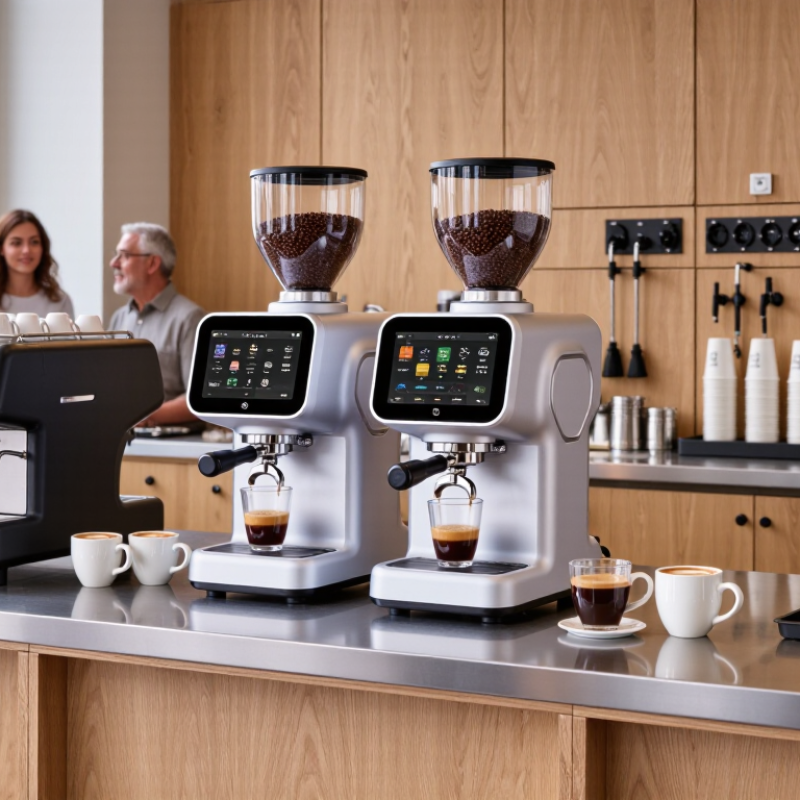
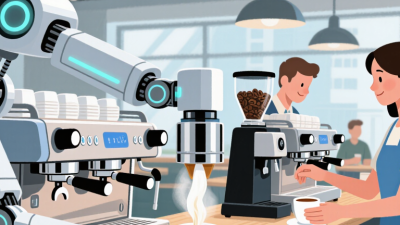
A coffee-machine robot is a coordinated workcell, not just a robotic arm beside an espresso machine. It links order input, cup positioning, grinding, dosing, brewing, and drink handoff. Automation ranges from assisted operation, where staff load cups and handle milk, to integrated cells that sequence most steps automatically. At the assisted level, an operator may still tamp grounds or clean the steam wand. More integrated systems use sensors and programmed controls to manage repeatable tasks. Fully automated does not mean maintenance-free. The International Federation of Robotics reported 4,281,585 industrial robots operating in factories worldwide in 2023, in its World Robotics 2024 report. This is broad automation context, not a count of café robots.
A typical workflow starts with an order and cup-size selection. A controller then coordinates the grinder, dosing mechanism, brewer, and cup-moving actuator. Sensors check cup presence and equipment status; some systems also monitor weight or temperature. Water filtration, milk handling, drainage, and cleaning cycles matter as much as the visible robot. Small inconsistencies can change extraction. Milk texture can drift, too. Buyers should assess changeover time, cleaning access, recipe adjustment, and how the system flags faults. A robot that repeats a recipe well may still struggle with unusual orders or misplaced cups. Real service conditions are messy. Calibration and staff training remain essential, even when the workflow looks fully automatic.
Global Coffee Demand: ICO Estimates 177 Million Bags in 2023/24
Top Coffee Machine Robots for Global Buyers?
Global Coffee Demand: ICO Estimates 177 Million Bags in 2023/24
The International Coffee Organization estimated global coffee consumption at 177 million 60-kilogram bags in 2023/24. Its Coffee Report and Outlook put annual growth at 2.2%. Not a cup count. The figure measures green coffee, so it cannot tell buyers exactly how many drinks machines will serve.
Demand still gives equipment planners useful context. The USDA Foreign Agricultural Service’s June 2024 Coffee: World Markets and Trade forecast global production of 176.2 million bags for 2024/25. These figures cover different coffee years and measure different things. Buyers should not treat them as a direct supply-demand balance.
For automated coffee machines, the practical test is steady service under local conditions. A busy hotel lobby may need fast recovery between orders; a small office may value simple cleaning and consistent portions. Check daily capacity, water use, maintenance access, and staff training before comparing models. Global demand is large, but local habits vary. A forecast cannot replace a real-world trial, and machine performance can disappoint when the menu or workload changes.
Robot Types Compared: Barista Arms, Automated Brewers, and Vending Systems
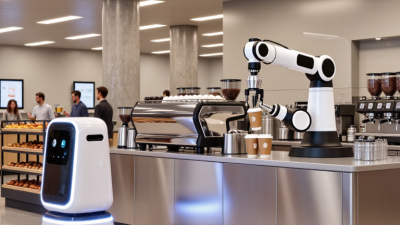
Barista arms suit cafés where visible preparation matters. A gripper can tamp grounds, move a portafilter, and steam milk, but each motion needs careful calibration. Expect a larger footprint and more maintenance points. It may struggle with unusual cup shapes or last-minute recipe changes. The show is part of the value.
Automated brewers focus on repeatable drinks. They can dose, brew, and dispense with fewer moving parts, making them practical for offices or steady-service counters. Vending systems add payment and unattended operation, but depend on reliable ingredient storage, cleaning routines, and remote fault alerts. Compare actual drinks per hour, not advertised speed. Check whether local technicians can reach the machine and source parts. Small details matter.
Tips: Test your own cups, water, and menu. Measure cleaning time. Ask who responds when a sensor fails.
Before buying across regions, confirm voltage, water connections, language settings, and consumable availability. A machine that performs well in a showroom may slow down during a busy morning. Run a pilot with real staff and realistic peak demand. Record drink quality, waste, downtime, and cleaning effort. No category is best for every site; sometimes the simplest brewer is the better fit, though that can feel less impressive.
| Comparison Dimension | Robotic Barista Arms | Automated Brewers | Coffee Vending Systems |
|---|---|---|---|
| How the system works | A programmed robotic arm handles selected barista tasks, such as moving cups, operating espresso equipment, or finishing drinks. | Integrated equipment automates repeatable brewing steps, typically using preset recipes and controlled water delivery. | A self-service cabinet dispenses prepared coffee or makes drinks to order through an automated interface. |
| Typical drink range | Espresso-based drinks and other recipes supported by the connected equipment and workstation layout. | Usually a focused menu of brewed coffee, espresso, or specialty drinks, depending on the machine configuration. | Often a preset menu that may include black coffee, espresso-style drinks, and selected milk-based options. |
| Typical preparation time | Approximately 1–3 minutes per made-to-order drink; recipe complexity and queue design affect timing. | Approximately 1–4 minutes per order; batch brewing can serve multiple portions, while single-cup recipes take longer. | Approximately 1–3 minutes per selection; actual service time depends on the recipe and whether ingredients are freshly prepared. |
| Customization | Potentially high when the arm, espresso equipment, and software support adjustable recipes; changes may require programming and testing. | Moderate to high for supported variables such as dose, water volume, temperature, and brew profile. | Usually low to moderate, with choices limited to the installed menu and available ingredient settings. |
| Space and installation | Requires a stable work surface, a safety-aware arm operating area, and space for connected coffee equipment. | Generally suited to a counter or beverage station; space needs depend on the brewer, grinder, and serving workflow. | Typically a standalone floor or counter unit; allow access for users, restocking, cleaning, and maintenance. |
| Staffing and supervision | Can automate repetitive movements, but setup, cleaning, ingredient handling, and exception management still need oversight. | Reduces manual brewing steps; staff are generally needed for replenishment, cleaning, and routine checks. | Designed for unattended customer ordering in some locations, but regular restocking, cleaning, and technical support remain necessary. |
| Cleaning and food safety | Requires cleaning of coffee-contact equipment and attention to arm grippers or tools that may contact cups or ingredients. | Requires regular cleaning and descaling according to the equipment and water conditions. | Requires scheduled cleaning of dispensing paths, ingredient containers, and any milk or fresh-food components. |
| Operational strengths | Creates a visible, technology-led service experience and can repeat programmed motions consistently. | Provides repeatable brewing with a comparatively straightforward workflow for a focused beverage menu. | Supports self-service access and can operate in locations where a staffed coffee counter is impractical. |
| Key limitations | More complex integration and safety planning; the robot does not remove the need for human support or maintenance. | Less suited to highly customized service if the selected equipment has a limited recipe range. | Menu flexibility and drink quality depend on machine design, ingredient storage, and the frequency of servicing. |
| Global purchasing checks | Confirm local safety and installation requirements, service availability, spare parts, software support, and integration compatibility. | Verify regional voltage and frequency options, water treatment needs, consumables, cleaning procedures, and technician access. | Check payment-method compatibility, local electrical requirements, ingredient availability, accessibility, and restocking logistics. |
| Best-fit locations | Showrooms, hospitality venues, innovation spaces, and sites where the robotic process is part of the customer experience. | Offices, cafés, hotels, and food-service counters that need consistent drinks from a defined menu. | Transit hubs, campuses, workplaces, and other high-access locations with suitable power and regular servicing. |
Planning note: Preparation times are indicative estimates, not guaranteed performance figures. Actual results vary by recipe, equipment configuration, demand, staffing, water quality, and maintenance schedule.
Buyer Criteria: Capacity, Uptime, Total Cost, Safety, and Serviceability
Top Coffee Machine Robots for Global Buyers?
A coffee machine robot should match the busiest hour, not just look impressive in a showroom. Estimate drinks per hour, peak demand, and the time needed to refill beans, milk, cups, and water. A unit rated for high output may slow down when staff must clear queues or reload supplies. Ask suppliers for performance data from comparable operating conditions. Uptime matters. Request maintenance intervals, fault records, and a clear response plan for outages.
Compare total cost beyond the purchase price. Include installation, utilities, consumables, staff training, cleaning, and replacement parts. Safety features should protect users near hot surfaces, moving parts, and dispensing areas. Check how the machine stops during a fault and whether routine cleaning is straightforward. Serviceability can decide whether a small issue takes minutes or keeps a machine idle for days. Some buyers overlook local parts availability; that can be an expensive mistake.
Tips: Run a site trial during a real rush. Record drinks served, downtime, waste, cleaning time, and support response. Ask operators to test common tasks, such as clearing a blocked outlet. Keep the scoring sheet simple, but revisit your assumptions after the trial. One test will not reveal everything.
Automation Context: IFR Reports 4.28 Million Industrial Robots in Use in 2023
The International Federation of Robotics reported 4.28 million industrial robots in operation worldwide in 2023. That figure shows how established automation has become across manufacturing. It does not mean millions of coffee-making robots are working in cafés. The statistic covers industrial robots across many sectors, so buyers should treat it as context, not a coffee-market forecast.
For coffee equipment, automation can mean a robot loading cups, moving parts along an assembly line, or handling repetitive steps in a compact service station. These tasks differ sharply. A robot used to assemble a metal housing faces different demands from one working beside hot water, steam, and spilled milk. Buyers should ask about cycle time, cleaning access, safety features, and local maintenance support. A quick demonstration helps: watch how the system responds when a cup is misplaced or a component needs replacing.
The global robot count also signals a wider supplier ecosystem, but it cannot guarantee easy installation or reliable service in every region. That matters. Request documented uptime figures and clarify which tasks remain manual. A polished video may hide awkward refills or slow recovery after a jam. The figures are useful, but imperfect; a buyer’s own workflow is still the better test.
Related Posts
-
How to Choose a Coffee Machine Robot for Your Business?
-
Innovative Coffee Machine Robot Designs Transforming Your Daily Brew Experience
-
7 Coffee Robot Buying Tips for Global Buyers
-
How to Choose a Robot Barista for Your Business?
-
Why Choose a Cafe Robot for Your Business?
-
7 Best Robot Cafe Solutions for Global Buyers in 2026