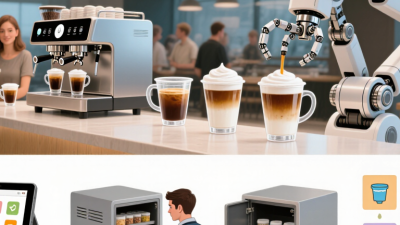
How to Choose the Best Robot Barista in 2026?
Choosing The Robot Barista in 2026 means looking beyond a polished screen or a quick pour. The right machine should produce repeatable drinks, handle busy periods, and fit the space and workflow of the café using it. It should also be easy to clean and maintain. A spotless demo is not the same as a reliable morning rush.
Henry Hu, founder of Cafe X, is a useful industry voice to consider when weighing automation and access. In paraphrase, his public focus suggests a practical test: “Choose automation that makes quality coffee more accessible, not merely faster.” That distinction matters. A robot can move a cup quickly, yet still frustrate staff if its grinder needs constant adjustment or its milk system is difficult to clean. Small details count.
This guide compares the features that shape real-world performance: drink consistency, menu flexibility, speed, footprint, service support, and total operating cost. It also asks what happens when the machine encounters an empty hopper, a queue of custom orders, or a maintenance issue. Not every café needs the same answer. A compact kiosk has different demands from a hotel breakfast bar. And specifications can flatter a machine. Real service may expose its limits. The goal is not to crown the most futuristic model, but to help buyers choose a dependable fit—and to notice where the evidence remains thin.
What a Robot Barista Is and How It Works
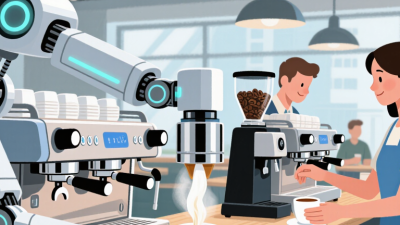
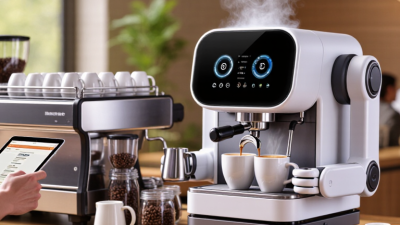
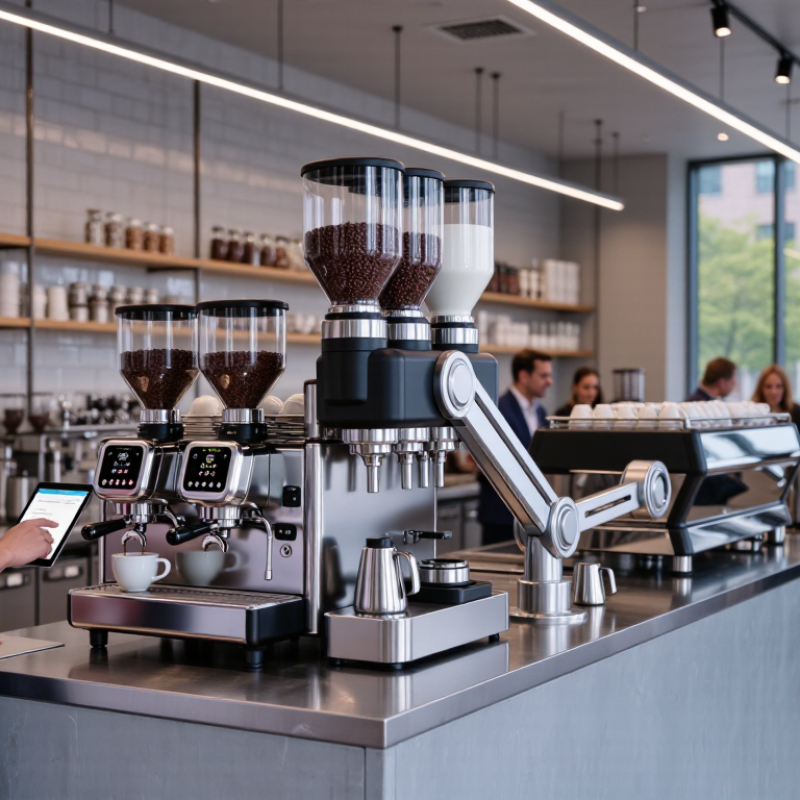
A robot barista is an automated coffee system that handles some or most steps in preparing a drink. It may grind beans, dose coffee, brew an espresso, steam milk, and dispense the finished cup. Cameras, sensors, and programmed recipes help coordinate these tasks. Some machines also use robotic arms to move cups or clean equipment. The exact process varies, so “robot barista” does not describe one standard design.
Think of the workflow as a small café station. An order enters through a screen or connected ordering system. The machine selects a recipe, measures ingredients, and controls brewing time and temperature. Sensors can flag an empty ingredient bin or a brewing problem, while staff refill supplies and handle maintenance. That is not magic. Milk texture, bean freshness, and a clean brew path still affect taste, and automation cannot guarantee every cup will be identical. The International Federation of Robotics’ World Robotics 2024 report recorded more than 205,000 professional service robots sold worldwide in 2023, a 30% year-on-year increase. This signals broader adoption, not a specific measure of coffee-machine quality. The National Coffee Association’s 2024 National Coffee Data Trends report found that 67% of U.S. adults had coffee in the past day, offering useful context for steady café demand. A busy counter still needs human judgment.
Define Your Beverage Needs, Serving Volume, and Available Space
How to Choose the Best Robot Barista in 2026?
Define Your Beverage Needs, Serving Volume, and Available Space
Start with the drinks people will actually order. If your routine is mostly espresso and americanos, prioritize consistent shots and simple controls. For oat-milk cappuccinos or iced lattes, check how the machine handles milk, foam, and cold drinks. A long menu looks impressive, but unused options can add cleaning steps. Be honest about your habits.
Serving volume changes what “convenient” means. A home with two coffee drinkers may manage with a compact machine and a small water tank. A busy office needs faster cycles, larger ingredient containers, and easy access for refills. Estimate peak demand, not just the daily average. I have seen capacity judged by a quiet morning, then regretted at 9 a.m. Also consider where used grounds and rinse water collect.
Tips: Measure the counter before comparing machines. Leave room for the lid, bean hopper, and water tank to open fully. Check nearby outlets and allow space for routine cleaning. A few centimeters matter. If possible, mark the machine’s footprint with paper; it makes cramped corners obvious, though it cannot show noise or workflow.
How to Choose the Best Robot Barista in 2026
Match the drink menu, daily serving volume, and available counter space to your needs.
How to use this guide: The bars show estimated daily output using a 150 mL serving assumption (drinks per day × 0.15 L). Choose a machine that supports your preferred drinks, including milk-based options if needed. Before buying, measure the available counter width and depth, and allow room for access and cleaning.
Compare Brewing Options, Automation, Customization, and Ease of Use
How to Choose the Best Robot Barista in 2026?
Compare Brewing Options, Automation, Customization, and Ease of Use
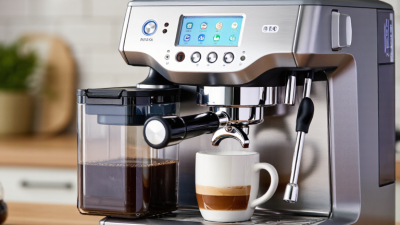
A useful robot barista should match the drinks you actually make. Check whether it prepares espresso, milk-based drinks, or both, and whether it accepts whole beans or pre-ground coffee. Grinder adjustment matters: a finer setting can change extraction, but it may also require trial and error. Look for clear controls and practical guidance, not just a long menu. A dozen drink icons mean little if you cannot adjust strength or cup size. Small detail, big difference.
Automation can save steps, but it does not remove every task. Some machines grind, brew, and froth milk automatically; others need you to move a cup or rinse a milk tube. Check how the machine handles cleaning, refilling, and alerts. Customization should be easy to repeat, so your morning coffee does not depend on remembering several hidden settings. If possible, test the interface: can you change temperature or milk volume without searching through screens? A little hands-on checking helps. I would not assume the most automated model is easiest to live with; cleaning routines can be surprisingly fiddly. Also consider counter space and noise, especially if the machine will run before everyone wakes up.
Assess Cleaning Requirements, Reliability, Safety, and Connectivity
A robot barista should fit your cleaning routine, not just produce attractive foam. Check whether milk lines, brew chambers, and drip trays can be removed without tools. Look for clear cleaning prompts and dishwasher guidance. A narrow rinse channel can hide residue, even when the exterior looks spotless. That matters.
Reliability shows up in repeated daily use. Ask how often seals, filters, and grinders need attention, and whether replacement parts are available. A clear fault message is more useful than a blinking light with no explanation. No machine is maintenance-free; occasional manual checks are still sensible. A polished demonstration cannot reveal every weak hinge or clogged nozzle.
Safety deserves a close look around hot water, steam, and moving parts. Prefer stable construction, clear alerts, and an accessible way to stop a cycle. Connectivity should help, not become a requirement for making coffee. Check whether basic brewing works offline, what app permissions are requested, and how software updates are handled. I would not choose convenience over control. A disconnected morning should still be manageable.
Evaluate Total Cost, Warranty, Support, and Long-Term Value
Choosing a robot barista in 2026 means looking beyond its purchase price. The National Coffee Association’s 2024 National Coffee Data Trends report found that 67% of U.S. adults had coffee the previous day. For frequent users, even a few days without a working machine can matter. Compare the full three-year cost: machine, beans, filters, cleaning supplies, water filters, and likely repairs. Small costs add up. A glossy price tag tells only part of the story.
Read the warranty before buying. Check its length, which parts it covers, who pays shipping, and whether regular maintenance affects coverage. Ask support how quickly it responds and whether replacement parts are available. A low-cost machine can become expensive if a small pump failure means replacing the whole unit. I would not assume every repair estimate is predictable; service access and local labor can change the calculation. NCA’s consumption figure describes U.S. coffee habits, not robot-machine reliability, so use it as context—not proof of durability.
Tips: Request a written warranty, save the support contact, and price common consumables before purchase. Then divide estimated ownership costs by your expected weekly drinks. If that number depends on perfect reliability, rethink the estimate.